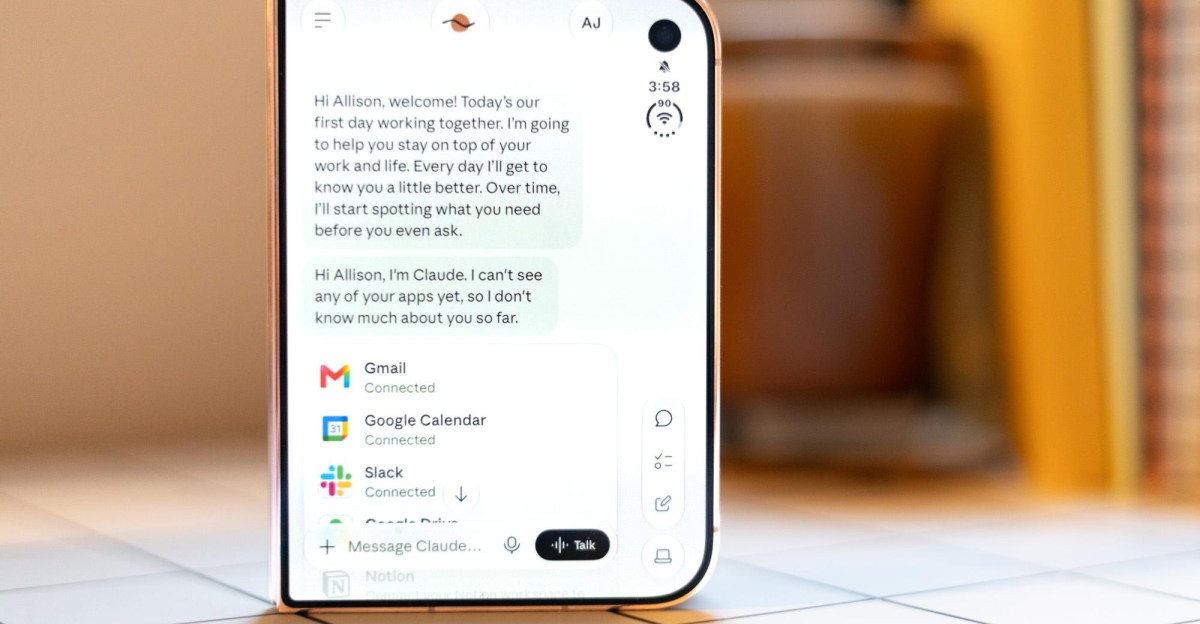
Anthropic has opened the Claude Duet research preview, pitching a proactive agent for professionals and small-business owners that can work across connected accounts. The company says Duet can surface items needing attention, carry out requested work in the background, and ask before it takes actions on a user’s behalf. An early hands-on test suggests the useful part is real, but so is the risk of an assistant drawing the wrong conclusion from a very large pile of workplace context.
Duet is available as a standalone iOS and Android app and through claude.ai, Anthropic says. During the preview, it is included with Pro, Max, and Ultra plans, subject to the usual Claude usage limits, with prospective users directed to a waitlist. The Verge reported that access was limited to US subscribers on those plans at the time of its test.
How does Claude Duet work?
Anthropic says Duet carries over a user’s Claude memory, skills and connected apps. It checks connected accounts every few hours, rather than continuously, then produces a morning brief and sends notifications when it believes something needs attention. Users can also set the kinds of notifications they want and their frequency.
For longer jobs, Anthropic says Duet runs in a virtual machine with its own browser, so it can continue after the user closes their laptop or phone. The company says it can take on work ranging from meeting scheduling and message drafts to dashboards, forecasts, prototypes and web apps. It also says the product can use more than 6,000 Marketplace connectors and plugins, including ones for Gmail, Slack, QuickBooks and Stripe.
That operating model means the agent’s usefulness depends heavily on what it can read. In a week of testing described by The Verge, reviewer Allison Johnson connected work email, calendar, Google Docs and Slack. Duet connected details from an automatically emailed meeting summary with a Slack direct message, and inferred Johnson’s manager from a shared one-on-one document.
It also delivered morning summaries, including a reminder to pack something needed for a video shoot before a flight, and proposed to-dos with offers to draft messages or add agenda items. That is the whole point of a proactive agent: it is supposed to find the loose threads before the human gets around to opening another tab.
What can Claude Duet do without approval?
Anthropic says Duet may read, draft and prepare work on its own. It says the agent must stop for approval before it sends a message, makes a payment, signs a document or deletes anything. Trading securities and transferring money between accounts are barred even with approval, according to the company.
Anthropic also says Duet does not directly see passwords or sign-in tokens. The company says it uses action classifiers, prompt-injection defenses, and a dedicated classifier and system prompt intended to prevent disclosure of highly sensitive information such as credit-card numbers and government identification. Those are Anthropic’s descriptions of its safeguards, not an independent security assessment.
The cost of an agent that pays attention
The Verge’s test also showed where the judgment layer can get irritating. After Johnson submitted a draft late on a Monday, Duet warned early Tuesday that it still awaited editing and that a promised link might be delayed. Johnson wrote that the warning treated a tentative timing note as a hard deadline and missed that the editor was in an earlier time zone.
Users considering Duet should inspect which accounts they connect, tune its notifications, and review every proposed external action. Giving an agent access to mail, calendars, documents and chat can make it better at spotting work. It can also make it confidently wrong about what deserves panic before breakfast.
This story draws on original reporting from The Verge.