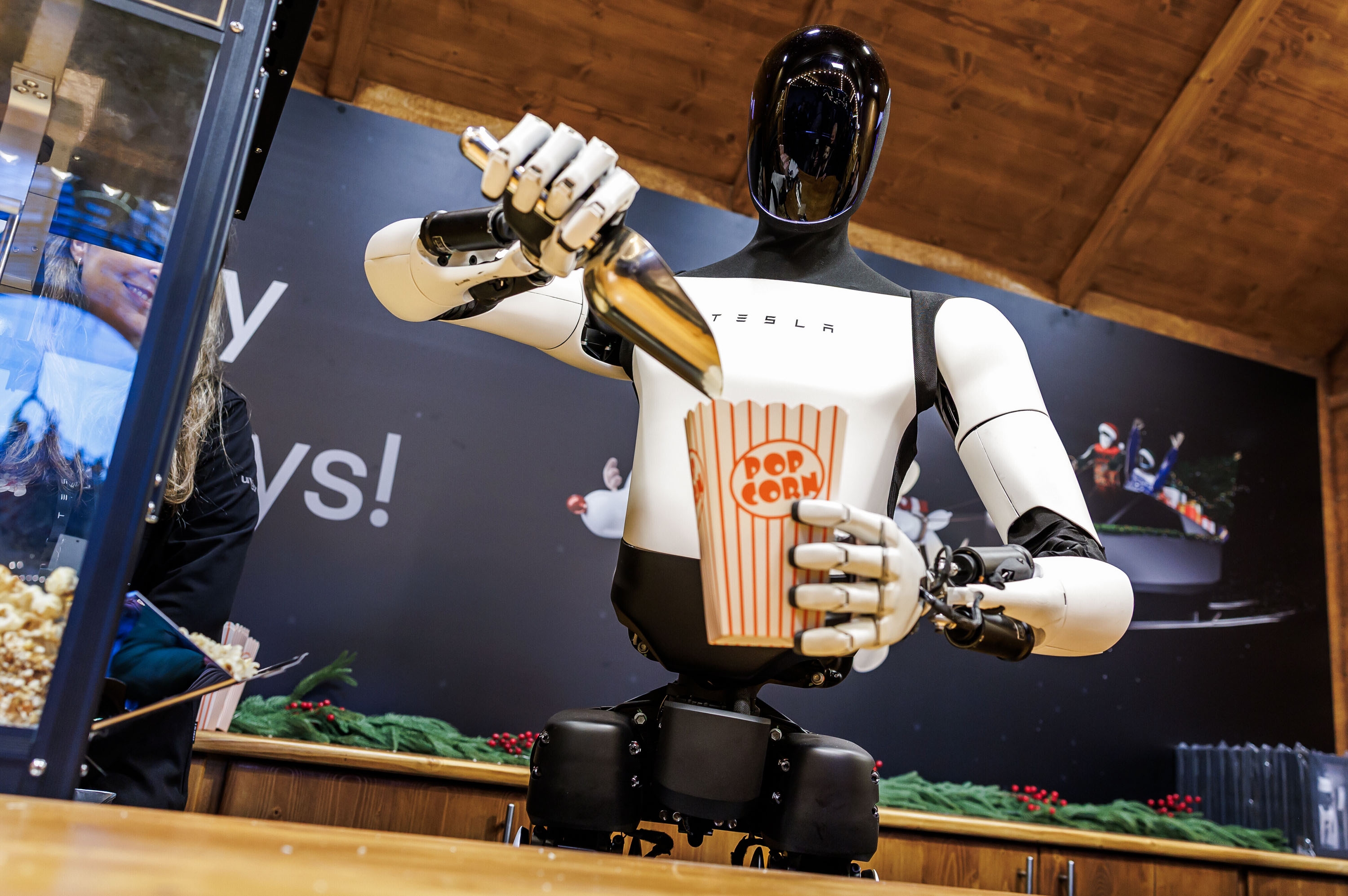
MIT Technology Review’s October 8 edition of The Download puts humanoid robot AI roadblocks alongside a much less theatrical bit of climate hardware: WaveSave’s portable, water-filled flood barrier. The two items are separate, despite the newsletter’s shared billing.
On robotics, the publication says excitement around human-shaped machines rests partly on the belief that advances behind systems such as ChatGPT and Claude can help robots learn human movement. Many researchers are skeptical. They argue that AI built from language and image data still faces the physical world’s endless variation.
The dispute is over more than robot choreography. A humanoid is a machine designed to resemble a person; a generalist robot is one able to learn and carry out multiple tasks. MIT Technology Review reports that researchers see those as distinct ideas, even when companies and investors tend to bundle them together.
Why are researchers skeptical of humanoid robot AI?
The publication’s related reporting documents the scale of the sales pitch. Tesla chief executive Elon Musk predicted that the company could sell Optimus robots to the public by the end of 2027. He has also claimed the machines could eventually reach human and then superhuman dexterity, automate almost all human labor, and cost as little as $20,000. Those are Musk’s predictions and claims, not confirmed product outcomes.
MIT Technology Review also cites a Morgan Stanley forecast of nearly 1 billion humanlike robots by 2050 and a market exceeding $5 trillion. Again, that is a forecast. Yann LeCun, the AI researcher, told the publication that companies building humanoids do not know how to make them smart enough to be useful.
There is real laboratory progress in the report. Google DeepMind uses ALOHA 2, a research platform with two arms, grippers, and cameras, to test Gemini Robotics. In a video example described by MIT Technology Review, the system packed a lunch by bagging bread, putting grapes in a container, and placing the food in a lunchbox. The publication characterized it as progress compared with roughly three years earlier, while presenting it as a limited demonstration rather than a proof that broadly capable humanoids have arrived.
The systems behind the debate include models trained on words and images. For background on the text side of that technology, see how large language models work.
How does WaveSave’s SlamDam work?
The newsletter’s other item concerns a physical barrier with no AI pitch attached. MIT Technology Review included WaveSave in its 2026 Climate Tech Companies to Watch list and described the company’s SlamDam as a portable rubber dam for flood conditions.
The stated deployment method is straightforward: users unroll the barrier along a riverbank or shoreline, then fill it with water so it expands into position. According to the publication, the barrier can stand as high as 1.3 meters and is intended to protect nearby buildings or property as water rises.
That editorial selection and product description are not independent verification of the dam’s performance. The evidence available here does not establish its cost, deployment speed, customer use, testing record, or effectiveness in a particular flood. It does establish the contrast the newsletter wanted to make: robotics researchers still argue over what current AI can do in the physical world, while WaveSave is offering a narrowly defined flood-control device.
This story draws on original reporting from MIT Technology Review.