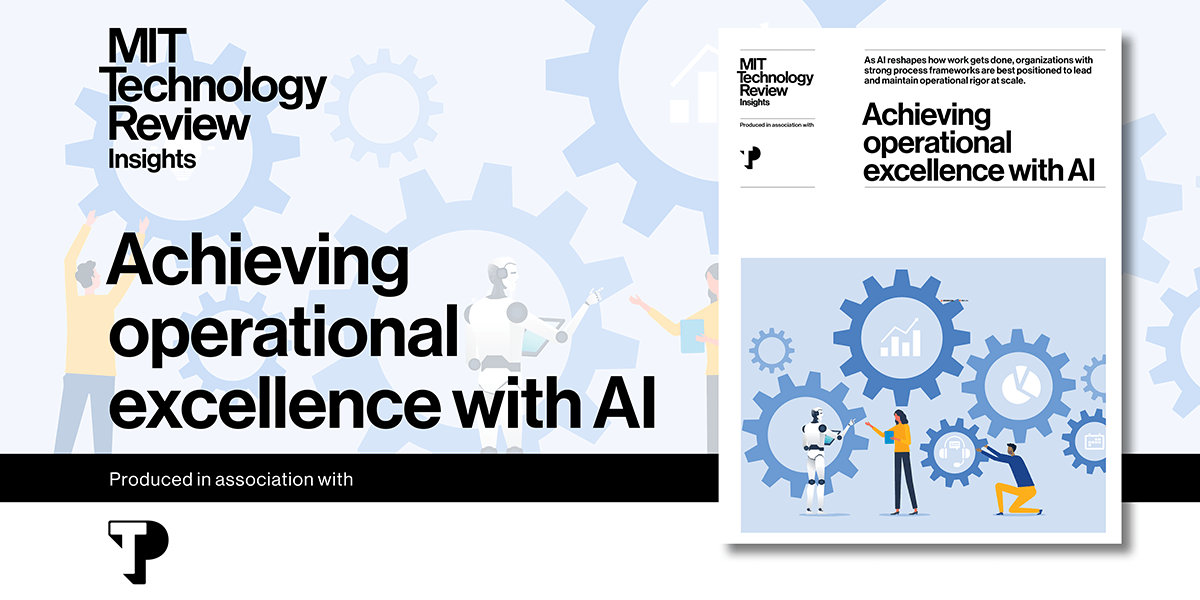
MIT Technology Review Insights has published a sponsored report, produced with Teleperformance, arguing that companies chasing AI-driven operational gains need old-fashioned process discipline before the software is likely to pay off.
The report’s central claim is not that AI replaces established management systems. It says AI is more useful when it is plugged into methods companies already use to measure, analyze, and improve work. That is less glamorous than another chatbot demo, but it is the part executives usually discover after the procurement paperwork is signed.
MIT Technology Review Insights points to Lean Six Sigma and business process management as the prior generation of tools for bringing structure to sprawling corporate operations. In its account, Lean Six Sigma brought statistical measurement and quality control to process work, while BPM gave companies a way to map how tasks move across departments from start to finish.
Those methods, the report says, helped turn measurement, analysis, and accountability into routine operating habits. AI process tools now enter that same territory: finding bottlenecks, improving workflows, and making process data more useful to managers. The report frames AI as an accelerator for process excellence rather than a substitute for it.
AI spending is rising, but the report warns against weak foundations
The market for AI-powered process optimization is expected by some estimates cited in the report to pass $113 billion within the next decade. The report also cites a study in which 88% of business leaders said they expected to raise spending on AI-infused process intelligence over the next 12 to 18 months.
Those figures describe appetite, not results. MIT Technology Review Insights says many investments may fall short if companies lack reliable process data, clear workflows, and management routines that can turn AI outputs into decisions. In plainer terms: a model trained around a messy operation can help find the mess, but it does not magically create operating discipline.
The report argues that companies with mature process practices have an advantage because they can add AI to systems that already use data and accountability. Organizations without that base risk attaching AI tools to unclear workflows and expecting software to supply the missing structure.
That distinction matters for buyers. “AI process intelligence” can sound like a category that fixes operational confusion by observation alone. The report instead says the cultural and procedural groundwork, including data-driven decisions and process discipline, is what makes the new systems more likely to produce measurable value.
A sponsored report, not newsroom coverage
The report was produced by Insights, MIT Technology Review’s custom content arm, in association with Teleperformance. MIT Technology Review says the work was not written by its editorial staff.
MIT Technology Review also says the report was researched, designed, and written by human writers, editors, analysts, and illustrators. Any AI tools used in production, it says, were limited to secondary processes and subject to human review.
The practical message of the report is blunt enough: companies that already understand their processes are better placed to benefit from AI. Companies that do not may be buying a faster way to expose problems they have not yet learned how to fix.
This story draws on original reporting from MIT Technology Review.