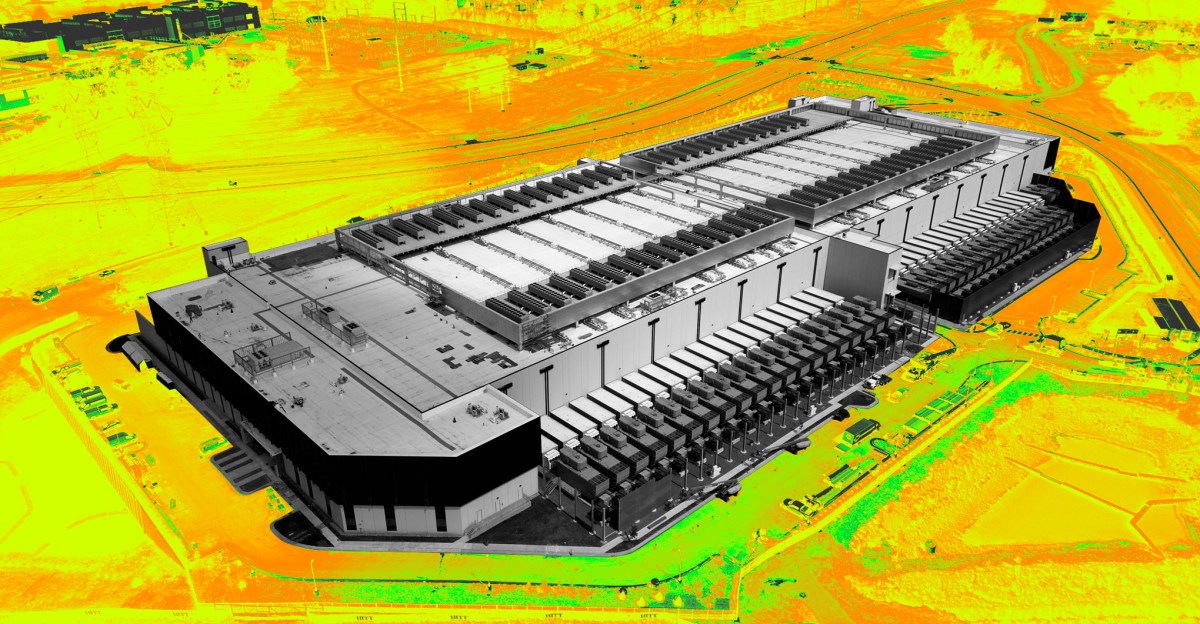
Texas data center pollution could undo much of the state’s long-running decline in major air pollutants, according to a new emissions analysis from the Houston Advanced Research Center. The warning is conditional, not a prediction carved into a gas turbine: HARC’s modeled results vary sharply with the power systems developers choose for planned facilities.
The Texas Tribune reported that the analysis examines statewide emissions through 2031 as data-center construction expands. Texas cut major pollutants between 2002 and 2024 even as its population grew and its economy roughly doubled, according to the report’s use of federal and state emissions data. HARC says that progress is vulnerable if the computing buildout is supplied by higher-emission electricity sources.
Data centers are buildings packed with servers, networking gear, cooling equipment and backup power systems. They consume electricity to run the computers and to move heat away from them. More capable AI chips can run hotter, raising cooling demand and, in turn, electricity demand. For a fuller primer on the machinery, see how a data center works.
How could Texas data centers affect air pollution?
HARC modeled several combinations of demand and electricity supply, with particular attention to criteria pollutants including nitrogen oxides, or NOx, and fine-particle pollution. NOx helps form ground-level ozone, a component of smog. These are modeled emissions totals, not measurements of pollution concentrations at a specific neighborhood or a finding about health outcomes.
Under a cleaner scenario reported by the Texas Tribune, in which data centers connect to the grid while adding on-site wind and solar, statewide NOx emissions could still rise 35% by 2031. In a scenario relying on traditional on-site natural-gas generation, NOx could increase by nearly 400%.
A separate HARC scenario, described by The Verge, assumed planned projects draw power from Texas’s anticipated grid mix. It found power-sector fine-particle pollution could more than triple, reaching its highest reported level since 2006, while NOx could rise 136% from the comparison baseline. Those estimates should not be treated as interchangeable with the Tribune’s figures; they describe different modeled assumptions.
Power supply is the variable that changes the result
The analysis puts an unglamorous infrastructure decision at the center of the story: whether operators wait for grid connections and add renewable generation, or install combustion equipment at their sites. CBS Austin reported that HARC estimated NOx emissions associated with meeting data-center demand could be two to 10 times higher with on-site combustion than with grid power paired with solar and wind. That does not mean total Texas emissions would multiply by the same amount.
The scale is still uncertain. At least 288 data-center projects are planned in Texas, according to the Texas Tribune, but plans do not guarantee construction or establish how each facility will be powered. The Verge also noted that some proposed projects may not proceed.
Demand for grid connections is already piling up. ERCOT received more than 500 requests from large electricity users during the past two years, many from data centers, compared with about two dozen in the preceding year, the Texas Tribune reported, citing state records. HARC’s conclusion is narrower than the headline panic: choices about electricity procurement and on-site generation determine how much of Texas’s air-quality progress is put at risk.
This story draws on original reporting from The Verge.