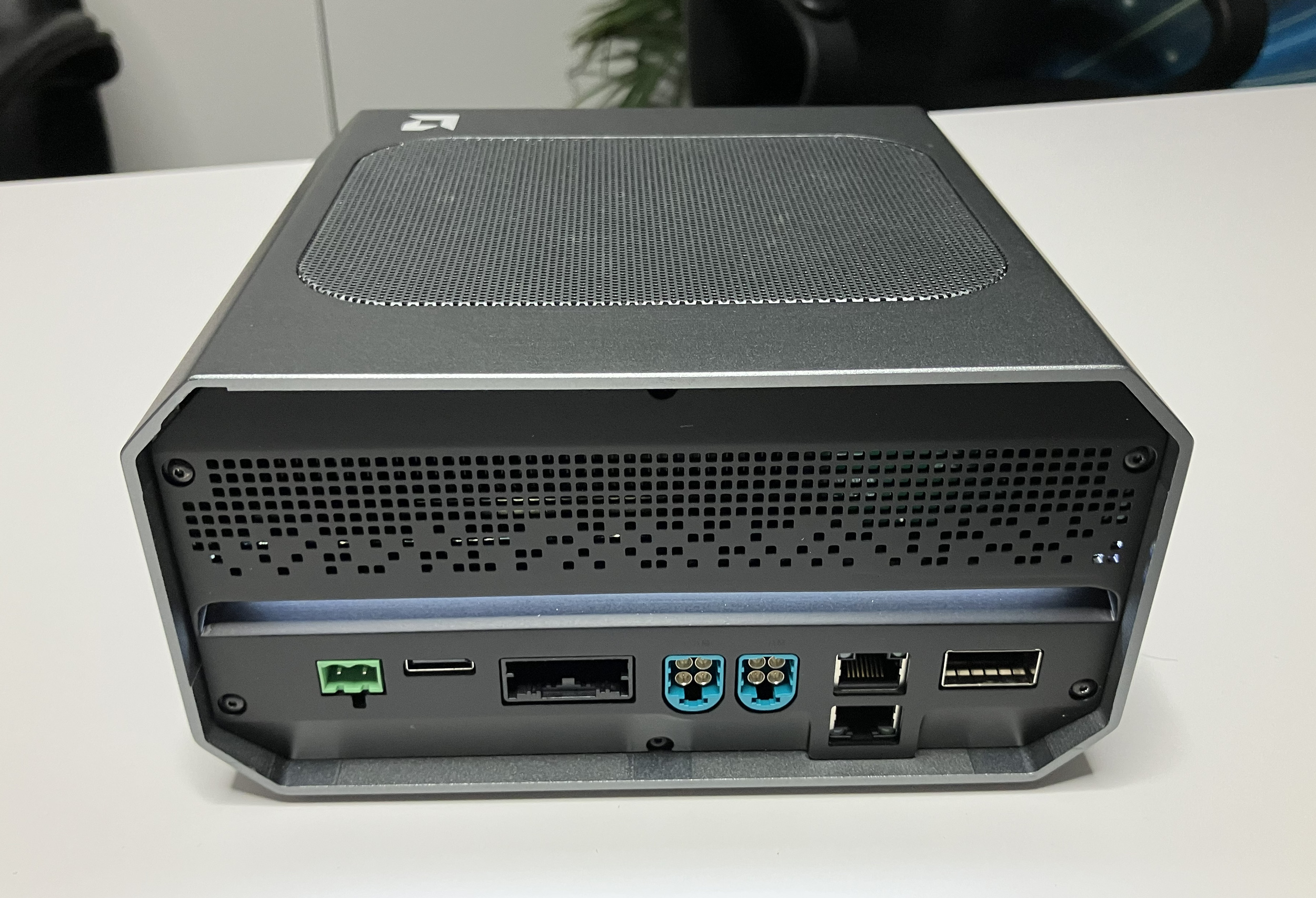
AMD used its Advancing AI 2026 keynote to put the AMD Ryzen AI Embedded X100 into the middle of its physical AI pitch: robotics and edge AI hardware that needs local compute, predictable timing and a vendor willing to sell the same silicon for years.
The announcement gives AMD a high-end entry in its modern Ryzen AI Embedded lineup. Earlier P100-branded parts used Krackan Point and Strix Point silicon, according to AMD. The X100 moves that embedded stack up to Strix Halo, the same silicon family behind Ryzen AI Max systems that have shown up in workstations and small PCs.
AMD is pitching physical AI as a growth market beyond server racks built around Epyc CPUs, Instinct GPUs and Pensando networking. The company said improvements in model accuracy and reductions in model size are making more capable AI practical for robotics and other edge systems. That is a claim about timing as much as technology, and AMD is far from the only chipmaker trying to attach itself to that market.
What is AMD Ryzen AI Embedded X100?
Ryzen AI Embedded X100 is AMD’s industrial version of its Strix Halo platform, aimed at high-performance physical AI devices. AMD says it combines Zen 5 CPU cores, RDNA 3.5 integrated graphics and a wide LPDDR5X memory interface in a single embedded system-on-chip.
The top configuration, branded X199, uses 16 Zen 5 CPU cores and 40 RDNA 3.5 compute units. AMD also plans an X188 with 12 CPU cores and 32 graphics compute units, and an X168 with 8 CPU cores and 32 graphics compute units. All three keep the 256-bit LPDDR5X memory bus, which matters because local AI inference can run into memory bandwidth limits before it runs out of marketing adjectives.
The embedded differences are less flashy than the core counts, but they are the point. AMD says X100 parts are qualified for industrial operation from -40C to 105C. The company also said the platform firmware and BIOS are tuned for quality of service and deterministic behavior rather than only maximum throughput.
For real-time work, AMD says X100 can deliver sub-7 microsecond interrupt latency for firm real-time operation under Linux. For workloads that need hard real-time behavior, AMD plans to support hypervisor-based operation. In plain English: the chip is meant to respond within tighter timing bounds than a normal desktop-class part, because a robot arm or industrial system does not get to shrug and retry like a web app.
Why AMD is updating Kria around X100
AMD also said the X100 will anchor a major update to Kria, its system-on-module line inherited from Xilinx. The current Kria K24 and K26 modules, introduced around 2022, use Xilinx Zynq UltraScale+ programmable SoCs with Arm Cortex-A53 CPU cores on TSMC’s 16 nm process, according to AMD’s product history cited by ServeTheHome.
Moving Kria to X100 means a shift from Arm-based programmable SoCs toward x86 processors, a bigger architectural jump than a routine module refresh. For readers who want the short version of that CPU split, Kernel has an explainer on Arm vs x86.
AMD said it also plans Kria development kits based on the new module, along with broader software libraries and frameworks intended to make development easier on the platform. The target markets AMD named include higher-end robotics and edge AI systems that need more performance than P100 chips provide, with healthcare, defense and broadcast also in view.
AMD is placing the X100 under its 10-year lifecycle program for Ryzen embedded hardware. For industrial buyers, that commitment can be as relevant as peak performance: redesigning a robot controller because a chip vanished from the catalog is expensive, tedious and exactly the kind of problem embedded customers pay to avoid.
This story draws on original reporting from ServeTheHome.