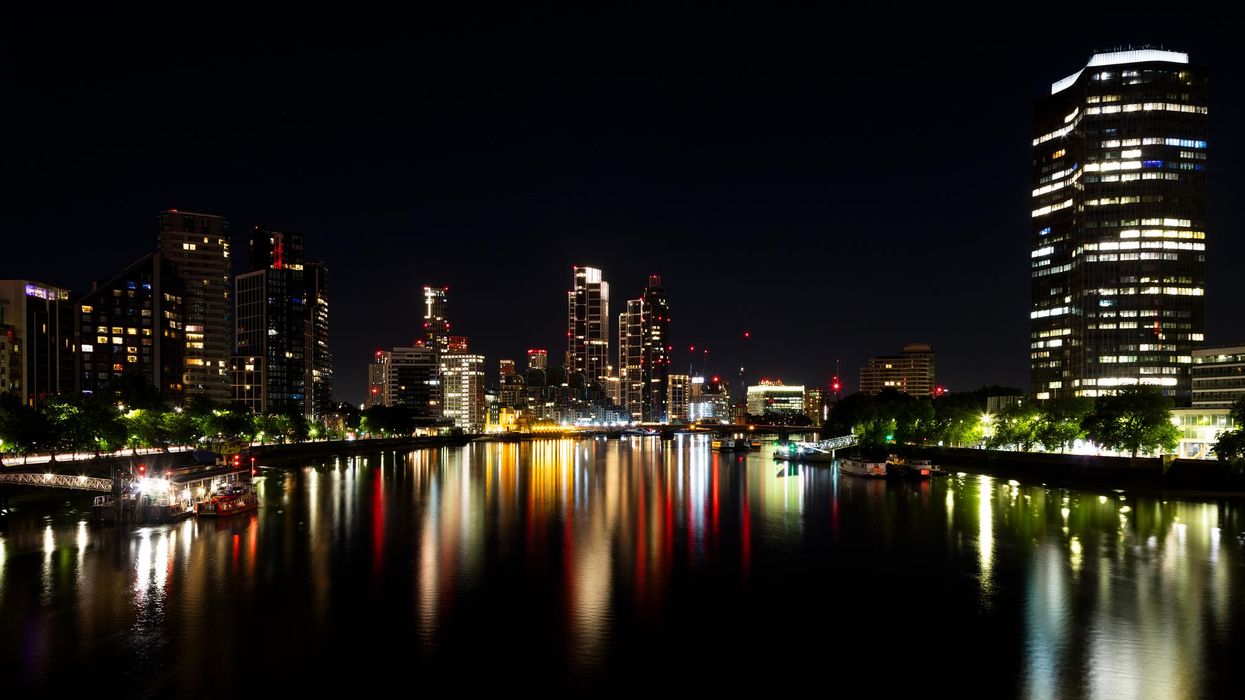
Cities have spent the past decade swapping older streetlights for LEDs, and in many places they have bought themselves a brighter problem. The hardware can be dimmed, aimed, color-tuned and networked. Too often, municipalities have used it as a cheaper way to throw more light into the sky, windows and drivers’ eyes.
Lighting designer Simon Thorp demonstrated the basic mismatch in London’s Trafalgar Square with a light meter: a spot near Nelson’s Column measured two lux, which he described as comfortable. That level is far brighter than a full moon, yet low enough for people to see each other and for modern CCTV cameras to function, according to Thorp.
Thorp’s complaint is mechanical, not mystical. Badly aimed fixtures create glare. Glare forces the eye and camera sensors to adapt to the bright source, which makes surrounding areas appear darker. Adding more light can then make the perceived problem worse.
LEDs changed the economics of lighting
The first visible red LED was invented by Nick Holonyak in 1962, but LED streetlighting became common only much later. By 2019, more than half of U.S. streetlights were LEDs, with adoption projected to exceed 90 percent by 2030. Similar conversions have spread globally, including through low-cost Chinese-made fixtures in developing countries.
The draw is obvious. LEDs use semiconductors to turn electricity into light through electroluminescence. They can use up to 90 percent less energy than incandescent bulbs, and municipalities have reported energy savings of 50 percent or more after switching. Their longer service lives also reduce maintenance because crews replace failed fixtures less often.
The same semiconductor control that makes LEDs efficient also makes them adjustable. Engineers can change output color and intensity, giving cities the option to dim streets late at night, brighten specific areas when needed, or reduce blue-rich light during hours when it causes more harm.
The control layer often gets skipped
That better version depends on controls, and many deployments left them out because they cost more. The Digital Addressable Lighting Interface, or DALI, gives each luminaire a digital address and connects drivers to a central server, so operators manage lights through software rather than rewiring circuits.
Paul Drosihn, general manager of the DALI Alliance, said the maintenance case alone should interest utilities. Before the newer digital protocol, identifying, diagnosing and fixing a defective luminaire took nearly three visits on average, he said. With DALI, he said, it takes one.
DALI can also tune spectrum over time, making lighting warmer and less disruptive later at night. Drosihn said similar controls can cut light leaking from buildings by linking interior LEDs to occupancy sensors and building-management systems, switching off floors when the last person leaves.
Blue-rich white light is the bad default
Many white LED streetlights are built around a blue semiconductor with a yellow phosphor coating. The result looks white to humans but remains heavy in blue light. Blue light scatters readily in the atmosphere, contributing to sky glow over cities.
Health and ecology concerns are part of the case against overlighting. Research cited by The Guardian found increased exposure to blue light from LEDs can suppress melatonin and is associated with higher risks including sleep disorders, obesity, some cancers and type 2 diabetes. Other research cited by DarkSky International says higher lumen output does not necessarily reduce crime.
Ruskin Hartley, chief executive and executive director of DarkSky International, said responsible outdoor lighting should be useful, targeted, low level, controlled and warm-colored. Those principles depend on LED capabilities, he said.
Some governments are trying. France introduced national rules in 2019 to reduce light pollution, including limits on upward public lighting and requirements for shops to switch off exterior and window lighting after 1 a.m. French communities have also dimmed or turned off municipal lighting after midnight. Researcher Chloé Beaudet of Université Paris-Saclay found public acceptance for such measures, especially when framed around energy savings and ecological concerns.
Global light pollution is still increasing by nearly 10 percent a year, according to research in Science. The wasted opportunity is that LEDs already include much of the fix. Cities just have to stop treating them like cheaper versions of the old dumb bulbs.
This story draws on original reporting from IEEE Spectrum.