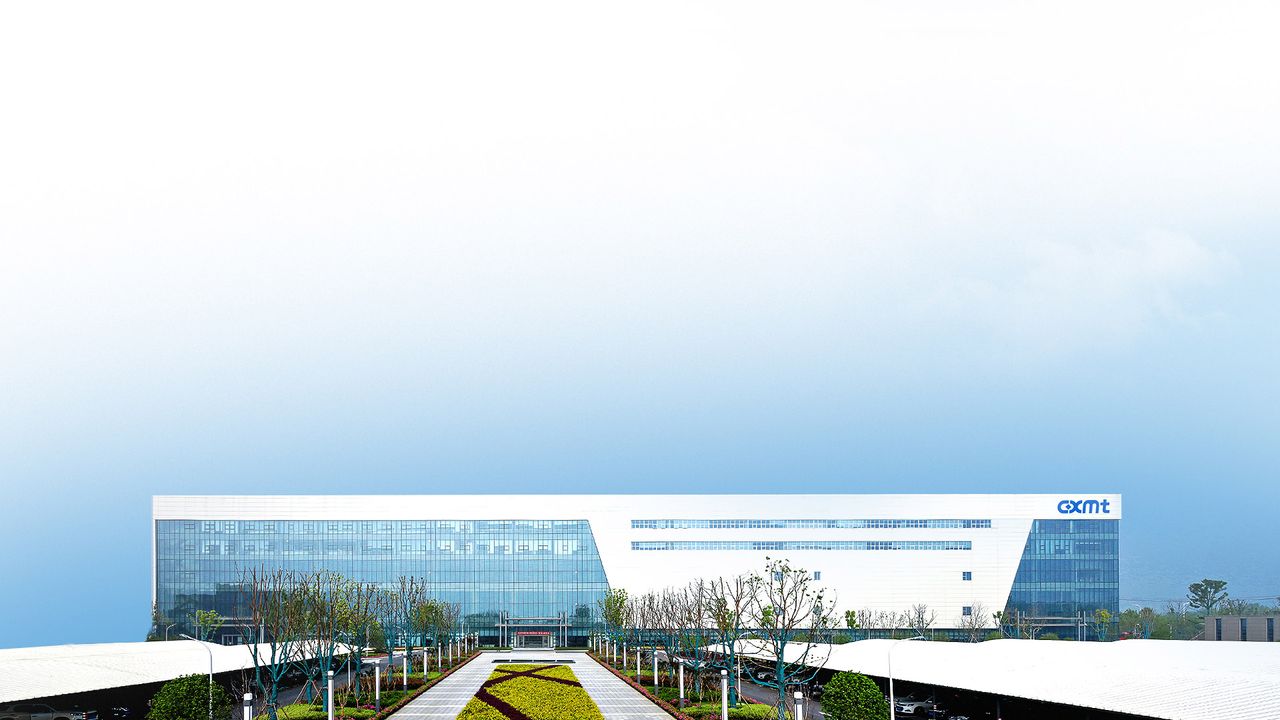
ChangXin Memory Technologies, China’s largest DRAM manufacturer, could come within striking distance of Micron’s memory production capacity in 2026, according to forecasting models published by Citrini Research. If that forecast holds, China would be positioned to become the world’s second-largest base for DRAM production in the next few years.
Citrini’s bottom-up model puts CXMT at about 350,000 wafer starts per month of DRAM capacity by the end of 2026. The same analysis puts Micron at roughly 375,000 wafer starts per month, leaving a gap of about 25,000. Wafer starts per month is the industry’s blunt but useful measure of how much silicon a fab can begin processing, before yield, product mix, and all the other messy realities show up.
The forecast also says China’s government is pressing CXMT to share DRAM technology with JHICC, Swaysure, and XMC, a YMTC subsidiary, to reduce domestic memory shortages. Citrini says those companies either already have DRAM capacity in place or are expected to add it soon.
China’s planned DRAM buildout
According to Citrini, Swaysure has finished building a 140,000 wafer-starts-per-month fab in Shenzhen. JHICC’s Jinjiang site has cleanroom space for 120,000 wafer starts per month, with an initial 60,000-wafer phase expected to receive equipment by the end of 2026. YMTC is projected to run about 50,000 wafer starts per month of DRAM output at Wuhan Fab 3.
If those sites ramp as described, Citrini says China would have about 600,000 wafer starts per month of DRAM capacity in the coming years, excluding Samsung and SK hynix facilities located in China. That would still trail South Korea by a wide margin, but Citrini says it would exceed Japan, Taiwan, and the United States combined.
The firm’s longer-range forecast is more aggressive. By 2030, Citrini projects China’s total DRAM capacity at around 1.41 million wafer starts per month. CXMT would account for about 950,000 of that, with new capacity in Beijing, Hefei, and Shanghai, assuming the buildout proceeds as planned.
Citrini’s model assumes CXMT’s 2030 output would include about 400,000 wafer starts per month on D1a, another 400,000 on D1b, and roughly 150,000 on D1c. The forecast also lists 2030 capacity of 120,000 wafer starts per month for JHICC, 140,000 for Swaysure, and 200,000 for YMTC/XMC. For comparison, Citrini’s table projects Samsung at 1.14 million to 1.45 million and SK hynix at 1.18 million wafer starts per month in 2030.
The lithography bottleneck
Citrini acknowledges that forecasting China’s DRAM expansion is harder than modeling established suppliers. The upside case is obvious enough: new fab buildings, state-backed financing, and government-directed technology sharing. The awkward part is tools, especially 193nm immersion deep-ultraviolet lithography scanners.
The report says the proposed MATCH Act could restrict sales of advanced immersion DUV tools to selected Chinese companies. If that happens as intended, Citrini says near-term DRAM capacity expansions could be disrupted.
Citrini expects China’s SMEE to move domestic immersion DUV scanners into volume production around late 2026 or early 2027 after beta testing. It also expects SiCarrier, also referred to as Yuliangsheng, to introduce a production-ready DUV platform in 2028. The forecast says lithography availability may stop constraining Chinese output after 2028 for mature logic and DRAM nodes.
That is the most speculative part of the story. The same reporting notes that SMEE and SiCarrier have not delivered a commercial immersion system yet, and that ramping such machines takes years. ASML, Canon, and Nikon cannot quickly increase immersion DUV output either, because these tools contain tens of thousands of parts.
Demand still outruns supply
Citrini projects total DRAM demand at 157.5 exabytes per year by 2030. Its breakdown includes 75 exabytes of commodity DRAM for agentic AI CPUs, 25 exabytes for conventional cloud servers, 20 exabytes for client devices, and 37.5 exabytes of HBM4E and HBM5 for AI accelerators.
The firm expects the industry to produce about 37.5 exabytes of HBM4E/HBM4 and 91.3 exabytes of commodity DRAM in 2030, including Chinese output. That would leave a deficit of 28.7 exabytes, or about 25%.
Citrini argues that China’s added DRAM capacity could help keep memory prices lower, especially for consumer devices that are sensitive to component costs. The same forecast says much of the new capacity would likely be absorbed by China’s domestic demand, rather than wiping out the global shortage.
This story draws on original reporting from Tom's Hardware.