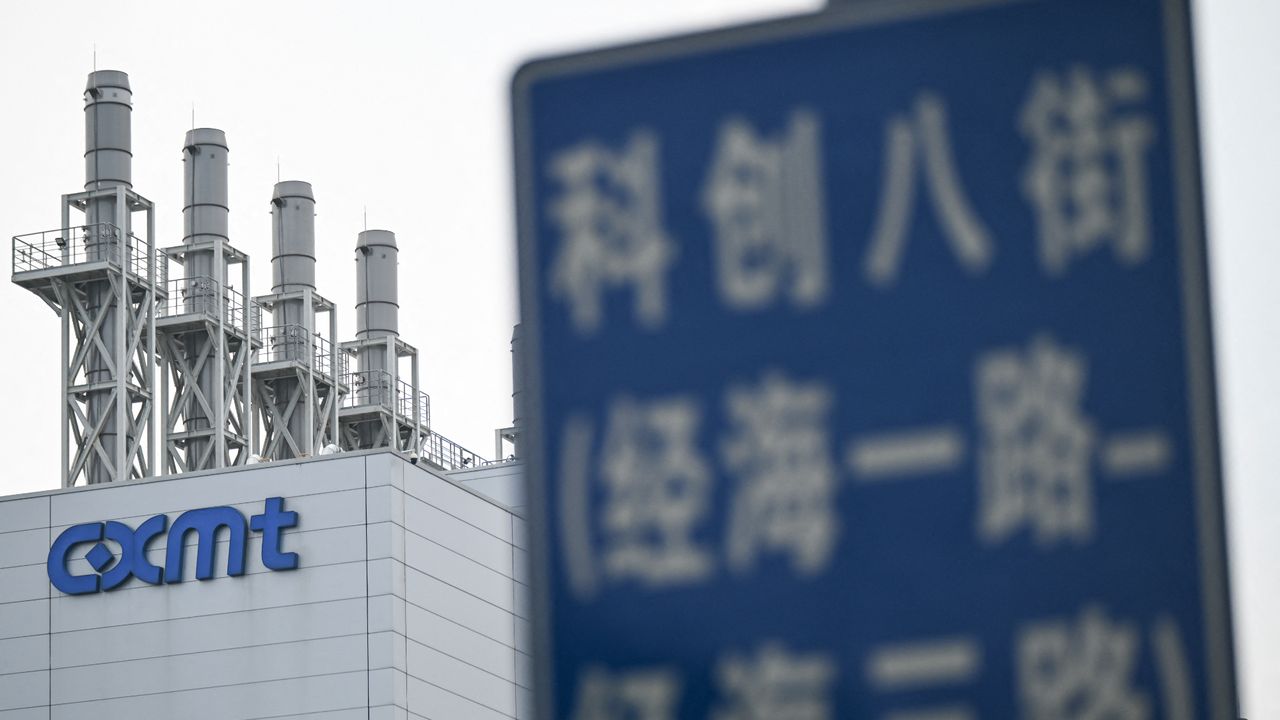
CXMT overtakes Tencent as the most valuable Chinese company in a market-capitalization comparison reported Aug. 13, just 17 days after the memory-chip maker began trading in Shanghai. Bloomberg put CXMT’s value at about $524 billion after its shares fell 1.2% that day, above the roughly $510 billion valuation of Hong Kong-listed Tencent.
The result is a share-price snapshot, not a permanent corporate ranking. It also differs from CXMT’s earlier milestone: on its July 27 debut on Shanghai’s STAR Market, it became the largest China-listed, or onshore-listed, company. Passing Tencent extends that comparison to a Chinese company listed in Hong Kong.
CXMT raised RMB57.92 billion, or $8.6 billion, after setting its IPO price at RMB8.66 a share, CNBC reported. The stock closed its first session at RMB49, a gain of nearly 466%, valuing the company at about RMB3.3 trillion and ahead of Industrial and Commercial Bank of China on the mainland market.
Why did CXMT overtake Tencent?
Independent reports linked the crossover to continued demand from investors for AI-related memory-chip stocks and concern over the immediate cost of Tencent’s AI buildout. CXMT’s own stock declined on Aug. 13, but Tencent’s market value fell further.
Tencent’s second-quarter results, released Aug. 12, showed revenue rose 11% from a year earlier to RMB204.8 billion. Its capital expenditure rose 176% to RMB52.8 billion. Tencent also reported negative free cash flow of RMB13.8 billion, saying capital expenditure, media-content payments and lease payments exceeded cash generated from operations. The company said its operating cash flow included large prepayments for AI-related computing infrastructure.
Those figures do not erase growth in Tencent’s established businesses. Domestic games revenue rose 17% to RMB47.3 billion, while marketing-services revenue increased 22% to RMB43.6 billion, according to the company. The market reaction, however, focused on the scale of investment required to build and run its newer AI products, Bloomberg reported.
What does CXMT make?
CXMT produces DRAM, a form of computer memory that temporarily holds data and instructions for active programs. DRAM appears in devices from smartphones to servers. CXMT’s IPO prospectus said it held 7.67% of the global DRAM market based on fourth-quarter 2025 sales figures, CNBC reported.
That remains a market where Samsung Electronics, SK hynix and Micron are the established leaders. Morningstar said CXMT’s technology still lagged those global competitors. Theodore Shou, chief executive of Yiyi Capital, told CNBC that the limited freely tradable shares at the debut and investor sentiment helped drive the initial surge, and cautioned that unusually strong memory-cycle margins and profitability would normalize over time.
CXMT reported first-quarter operating profit of RMB35.43 billion, compared with an RMB2.83 billion loss a year earlier, CNBC said. Its new market ranking reflects what traders were willing to pay on Aug. 13, not a settled verdict on that growth or on the durability of the memory cycle.
This story draws on original reporting from Tom's Hardware.