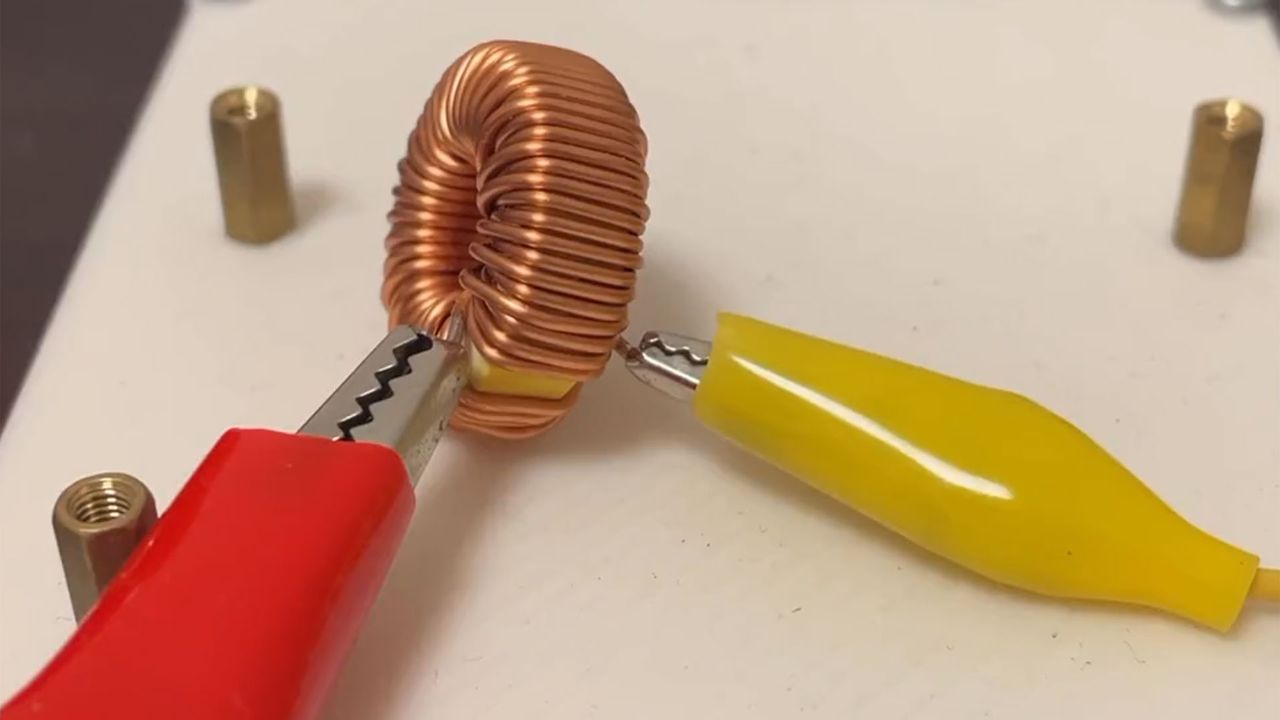
Electrical engineering student Battery Potato has shown a toroidal inductor producing a chip-tune melody through coil whine, the high-pitched noise PC builders usually spend money and patience trying to suppress.
The demonstration, posted in a short video, uses a hand-built coil rather than a graphics card, power supply or SSD. Tom's Hardware reported that Battery Potato studies at Nagaoka University of Technology and appears to be running current through the inductor to make it audibly vibrate.
That is the same basic nuisance behind the coil whine many PC users hear under load. Inductors, and sometimes capacitors, can vibrate when electrical demand changes quickly. If the vibration lands in the audible range, the result is the thin, high-pitched sound that can make an otherwise quiet machine feel cursed.
In gaming PCs, Tom's Hardware said the noise is often noticed when a GPU is pushing very high frame rates. It can also show up during heavy storage activity, such as large file transfers on an SSD. Power supplies and motherboards can also contain noisy coils.
Battery Potato's version flips the usual engineering goal. Product designers generally try to reduce coil whine, especially in consumer hardware that sits on or near a desk. In the video, the coil is the speaker.
How a coil becomes an instrument
The demonstration uses a simple toroidal inductor, a doughnut-shaped coil. Tom's Hardware said the student may have chosen a home-built part because it produced a cleaner sound than ordinary off-the-shelf components. The report also said a modulated current waveform is likely being fed into the coil so the vibration follows the tune.
That wording matters. The video shows a coil making music, but the report does not identify the exact circuit or the melody. The result resembles the square-edged sound of old handheld game music, although Tom's Hardware did not name the tune and cautioned that many sounds played through a coil could take on that character.
For PC owners, the practical takeaway is less cheerful. Coil whine is not usually a cute synth trick when it comes from a graphics card or storage device inside a case. It tends to be most annoying to people who can hear high frequencies clearly, especially if the rest of the system is quiet.
OCCT tried a related trick
The idea of making coil whine musical is not new. Tom's Hardware reported last October that OCCT version 15, a PC stress-testing tool, added a coil whine detection feature with three built-in tunes.
According to the OCCT developers, musical patterns can make coil whine easier for users to pick out, particularly in noisy rooms where a flat high-pitched squeal might blend into fan noise or other electronics.
Battery Potato's demonstration is less diagnostic tool and more bench-top mischief. It still makes a useful point: coil whine is mechanical motion caused by electrical behavior. With the right signal, that unwanted whine can become something close to music.
This story draws on original reporting from Tom's Hardware.