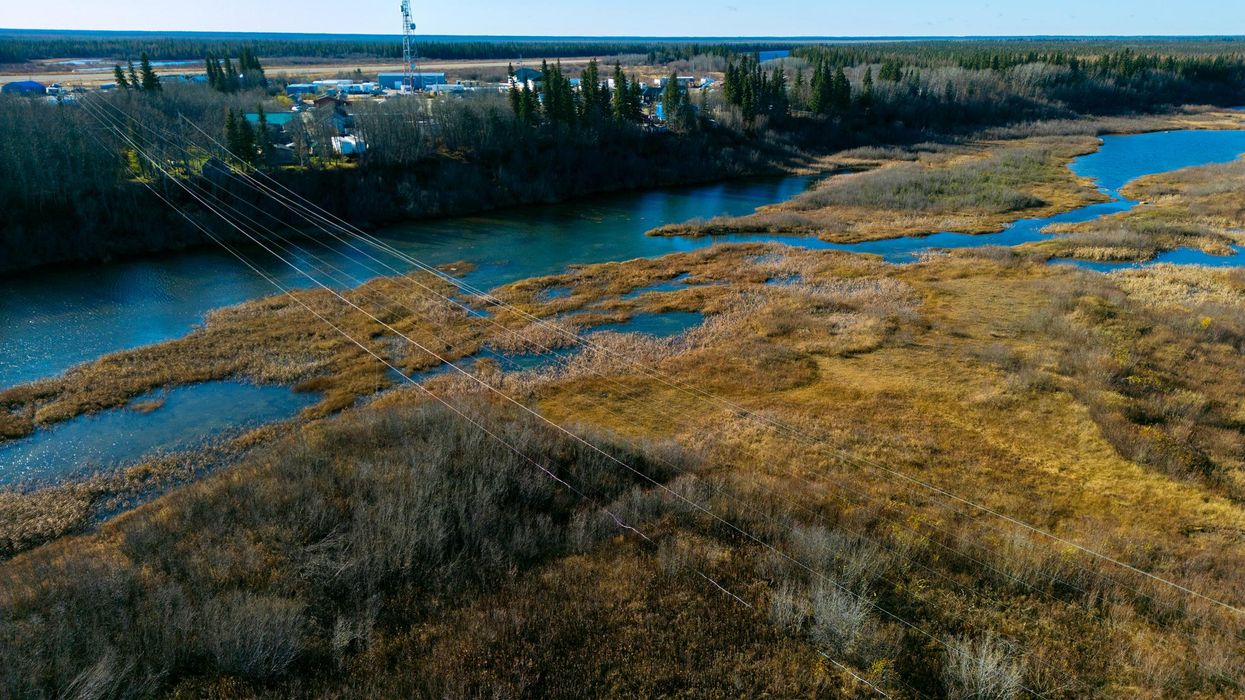
The Fort Albany fiber network built by Western James Bay Telecom Network has given a remote Cree community in northeastern Ontario something large telecom providers did not: a locally owned, hard-wired internet system in a place where roads disappear for most of the year.
WJBTN, a nonprofit owned by Indigenous communities, built what IEEE Spectrum described as Canada’s first fully Indigenous-owned-and-operated fiber-optic network. The system serves Fort Albany First Nation, about 975 kilometers north of Toronto, and other communities along the western shore of James Bay.
For residents, the upgrade was not an abstract broadband milestone. In February 2024, former Fort Albany chief Elizabeth Kataquapit used Facebook to alert the community’s search-and-rescue volunteers after a young man failed to return home and was later found hypothermic on the frozen shore of James Bay. Before the fiber network, the rescue team relied on a small number of handheld radios, according to Kataquapit.
How did Fort Albany build a fiber network?
The backbone started with electricity. In 2008, locally owned Five Nations Energy Inc. ran fiber-optic cable on power poles from Moosonee, 135 kilometers away, to subarctic communities on the James Bay coast. Regional Cree leaders later formed WJBTN to lease that backbone and bring high-speed telecommunications to Moosonee and three Indigenous communities farther north.
The first version was constrained. WJBTN had 1 gigabit per second of total capacity for a population of about 6,000 people. A telecom company, Xittel, used microwave links and local access points to deliver wireless internet to homes, but users complained about delays, unreliable service and tight data caps. Kataquapit called the service a “turtle.” WJBTN finance officer Brian Nakogee said Xittel advertised 10 megabits per second, while speed tests often showed 3 Mb/s for uploads and downloads.
Nakogee joined WJBTN in 2014 and was asked to help plan fiber connections for roughly 1,000 homes and businesses spread across 300 kilometers of coast. The geography made the usual southern Canadian buildout model a bad joke: many supplies and services require a 500-kilometer trip to Timmins, and land travel is possible only for a few winter weeks when frozen tundra can support a temporary road.
With engineer Dirk MacLeod, Nakogee developed a lower-cost plan that upgraded the long-distance backhaul and then connected homes through local fiber infrastructure. Backhaul is the high-capacity link that carries traffic from local networks to the wider internet. WJBTN’s upgraded backbone used coherent optics equipment from Infinera to deliver 100 Gb/s to distribution points in each town, with redundancy if a fiber line failed.
For the last stretch into homes, the engineers chose GPON, or Gigabit Passive Optical Network. Instead of running a dedicated fiber all the way from a central office to every customer, GPON uses passive optical splitters to share capacity among many homes without powered equipment at every junction. In remote communities, fewer powered field boxes means fewer things to repair in places where repair crews and spare parts are hard to get.
The project was estimated at CA $4.7 million, or CA $4,700 per household. The Fiber Broadband Association estimates urban U.S. fiber-to-the-home construction at the equivalent of about CA $1,400 to CA $1,800 per household, underscoring how expensive remote builds become before anyone touches a strand of glass.
Who built and maintains the network?
Fonex Data Systems, based in Montreal, helped upgrade the backhaul. Contractor Tasso Varvarikos tested the optical system at Infinera’s laboratory in Stockholm before the equipment was flown north in 2019. By May of that year, anchor customers including hospitals, schools and air-navigation systems were moved onto the 100-Gb/s backbone.
The household rollout hit a hard stop when Dirk MacLeod died of a heart attack in July 2019. Then COVID restrictions blocked outside crews from entering the communities. WJBTN shifted toward local labor. Peyton Reuben, a Fort Albany computer systems graduate, learned to splice fiber and helped build an aerial network from utility poles to neighborhood boxes and homes.
That local capacity is central to WJBTN’s model. The network keeps infrastructure ownership and service revenue inside the First Nations communities it serves, rather than leaving them dependent on outside carriers or satellite providers. For Fort Albany, the result is faster internet, but also a rarer thing in remote telecom: control over the wires.
This story draws on original reporting from IEEE Spectrum.