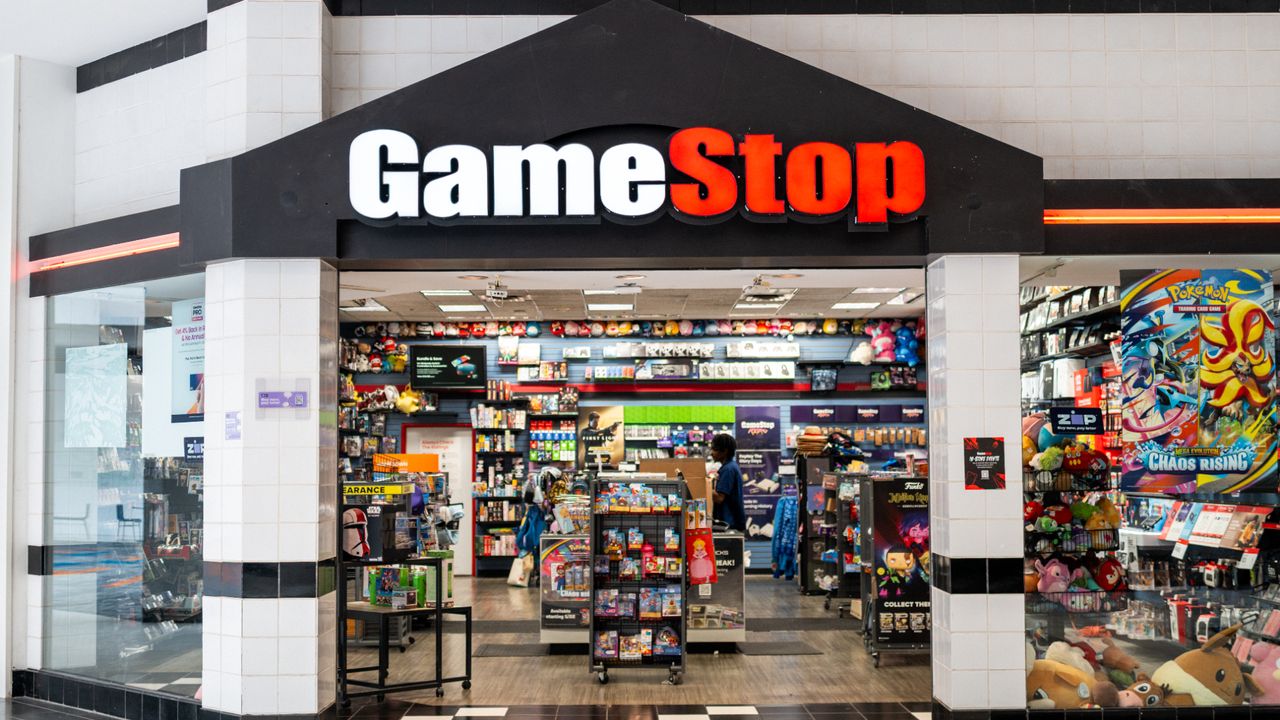
GameStop CEO Ryan Cohen said Sony’s plan to stop making physical game discs in 2028 would have no meaningful effect on the retailer, because GameStop now makes far more money from hardware and collectibles than from game software.
Cohen made the comments Thursday in a BloombergTech interview while answering a question about console makers moving away from disc drives and future games shifting to digital-only launches. That trend cuts straight at the old GameStop model: buy a boxed game, trade it in, sell it again, repeat until the disc looks like it survived a lawn mower.
Cohen’s answer was blunt. He said software “doesn’t matter at all” to GameStop now, adding that it represents less than 12% of the company’s business and that collectibles account for more than half. He called Sony’s disc decision “totally irrelevant.”
GameStop’s own FY2025 figures tell a messier version of the same story. The company reported $3.63 billion in total net sales for the fiscal year. Its software category, which includes physical discs, cartridges and digital download codes under GameStop’s classification, brought in $729.3 million. That was 20.1% of total net sales, higher than Cohen’s “less than 12%” claim.
The direction of travel, however, backs his broader point. Software was GameStop’s smallest listed product category in FY2025, and it fell hard from the prior year. Hardware and accessories remained the largest segment, while collectibles grew sharply.
- Hardware and accessories: $1.84 billion in FY2025 net sales, or 50.7% of the total, down 12.3% from FY2024.
- Collectibles: $1.06 billion, or 29.2% of the total, up 47.7% from FY2024.
- Software: $729.3 million, or 20.1% of the total, down 27.5% from FY2024.
GameStop’s hardware and accessories bucket includes new and pre-owned hardware, accessories, bundles, interactive figures, strategy guides and mobile or consumer electronics. Its collectibles category covers apparel, toys, trading cards, gadgets, other pop-culture products and submission services tied to authentication and grading of trading cards.
The Sony disc issue came up during a broader discussion of Cohen’s attempt to buy eBay. According to the account discussed in the interview, GameStop began buying eBay stock on February 4 and sent eBay an unsolicited, non-binding acquisition proposal on May 3.
The offer was $125 per share, split evenly between cash and GameStop stock, valuing eBay at about $56 billion. GameStop’s own market capitalization was around $10 billion. eBay’s board rejected the proposal on May 12. Chairman Paul Pressler wrote that the board found it “neither credible nor attractive.”
Cohen has said he plans to take the offer directly to eBay shareholders. That leaves GameStop trying to pitch itself as something other than a mall-era game store at the same time its CEO is shrugging off one of the clearest signs that boxed console games are sliding further into the past.
This story draws on original reporting from Tom's Hardware.