REI’s 2026 Co-op camping and hiking lineup puts most of its effort into the unglamorous parts of sleeping outside: poles that match, pads that inflate without a wrestling match, and bags that vent before the tent turns into a damp nylon terrarium.
WIRED said its editors spent months testing many of the items and selected a short list of standouts from REI’s new and updated gear, along with several camping products sold through REI. WIRED also disclosed that its product coverage is independently selected, while the publication may earn compensation from retailer links or purchases.
The tent is built for families, not backpacking minimalists
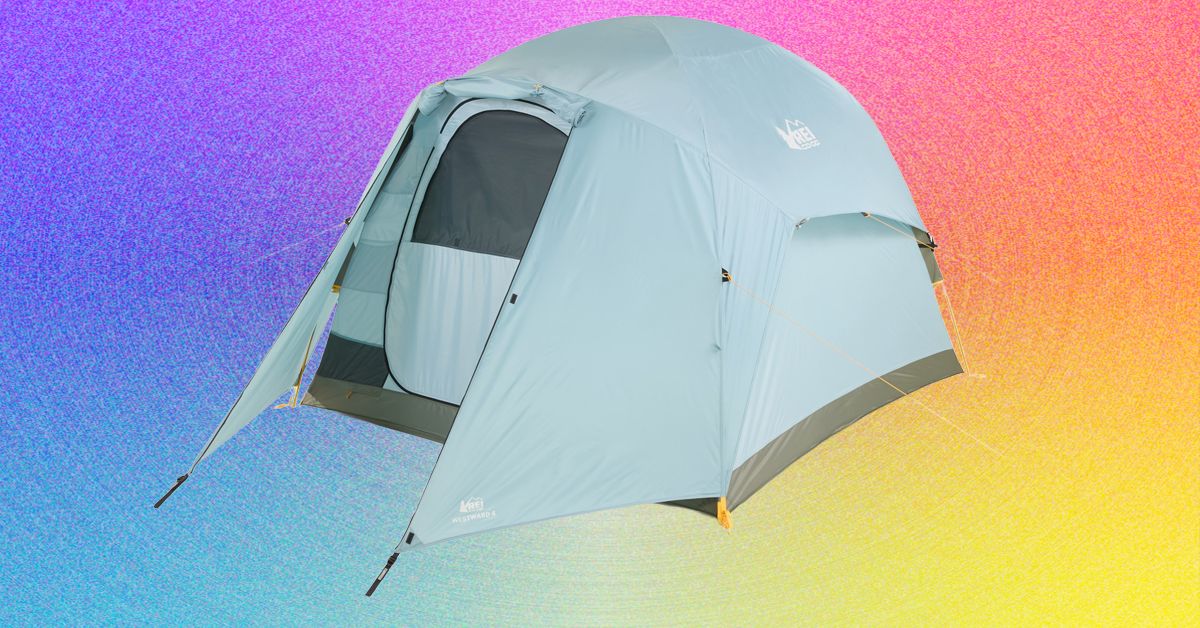
The REI Co-op Westward Tent is the anchor product in the roundup. The four-person version starts at $449, while the six-person model is listed at $549. According to WIRED’s testing, the Westward 6 uses a cross-pole structure and color-coded poles, and a practiced user can pitch it in about 10 minutes.
The six-person label needs the usual tent-industry translation. WIRED said it comfortably handled two adults, three children and a dog, while six adults would be tight. The tent has a 77-inch peak height, two doors with windows, bug-proof mesh on the walls, doors and windows, storage pockets, a central lantern clip and a large front vestibule for muddy gear. WIRED cautioned that campers expecting bad weather should take the extra time to stake the tent and the rainfly guylines.
Sleep gear gets the most practical upgrades
REI’s Westward Dreamer Self-Inflating Bed, priced from $199, is a renamed and updated version of the former Camp Dreamer XL, according to WIRED. The pad now includes a repair kit and an improved valve system for adjusting firmness. WIRED compared its 6.7 R-value with the Therm-a-Rest MondoKing’s 7 rating and said the REI pad is $60 cheaper, making it a stronger summer buy in that review.
The pad ships with a duffel-style stuff sack and an inflation sack. WIRED said about four full inflation-sack loads get it firm enough to start, after which users can bleed air to taste. That is the correct amount of fiddling for a sleeping pad, which is to say: still fiddling, but less of it.
For colder car-camping nights, WIRED pointed to the REI Co-op Siesta Hooded 20, priced from $149. It carries a 20-degree Fahrenheit rating, has a rectangular cut, uses recycled polyester and includes a hood. A full-length zipper lets it open into a quilt, while a second partial zipper adds ventilation.
The lighter REI Co-op Campwell 30, priced from $100, is positioned for summer trips. WIRED said it can unzip into a double quilt and packs small enough to ease trunk-space concerns.
Coolers, sun shirts and power stations round out the kit
WIRED’s non-REI picks include the $475 Yeti Roadie 60 wheeled cooler. The reason is basic physics: WIRED said the Roadie 60 weighs 68 pounds when packed with ice before food goes in. Wheels are not decoration at that point. The Roadie 60, 48 and 32 share a long-side handle design and include a basket to keep dry goods out of the ice.
For sun protection, WIRED selected the $60 REI Co-op Sahara Shade Hoodie in men’s and women’s versions. The hoodie uses REI’s ShadeFactor50 UPF50+ fabric, with stretch, thumbholes and a hood. The newer styles cited by WIRED include redesigned thumbholes and a ponytail opening.
For campers working from the road, WIRED highlighted the $1,500 Goal Zero Yeti 1500 portable power station. The 2026 version includes a battery, charge controller, 2,000-watt inverter and automatic power switching when shore power is available. WIRED framed it as a power system for devices such as laptops, portable fridges, water pumps and Starlink equipment.
The list also includes the $499 Co-op Cycles Rev 24 Kids Mountain Bike, though WIRED provided fewer technical details for that model in the excerpted roundup than for the camping shelter and sleep systems.
This story draws on original reporting from WIRED.