Gaming SSD capacity is the more useful upgrade target for most PC players than chasing the highest PCIe 5.0 headline speed, especially while storage prices are behaving badly. Current retail checks show older PCIe 3.0 drives can cost more than newer PCIe 4.0 or PCIe 5.0 models, which breaks the usual “older is cheaper” shopping logic.
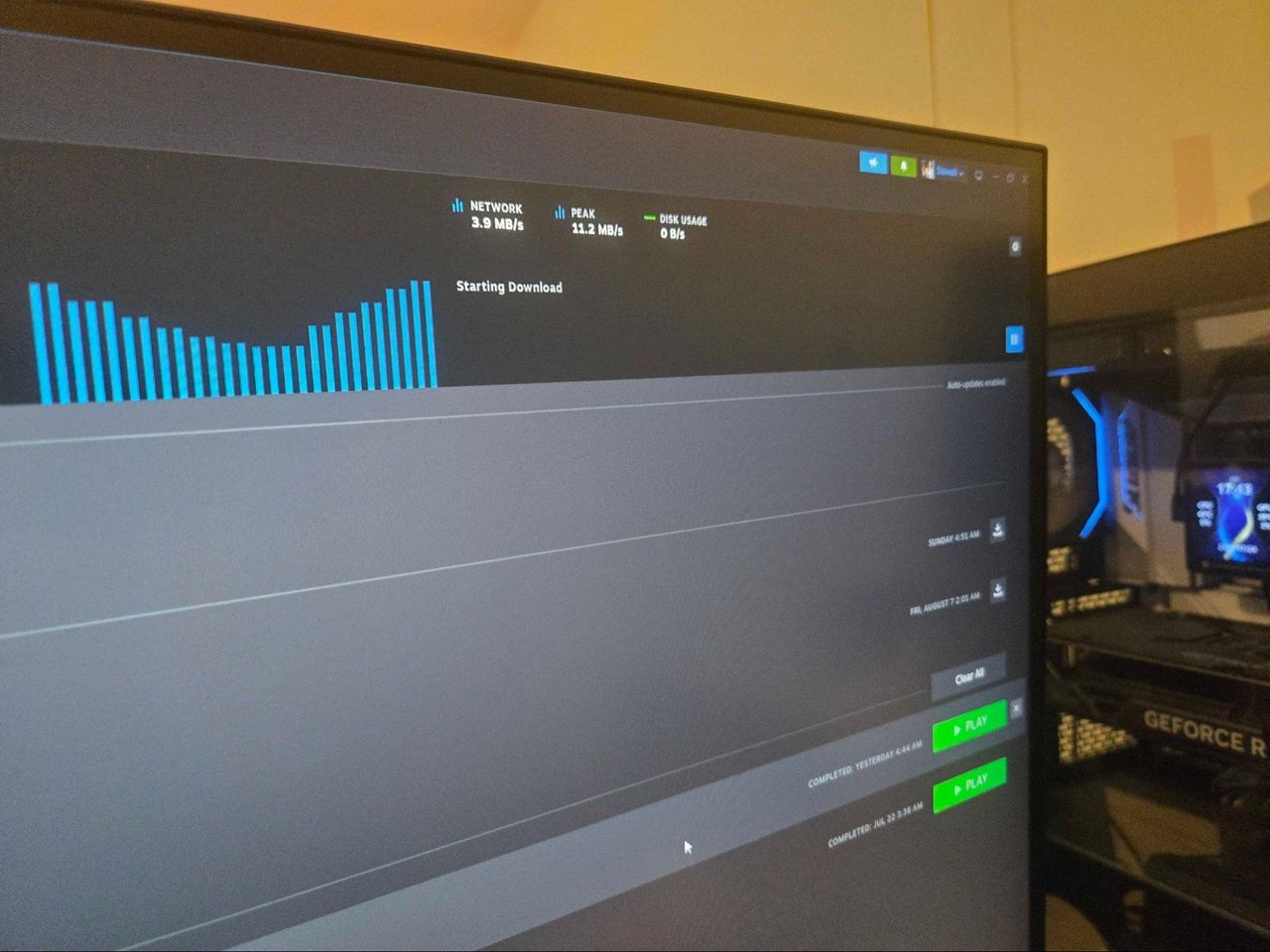
The practical reason is dull and important: modern games are large. Some recent titles can need 150GB or more, and a copy of Ark: Survival Evolved with downloadable content can fill a 512GB SSD by itself. For players who want several games installed at once, drive size will be felt more often than a benchmark number on the box.
A 1TB SSD is the minimum sensible recommendation in the analysis. Larger drives make more sense for players with slower internet connections or data limits, because deleting and reinstalling games becomes a chore. Players with very fast, unmetered connections can treat storage more casually, although repeated downloading and writing still counts against SSD endurance.
How much SSD speed do you need for gaming?
For pure gaming, PCIe 3.0 through PCIe 5.0 SSDs can all work well. Peak read and write speeds usually have little effect on frame rates, except in games built to use DirectStorage-style asset loading.
The GPU, VRAM, CPU and system memory do most of the frame rendering work. The SSD’s job is mainly to move assets from storage into RAM or VRAM. Once those assets are loaded, the drive spends much of active gameplay waiting, not driving the frame rate counter.
That does not make the SSD irrelevant. In large open-world games or levels that pull in textures, models and shaders while the player moves, random read performance and IOPS can matter more than the sequential speeds vendors like to print in large type. Write speed matters more for installing, patching, copying game files and recording video in the background with tools such as SteelSeries GG, Xbox Game Bar or OBS.
Anyone still running games from a hard disk drive has a clearer upgrade path. A typical HDD reads around 100MB/s to 150MB/s, while current PCIe 5.0 SSDs can advertise peak reads around 14,500MB/s. Even if games do not need that top speed, moving from a hard drive to an SSD can cut a level load from around 45 seconds to a few seconds. For the broader tradeoff, see Kernel’s explainer on SSD vs HDD storage choices.
Current PCIe SSD prices are messy
The pricing picture is the annoying part. A drive that sold for about $80 a year ago may now be listed around $250, according to the current market check. That makes generation labels less useful than the actual price and capacity in front of you.
- PCIe 3.0: Samsung 970 EVO Plus listings showed $339.99 for 1TB and $441.99 for 2TB at Newegg.
- PCIe 4.0: WD Black SN850X listings showed $229.99 for 1TB, $349.99 for 2TB, $674.99 for 4TB and $1,679.00 for 8TB at Best Buy.
- PCIe 4.0: Samsung 990 Pro listings showed $239.99 for 1TB and $389.99 for 2TB at B&H Photo and Best Buy listings.
- PCIe 5.0: Samsung 9100 Pro listings showed $249.99 for 1TB, $399.99 for 2TB and $999.99 for 4TB through Walmart and Best Buy listings.
- PCIe 5.0: Crucial T705 listings showed $301.19 for 1TB, $389.99 for 2TB and $745.49 for 4TB at Best Buy.
The blunt takeaway: if a 4TB PCIe 4.0 SSD costs the same as a 2TB PCIe 5.0 SSD, most gamers will get more usable value from the extra capacity. PCIe 5.0 speed becomes easier to justify for workloads beyond gaming, where drive features such as DRAM, HMB and sustained transfer rates start to matter more.
This story draws on original reporting from Tom's Hardware.