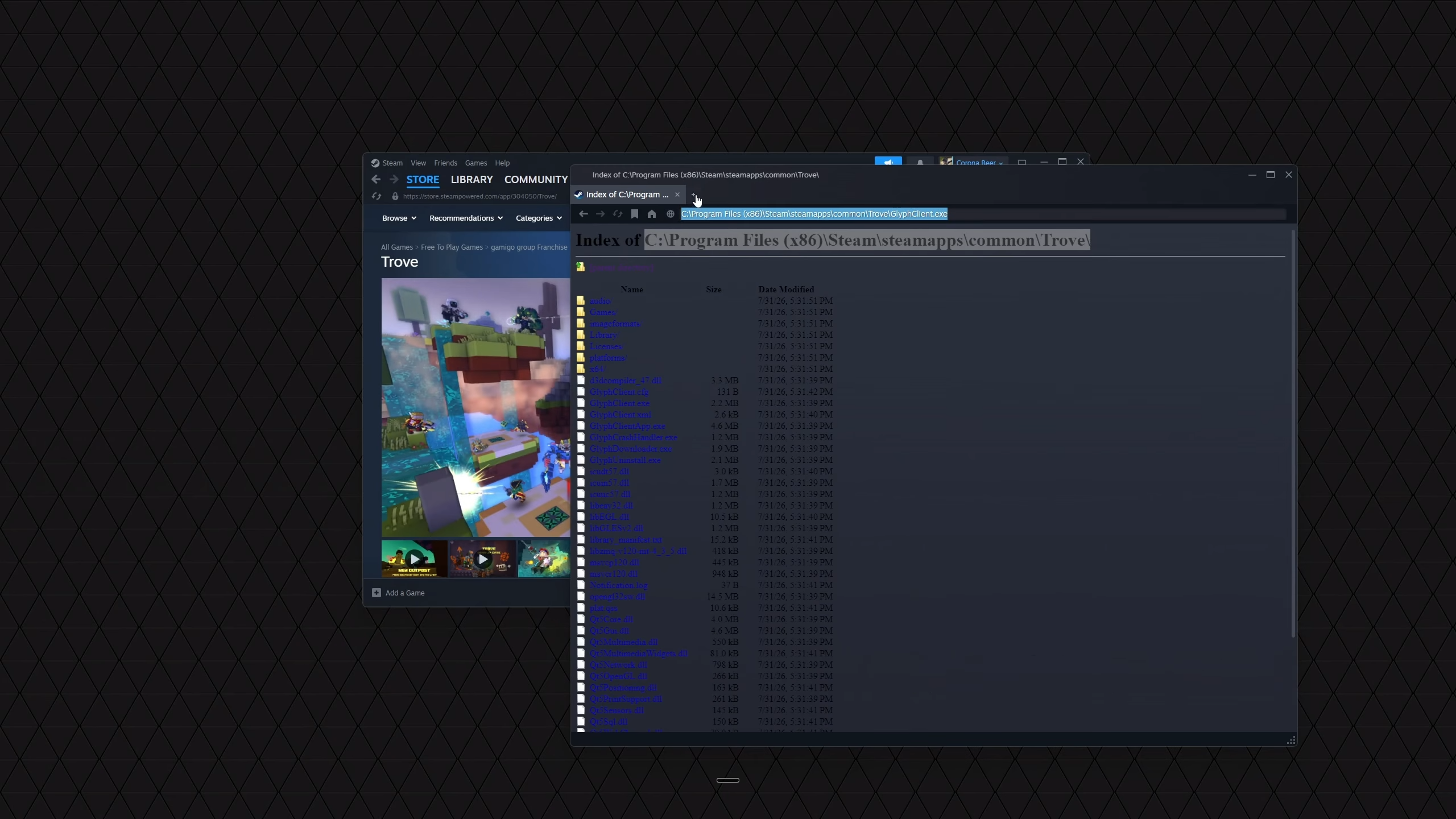
A reported GeForce NOW Windows desktop exploit gave modders access to the operating system behind certain paid cloud-gaming sessions, according to demonstrations attributed to Zortos and dpadGuy. The reports matter because the service is sold for streaming games, while the demonstration showed non-game software running inside the hosted Windows environment.
Tom’s Hardware and HWBusters said the pair used a workaround associated with Trove, an Install-to-Play title, to make a session open Windows rather than the selected game. The reporting describes a file-substitution route, but the technical details are not being reproduced here because they would provide instructions for bypassing the platform’s controls.
The reported result was a usable desktop with a taskbar and File Explorer, not a separate cloud-PC product. HWBusters said the activity appeared to remain within the user’s own streamed session and reported no indication that other customers’ data or systems were exposed. That is a useful boundary, though it is reporting rather than an independent security assessment.
Does the GeForce NOW Windows desktop exploit still work?
There is no clear answer in the available evidence. Tom’s Hardware reported that Zortos said the workaround still worked for him, while users separately reported sessions ending when File Explorer appeared and downloads being blocked. HWBusters also cited user claims that the route may have been closed or that Trove had disappeared from their GeForce NOW libraries.
Nvidia has not confirmed the reported desktop access, identified affected regions or membership types, or stated whether it has fixed the issue in the material reviewed for this report. The demonstrations therefore establish that modders claimed to have done this in some paid sessions, not that it currently works broadly or reliably.
What did the AI demonstration show?
Zortos posted a demonstration of LM Studio running Gemma 4 31B on an Ultimate-tier instance at about 41 tokens per second, according to HWBusters and Tom’s Hardware. That figure is a claim from the demonstrator, not an Nvidia benchmark or an independently replicated result.
Tom’s Hardware also reported that the instance exposed 48GB of VRAM through an RTX Pro 6000D. Nvidia’s official GeForce NOW page does not list either that GPU or 48GB of VRAM for Ultimate. Nvidia advertises Ultimate as offering GeForce RTX 5080 performance for game streaming, with sessions of up to eight hours, up to 5K resolution and up to 360 frames per second.
Those session limits make the demonstration poor evidence for an always-on inference service. A model can run during a session, based on the reports, but Nvidia’s published product is designed to connect supported game libraries and stream games, including Install-to-Play titles. It is not advertised as a general-purpose Windows machine for local AI workloads.
What does this mean for subscribers?
People considering the workaround should treat it as unstable and potentially short-lived. Nvidia says memberships are subject to its Terms of Use and Membership Terms. Both Tom’s Hardware and HWBusters characterized the activity as outside those rules, but the relevant terms language and any Nvidia enforcement decision were not included in the available material.
The more immediate point is that a polished game launcher still sits atop a remote Windows system. Reports suggest the boundary between the supported game and that underlying system was weaker than intended in at least some sessions. Whether Nvidia has now closed that opening remains unconfirmed.
This story draws on original reporting from Tom's Hardware.