Georgia Power eminent domain concerns have moved from utility planning maps to people’s living rooms. Fortune reports that Georgia’s largest electric utility is acquiring 30 residential properties, through sales or eminent domain, for a grid project connecting the Ashley Park Substation to Plant Wansley.
The planned transmission stretch runs about 35 miles through Fayette, Heard, Fulton and Coweta counties, according to Fortune. Plant Wansley is being upgraded, and the link to Ashley Park is part of a broader power-grid expansion. For the homeowners in the corridor, the mechanism is blunt: the properties in the way have to go.
One of those homes belongs to the family of Ansley Brown, who described the situation in posts on Instagram. Brown said her childhood home is in the path of the power-line expansion and said Georgia Power planned to bulldoze the property. She also claimed the project is being driven by demand from data centers.
Why is Georgia Power using eminent domain?
Fortune reports the line is meant to connect the Ashley Park Substation with Plant Wansley, rather than run directly from a plant into a data center. Eminent domain is the legal process that can allow property to be taken for certain infrastructure projects when a sale is not agreed, with compensation handled through negotiation or legal proceedings.
Brown said her family contacted Rep. Brian Jack, a Georgia Republican, and that his office sent people to review the situation and helped connect the family with Georgia Power. Brown later said the family had reached a settlement. Georgia Power told Fortune that the family agreed to settle for an amount that was not disclosed.
The settlement closes one family’s dispute, at least financially, but it does not answer the bigger question hovering over the project: who pays the physical and political cost of building enough grid capacity for the next wave of large power users.
What does this have to do with data centers?
Brown tied the line expansion to data centers in her Instagram posts. The reported route itself connects utility infrastructure, not a dedicated plant-to-data-center feed. Still, the suspicion is not coming out of nowhere. AI data centers are drawing more scrutiny because they need large, steady supplies of electricity, and those loads often require transmission upgrades long before any server starts answering prompts.
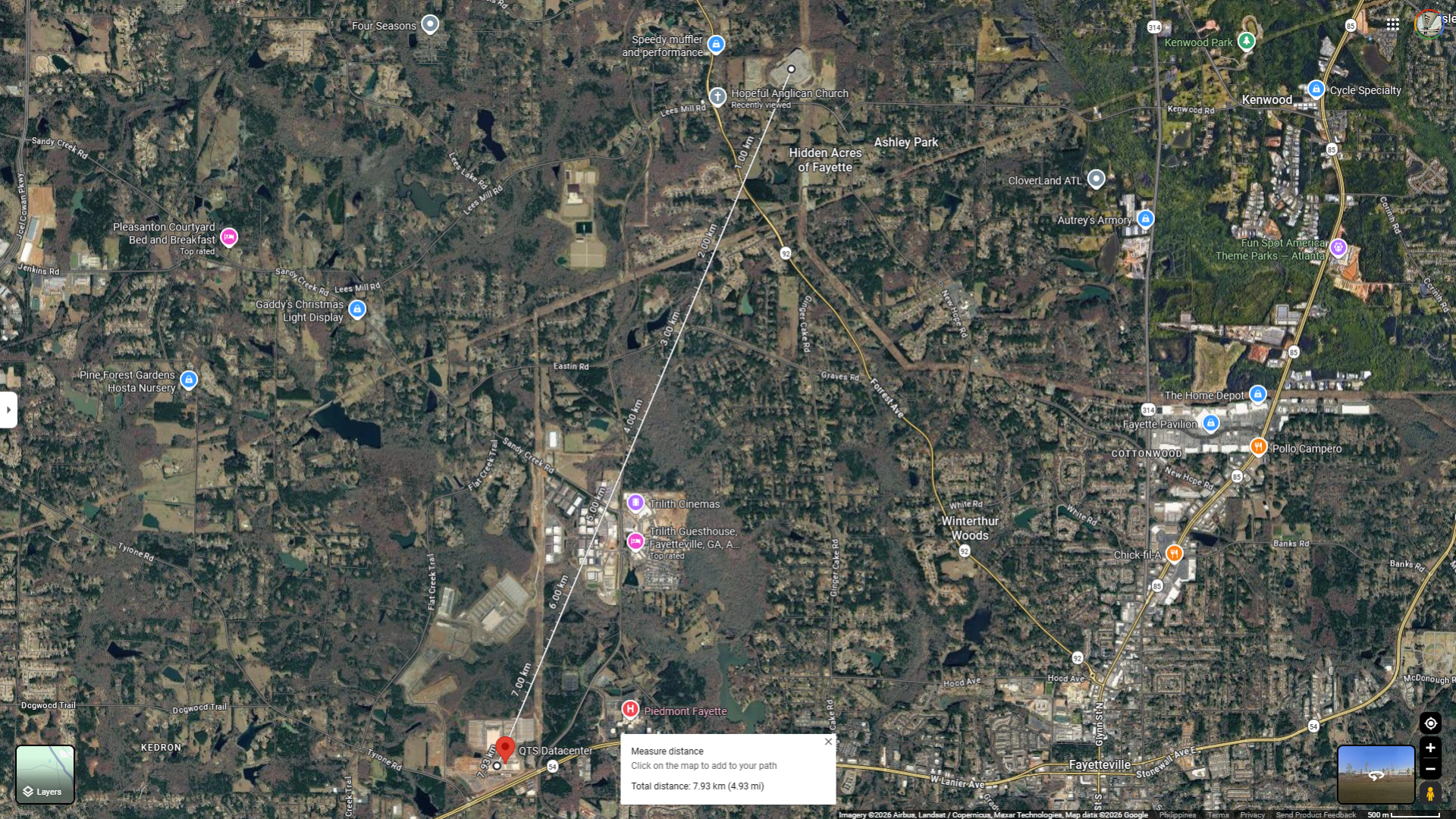
The local geography adds fuel. A data center described as an AI facility sits less than five miles southwest of the substation, and it has been accused of using 29 million gallons of water. That does not prove Georgia Power’s 35-mile line exists for that site. It does explain why residents hearing “grid upgrade” may also hear “data center bill coming due.”
The fight in Georgia fits a wider pattern. Utilities and power providers are spending heavily on grid upgrades as data-center demand rises. Those costs can land on ordinary ratepayers unless regulators or lawmakers assign more of the burden to the large customers creating the new load.
President Donald Trump has promoted AI data-center development and expanded a “ratepayer protection pledge” meant to address electricity-cost concerns, according to reports cited around the issue. Oregon has gone further with a rule affecting large power users: industries using 20 megawatts or more face higher bills, while residential and commercial customers receive a smaller reduction.
For the Brown family, the abstract policy argument became a property line. For Georgia Power, the project is part of a grid buildout. For everyone else watching, it is another early test of whether the AI boom gets powered by new infrastructure, old eminent-domain law, and homeowners who never asked to be part of the load forecast.
This story draws on original reporting from Tom's Hardware.