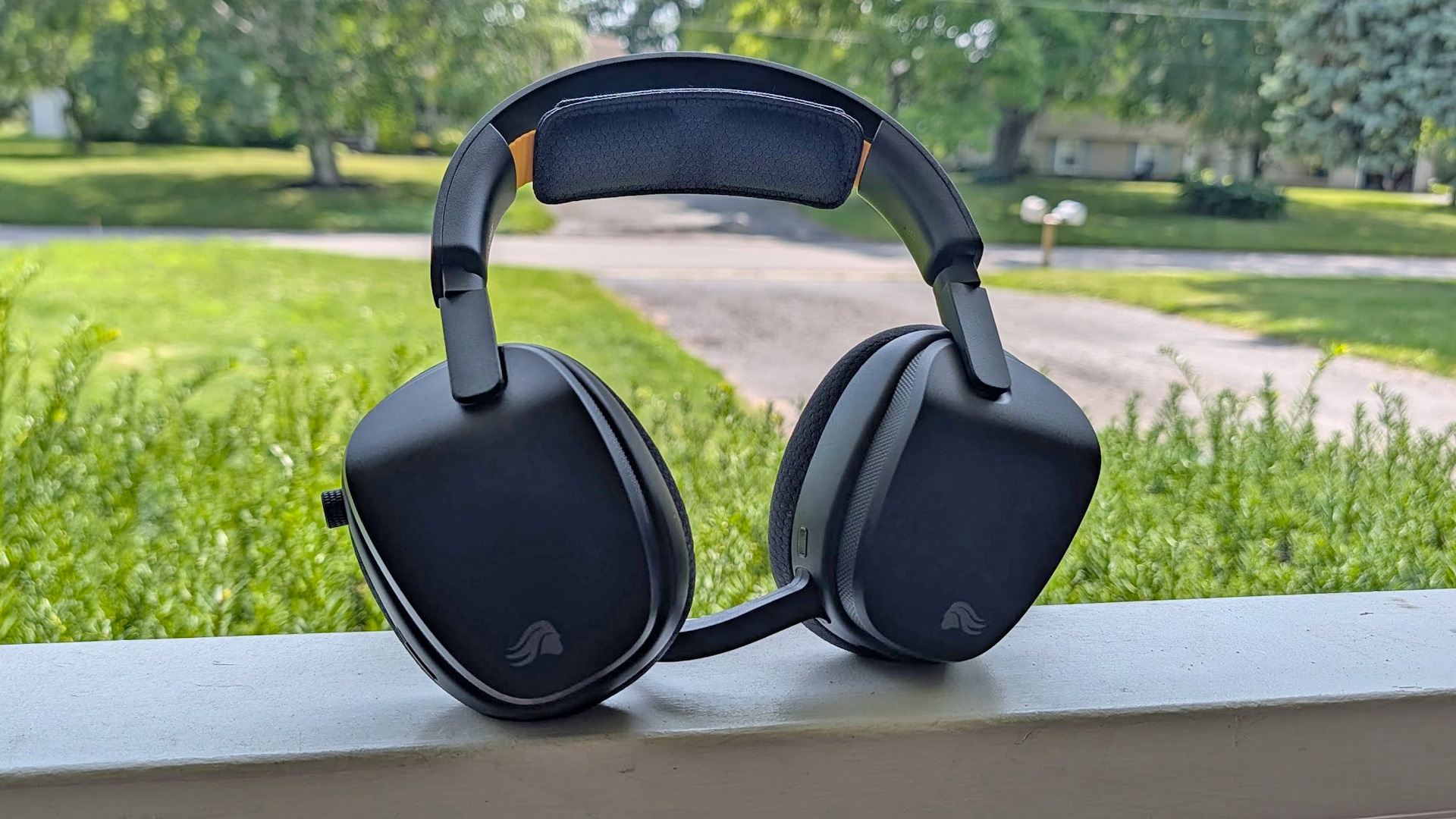
The Glorious Wireless InfinitePlay review evidence points to a headset built around one useful refusal: it should not drop audio when its removable battery runs out. Glorious’ GHS Wireless InfinitePlay, listed at $229.99 in Tom’s Hardware’s July 2026 review, pairs two swappable packs with an internal backup battery intended to keep the connection alive during the physical swap. That is a practical distinction for people who spend long sessions at a PC and dislike a cable appearing at the worst possible time.
This is a buying analysis, not Kernel’s own bench test. The available hands-on reviews broadly agree that comfort and the power design are the appeal. They also identify less glamorous compromises: no active noise cancellation, sound leakage, earcups that may move too freely, and a price that is not an automatic win.
How does the InfinitePlay battery system work?
The headset ships with two removable batteries and a base station that charges the spare, according to Tom’s Hardware. Each pack is rated for up to 85 hours, while the non-removable internal reserve is rated for about three hours. Those are stated ratings rather than independently verified endurance figures.
When one pack is depleted, the user ejects it from the right earcup and inserts the charged spare. The internal cell is meant to cover that interruption, so audio and voice chat can continue. The dock also holds a removable USB-C dongle, allowing a lower-profile wireless setup away from the base station.
There are already gaming headsets with replaceable batteries. The relevant feature here is the backup cell bridging the changeover, rather than hot-swapping alone.
What else does the Glorious GHS Wireless InfinitePlay offer?
The reviewed specifications agree on 40 mm drivers, an over-ear closed-back design, a detachable omnidirectional microphone, USB-C wired use, 2.4 GHz wireless and Bluetooth. Weight is around 360 grams with the battery and microphone installed. One detail remains muddy: Tom’s Hardware lists Bluetooth 5.3, while Basic Tutorials lists Bluetooth 5.4. Buyers who need a particular Bluetooth revision should confirm it with Glorious before treating either listing as definitive.
Tom’s Hardware found source switching between Bluetooth and 2.4 GHz quick and reliable, but reported that the headset cannot play both inputs at once. That rules it out for anyone expecting game audio from a PC and a phone call to mix simultaneously.
Comfort is strong, isolation is not
Tom’s Hardware reported no head pain during two weeks of use and praised the breathable fabric-trimmed cushions, including their accommodation for glasses. The Techne’s reviewer also described the headset as notably comfortable, while disclosing Amazon affiliate links in the video description. Both impressions are personal testing results, not a fit guarantee.
Tom’s Hardware also reported meaningful sound entering and leaving the fabric cushions, and no ANC. That is an immediate trade-off for shared rooms, noisy homes or anyone who wants a headset to keep their game and their surroundings from bleeding into each other.
Build perception is less flattering. Tom’s Hardware said the plastic chassis and loose earcup yokes did not feel commensurate with a $230 product, while The Techne found the plastic construction solid but also flagged light earcup movement. PC Gamer’s review headline likewise praised the battery arrangement while expressing reservations about the price.
Who should buy it?
- Buy it if: avoiding a battery-related audio cutoff is worth paying for, and you value breathable, comfortable cushions.
- Skip it if: you need ANC, stronger passive isolation, simultaneous Bluetooth and 2.4 GHz playback, or a more premium-feeling chassis.
The InfinitePlay’s value rests on whether its handoff battery is a real problem-solver in your routine. If it is, the mechanism is unusually well targeted. If it is not, the headset’s isolation and construction complaints become harder to excuse at this price.
This story draws on original reporting from Tom's Hardware.