Tom Lynch says he owns the “original engineering copy” of an Intel 8080 Rubylith mask and is looking for someone to restore it. In an August 3 post, Lynch asked for recommendations for the Intel 8080 Rubylith restoration project. The object may be a striking record of how processors were laid out before chip design became a screen full of software tools. Its authenticity, condition and complete ownership history have not been independently established in the available reporting.
Lynch followed up by praising the person he said originally acquired the object and linking to Internet Hall of Fame inductee Dan Lynch’s biography. That supplies a provenance lead, not a documented chain of custody. No museum, archival institution or qualified conservator is identified in the reporting as having examined the sheet or recommended a treatment.
What is the Intel 8080 Rubylith restoration request about?
Rubylith was a peelable red adhesive film used in graphic arts and early chip design. Engineers cut shapes from it to control which areas would be exposed during photolithography, the light-driven patterning stage used in semiconductor fabrication. Before a design went to tape-out, the working material could accumulate pen marks, tape and overlays as engineers revised it, according to Tom’s Hardware.
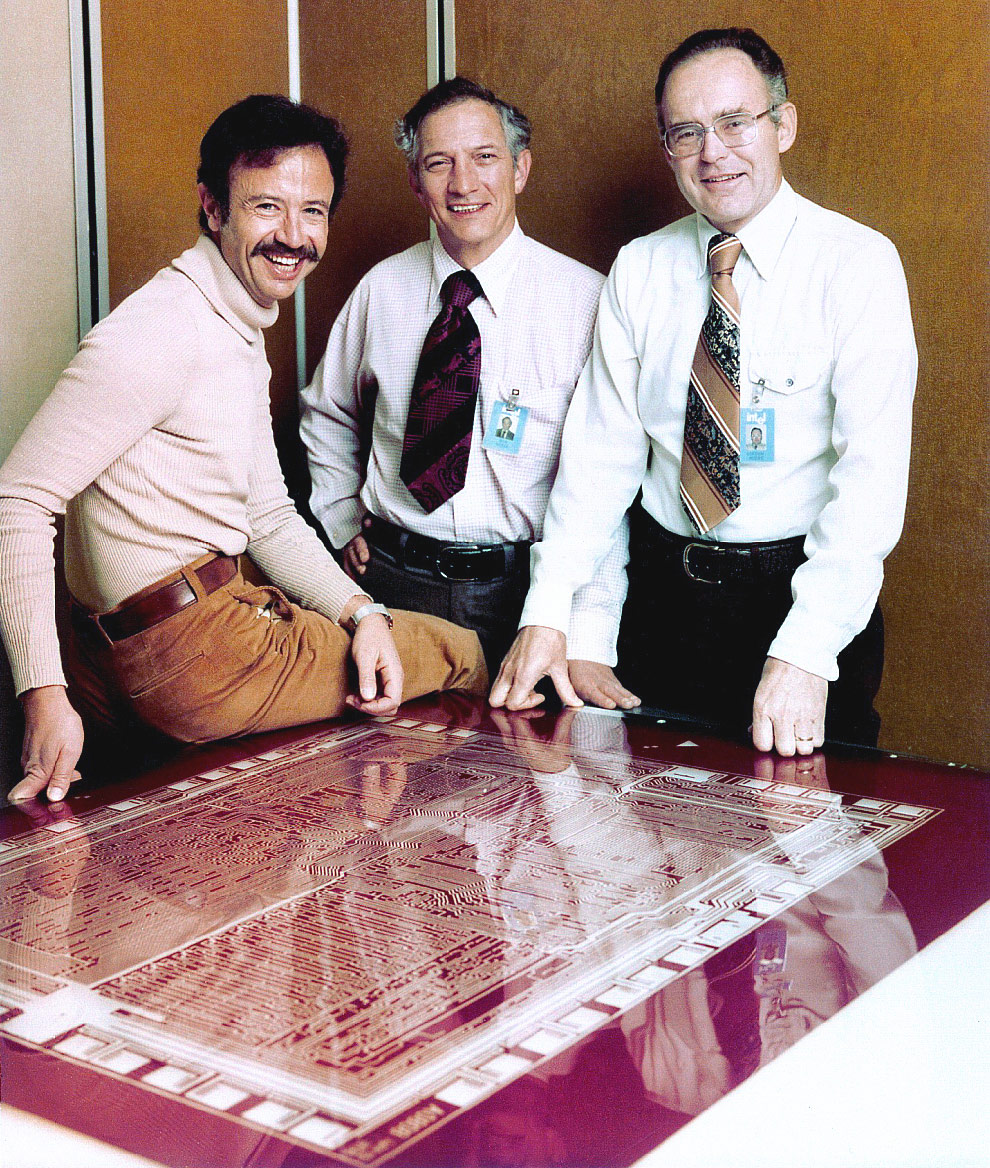
The photograph shared with Lynch’s request shows a framed, human-scale layout. Tom’s Hardware reported that an 8080 layout of this kind was manually drafted and was likely about 100 times the scale of the eventual die. The publication estimated that the roughly 20-by-16-inch sheet maps about 5,000 transistors, wiring traces and related features. Those are descriptions and estimates reported for this type of layout, rather than verified measurements or an authentication of Lynch’s particular artifact.
The distinction is not pedantic. A frame, some red film and a plausible-looking grid do not settle whether an item is an original engineering copy, which production stage it represents, or how it reached its current owner. The reporting includes no conservation assessment, material analysis or full documentation trail.
Why does the Intel 8080 matter?
Intel introduced the 8080 in 1974. The company identifies Federico Faggin as its lead designer and describes the processor as an 8-bit, general-purpose chip. Intel says it could execute 290,000 operations per second, had a 40-pin package that made it easier to connect with other components than the 8008’s 18-pin design, and combined functions that earlier Intel processors required supporting chips to handle.
The processor launched with a maximum clock speed of 2 MHz, according to Intel. That is the tiny clock rate represented by a layout dense enough to need thousands of transistors and carefully routed connections, all drafted by hand before they became structures on silicon.
Intel says the 8080 powered the MITS Altair 8800, an early personal computer sold for $439, compared with $30,000 commercial computers cited in its history. The company also says the 8080 directly inspired x86. Those claims explain the interest in the sheet, while leaving the essential unanswered question intact: whether this framed Rubylith is the original Lynch says it is.
This story draws on original reporting from Tom's Hardware.