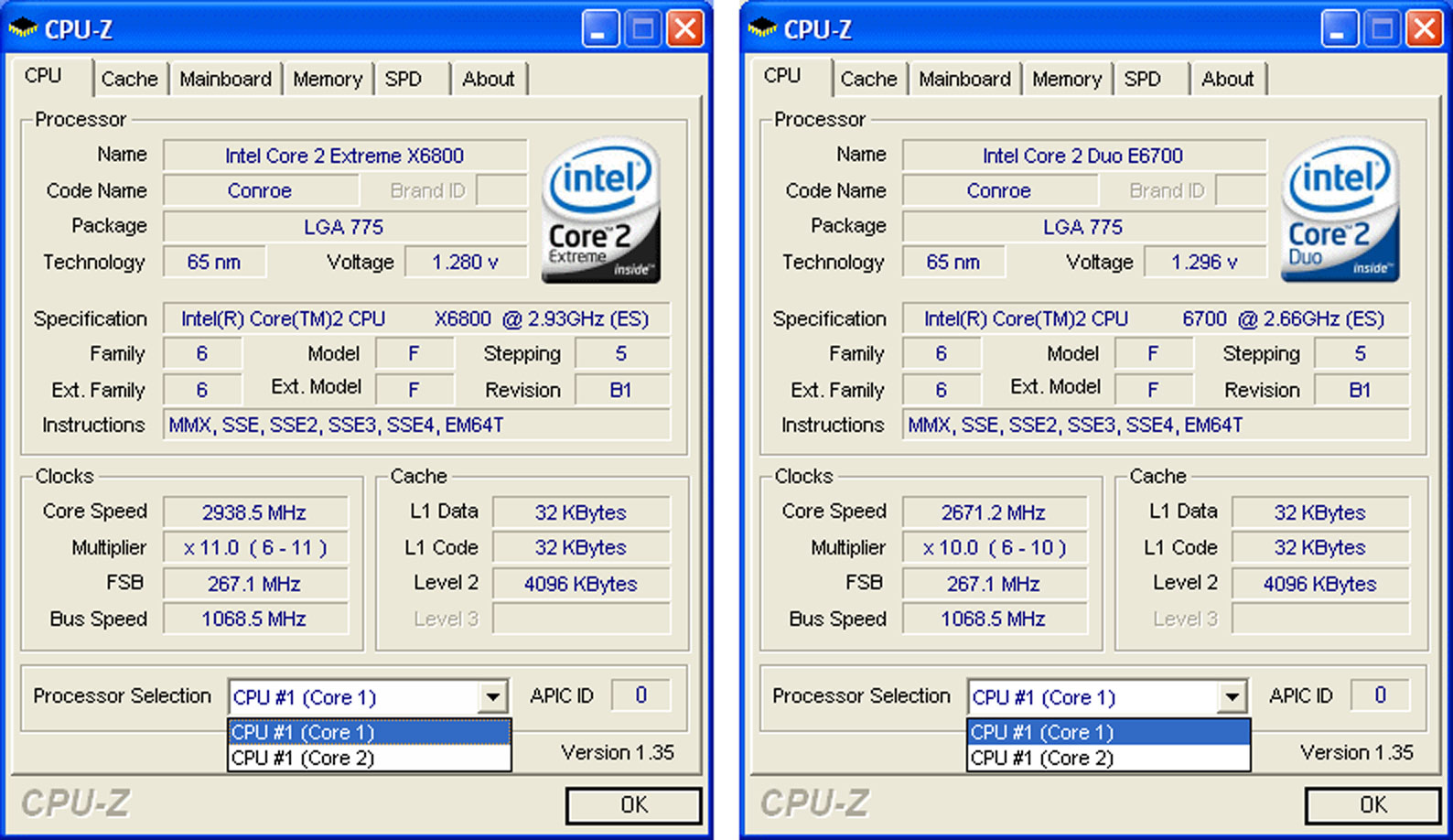
The Intel Core 2 Duo anniversary lands 20 years after Intel introduced its first Conroe processors on July 27, 2006, a launch that changed the company’s standing in PC CPUs. Intel announced 10 Core 2 Duo and Core 2 Extreme chips for consumer and business desktops, laptops and workstations, and the family quickly became the part that put Intel back ahead of AMD’s Athlon 64 line in performance.
Tom’s Hardware tested the desktop chips before launch and called Core 2 Duo “the new king.” Its review said the new processors would beat the Athlon 64 X2 and FX families across the board, including games, where AMD had been particularly strong. That mattered because AMD had spent the early and mid-2000s making Intel look slow, hot and too attached to clock-speed marketing.
What made Intel Core 2 Duo faster than Athlon 64?
Core 2 Duo did more work per clock cycle, rather than chasing a bigger gigahertz number. The Conroe chips used shorter pipelines, improved branch prediction, a shared Smart Cache, higher IPC and Intel’s 65nm process, according to Intel and Tom’s Hardware. IPC means instructions per clock: how much useful work a CPU can complete in each tick, which is why a chip with a lower clock speed can still win benchmarks.
Intel’s launch materials claimed the new processors delivered up to 40 percent more performance and more than 40 percent better energy efficiency compared with its previous best processor. Reviewers also found that lower-end Conroe parts could pass Intel’s Pentium Extreme Edition desktop flagships despite running at much lower frequencies.
The initial desktop stack included four mainstream Core 2 Duo models and one high-end Extreme part:
- Core 2 Extreme X6800: 2,933 MHz, 4 MB L2 cache.
- Core 2 Duo E6700: 2,666 MHz, 4 MB L2 cache.
- Core 2 Duo E6600: 2,400 MHz, 4 MB L2 cache.
- Core 2 Duo E6400: 2,133 MHz, 2 MB L2 cache.
- Core 2 Duo E6300: 1,866 MHz, 2 MB L2 cache.
All five desktop models listed by Tom’s Hardware used a 266 MHz front-side bus, marketed as FSB1066 QDR. The faster three carried 4 MB of L2 cache, while the two cheaper mainstream chips used 2 MB.
Why did Conroe matter after launch?
Conroe gave Intel a clean break from NetBurst, the architecture behind its high-clocked Pentium 4 and Pentium Extreme Edition chips. Tom’s Hardware described NetBurst-era parts as hot and power-hungry, and Core 2 Duo let Intel retire that approach without asking buyers to accept worse performance.
The design also pointed directly at what came next. Tom’s Hardware notes that Conroe was the direct ancestor of Intel’s Core 2 Quad processors, which arrived in January 2007 by putting two Conroe dies into one package. That move helped push multi-core CPUs further into mainstream PCs, and developers began paying more attention to software that could use more than one core.
Single-threaded performance still matters in Windows, applications and games in 2026, according to Tom’s Hardware, but Core 2 Duo marked the point where mainstream CPU marketing had to explain more than clock speed. The publication argues Intel’s Conroe line laid the groundwork for more than a decade of Intel CPU dominance, lasting until AMD’s Ryzen family matured with the Ryzen 3000 series.
This story draws on original reporting from Tom's Hardware.