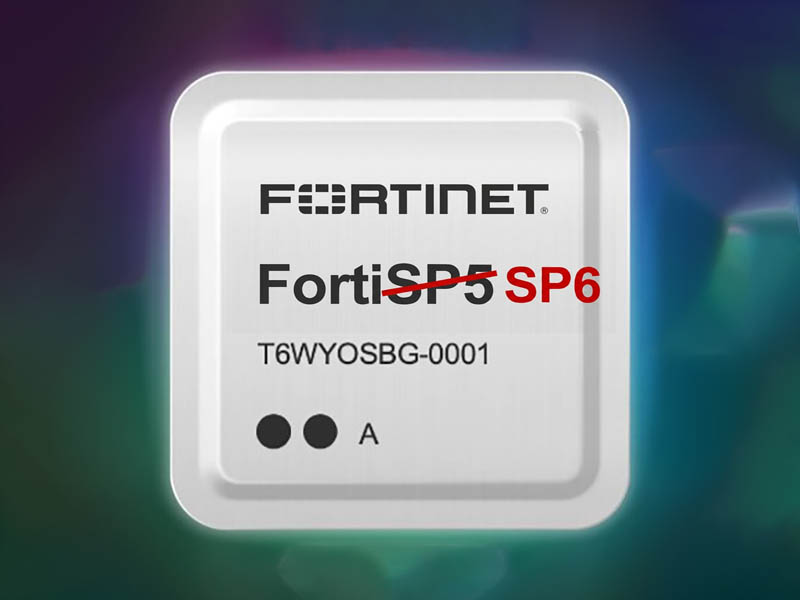
Intel and Fortinet said Tuesday they will collaborate on Fortinet’s next custom security chip, the Fortinet Security Processor 6. For Intel Foundry, the announcement is a public customer win in networking and security hardware, a more interesting category than another vague AI accelerator teaser.
The companies said Fortinet will bring its security processor expertise, while Intel will provide design, packaging and manufacturing capabilities. They did not disclose specifications for the Security Processor 6, production timing, process node, pricing, volumes or which Fortinet products will use the chip.
That silence matters. A foundry win can mean anything from a small packaging engagement to manufacturing a major chip family. The announcement confirms Intel is in the SP6 project. It does not say how much revenue Intel will book from it.
Fortinet has been doing custom silicon for years
Fortinet’s appliances are not just generic boxes with a stock CPU and a logo slapped on the lid. ServeTheHome has previously documented Fortinet’s custom silicon, including the FortiSP5 launch and FortiSOC4 chips found in its FortiGate FG-40F and FG-60F reviews. In those systems, ServeTheHome said the hardware showed Fortinet was using dedicated processors rather than leaving all packet and security work to an off-the-shelf CPU.
The new Security Processor 6 continues that strategy, though Fortinet and Intel have not published the chip’s architecture or performance claims. The name also comes with some annoying ambiguity for server people: this Fortinet SP6 is unrelated to AMD’s SP6 socket used by products such as AMD’s Epyc 8005 “Siena” line, which ServeTheHome referred to as Sorano.
ServeTheHome noted that Fortinet’s earlier SP5 materials compared the chip against “industry-standard CPUs.” The site said that comparison was likely aimed at Intel Xeon D or Atom-class processors at the time, although Fortinet did not identify the exact rival CPU in the material cited.
A foundry win with a competitive wrinkle
The useful part for Intel is that Fortinet appears to be a customer Intel can name. ServeTheHome said it believes the prior FortiSP5 was made on TSMC 7nm, which would make this a shift of at least some future Fortinet silicon work toward Intel. That remains framed as the site’s assessment, not a specification confirmed by Intel or Fortinet.
The deal also lands in a slightly awkward place for Intel Products, because Fortinet’s security ASICs can replace work that might otherwise run on general-purpose Intel processors in network appliances. Intel Foundry wants outside customers, including customers whose chips may reduce demand for Intel CPUs in specific systems. That is the foundry business Intel says it wants, even when it rubs against the old x86 franchise.
ServeTheHome cautioned against treating the agreement as a giant revenue event. The site described Fortinet as a business where service revenue often accounts for about 70% of revenue and hardware about 30%. Using a hypothetical $7 billion trailing 12-month revenue figure, it estimated roughly $5 billion would be service revenue, leaving hardware as only part of the business, and the ASIC only part of that hardware stream.
The confirmed story is narrower and still notable: Fortinet plans another custom security processor, and Intel Foundry has attached its name to the project. The missing details are the ones that will decide whether this is a strategic proof point, a modest component contract, or something larger.
This story draws on original reporting from ServeTheHome.