Laser-powered drone charging moved a little closer to a usable aircraft system after researchers at the Civil Aviation University of China reported a receiver that converted 38.49% of incoming green-laser energy into electricity. The result powered a propeller on a stationary drone model, not a drone in flight, which is a distinction the “indefinite flight” pitch tends to skate past.
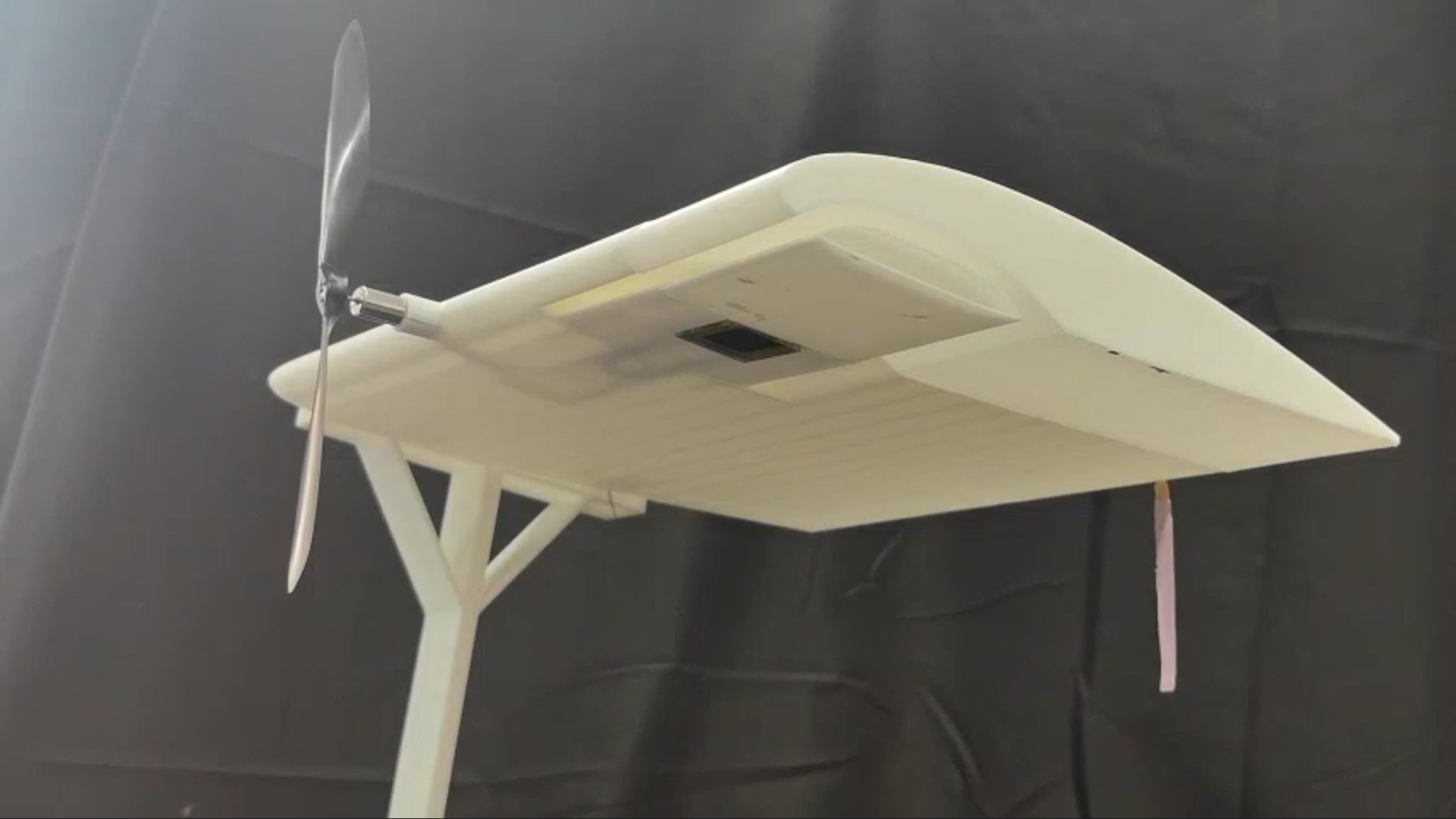
The work, reported July 29 in Matter & Light, centers on a lightweight perovskite laser cell-thermoelectric, or PLC-TE, receiver mounted beneath a drone wing. According to a Cell Press release, senior author Jianhua Han’s team designed it to accept energy beamed from a ground-based laser.
Its first layer is a perovskite cell tuned to turn laser light into electrical power. A second, thermoelectric layer recovers part of the energy associated with heat. That layer produces more electricity when there is a greater temperature difference between the receiver’s laser-facing hot side and its cooler side.
How does laser-powered drone charging work?
A ground transmitter would aim a laser at a photovoltaic-style receiver on the aircraft, and the receiver would convert part of that light into electricity. In this design, the thermoelectric layer also draws power from the temperature difference created as the laser heats the device.
That arrangement creates an awkward engineering problem: the heat needed for thermoelectric generation can also degrade the light-conversion layer. Han said thermal imaging during high-power laser tests showed temperatures of 80 to 90 degrees Celsius. The researchers said that heat reduced efficiency and threatened the receiver’s operation.
The team added Sb2Se3 nanocrystals, identified in the study title, to the receiver. Because the nanocrystals conduct heat poorly, they serve as a thermal barrier, according to the Cell Press release. The researchers also cut air channels through the wing. Air moved by the propeller passes through those channels and cools the thermoelectric layer’s cold side, preserving the temperature gradient the device needs.
In the proof-of-concept test, a green laser illuminated the wing-mounted receiver on a stationary drone model and powered its propeller blade. The reported 38.49% figure measures conversion at the receiver, not the performance of a complete ground-to-aircraft power system and not sustained airborne endurance.
Has the laser-powered receiver flown a drone outdoors?
No. The device has not yet flown, according to the Cell Press release and Professional Engineering. The next proposed test is an outdoor trial aboard a lightweight drone, where the receiver will have to operate reliably while the aircraft moves.
That leaves several jobs before this becomes a way to keep a drone aloft for extended periods: maintaining accurate laser tracking of a moving aircraft, handling outdoor conditions, and establishing that the system can operate safely. The stationary propeller test demonstrates that the receiver can deliver power under controlled conditions. It does not yet demonstrate continuous flight or a practical field deployment.
This story draws on original reporting from Tom's Hardware.