Lenovo has expanded its Whitsett, North Carolina, manufacturing site for Lenovo Whitsett AI servers, doubling the facility to 890,000 square feet as customers press for more U.S.-built computing hardware, according to Tom's Hardware, which toured the plant.
The China-based company marked the expansion with a ribbon-cutting on Friday. Lenovo said it has put millions of dollars into the site, which currently has about 400 line workers and room to grow to 1,000. The company opened its U.S. headquarters in Morrisville, North Carolina, in 2005 and later added PC manufacturing in Whitsett, a short drive away.
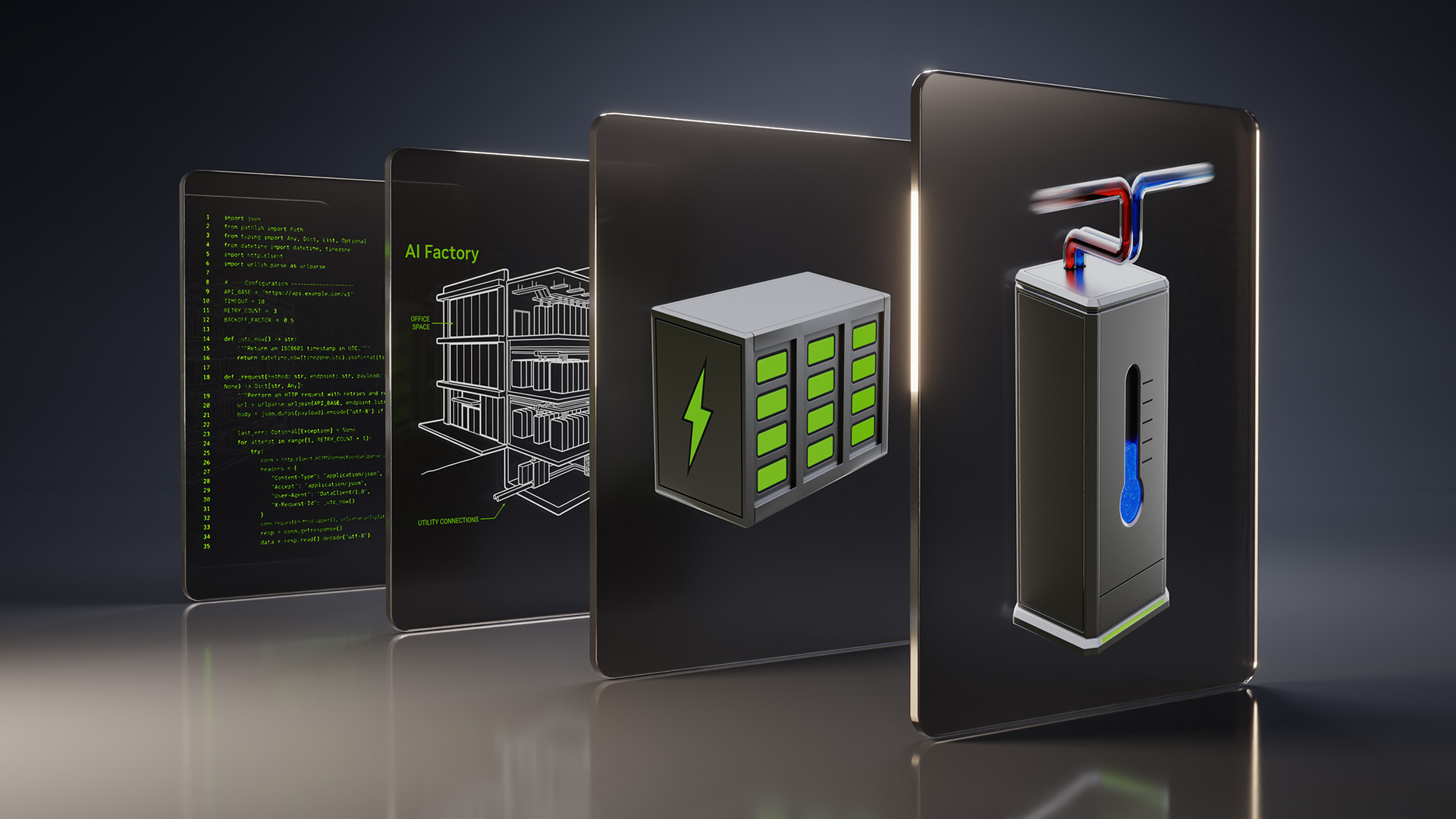
Lenovo is best known to many buyers as the top PC vendor by global shipments, but the Whitsett expansion is aimed at infrastructure: the servers, racks, power delivery, and cooling equipment needed to run AI workloads. The marketing label is AI. The physical reality is a warehouse full of parts, test racks, water pipes, electrical conduits, and a power bill that does not care about slogans.
Why is Lenovo expanding in Whitsett?
Ashley Gorakhpurwalla, executive vice president and president of Lenovo's Infrastructure Solutions Group, said customers are moving AI projects beyond the hype phase and want infrastructure they can trust. He also said building high-quality infrastructure closer to customers has become more important as systems grow more complex.
Ben Massey, Lenovo's vice president of supply chain, pointed to North Carolina's labor and research base as part of the pitch. He cited an arc from the Research Triangle to the Triad with engineers, manufacturing workers, research and development staff, and supply-chain specialists. Lenovo's Morrisville R&D hub is a little over an hour from Whitsett on Interstate 40, and the company can recruit from NC State, Duke, UNC-Chapel Hill, Wake Forest, and the state's community colleges.
According to Tom's Hardware, Lenovo and local contractors turned the expanded space from an empty warehouse into an operating server production line in nine months. Duke Energy supplied power capacity of up to 20 megawatts, and Lenovo moved from temporary to full power at the site within seven months.
What is inside the Whitsett server line?
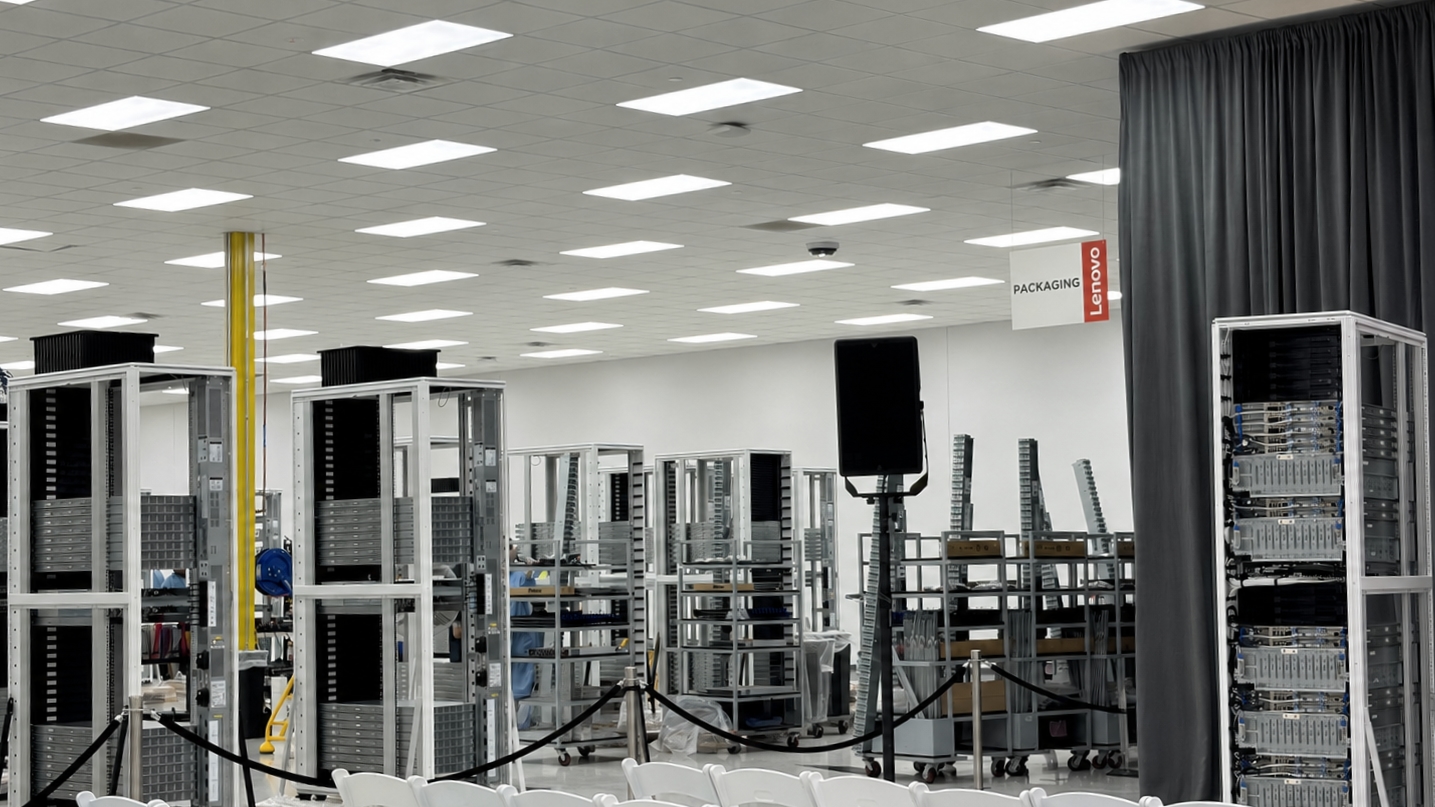
The kitting area covers 26,000 square feet, where workers gather processors, memory, storage, and other components before assembly. Lenovo has 10 kitting lines there, staffed by 50 people who process more than 150,000 parts a day. The company currently assembles 200 racks a week in that area and says it can increase that to 400.
The assembly area is larger, at 53,000 square feet. Lenovo said it has seven assembly lines, 28 assembly stations, and capacity for 1,400 server nodes per day, equal to one server every 60 seconds. At full output, the company expects 1,000 operators across three shifts; Tom's Hardware reported the current figure is about 380. Lenovo said employees receive roughly 1,000 hours of training and rotate through different build stages.
Finished systems then move into testing. The facility has 10 thermally controlled pods with 16 test racks in each pod. Cooling comes from computer room air handlers, each rated for 1 megawatt of cooling capacity, plus 30 Vertiv Liebert XDU direct liquid cooling units that can expand to 50. Each liquid cooling unit can support up to 300 kilowatts.
Lenovo said Nvidia GB300 racks draw 140 kilowatts, while Vera Rubin racks are expected to reach 230 kilowatts at peak load. Tom's Hardware reported Lenovo expects its first Vera Rubin hardware to arrive in Whitsett by the end of August.
The expansion also lands in the middle of a broader fight over AI infrastructure. More local manufacturing may shorten supply lines for customers, but the same demand is pushing data centers, water systems, power grids, and nearby communities into closer conflict as companies including Google, Microsoft, and OpenAI seek more compute capacity.
This story draws on original reporting from Tom's Hardware.