Mariana Costa’s Laboratoria work has drawn one of IEEE’s top honors, with the engineering organization giving its President’s Award to the Peruvian co-founder and president for expanding women’s access to technology careers in Latin America.
IEEE recognized Costa this year for what it described as “distinguished leadership and contributions to the betterment of society.” The award is chosen by the IEEE president with approval from the IEEE Board of Directors. Costa received it on April 24 at the IEEE Honors Ceremony in New York City.
Costa told IEEE the recognition surprised her because she is not an engineer and had not considered joining the organization before. Her route into technology ran through public policy, social inequality and, eventually, a very practical question: why were the good tech jobs going almost entirely to men?
What does Laboratoria do?
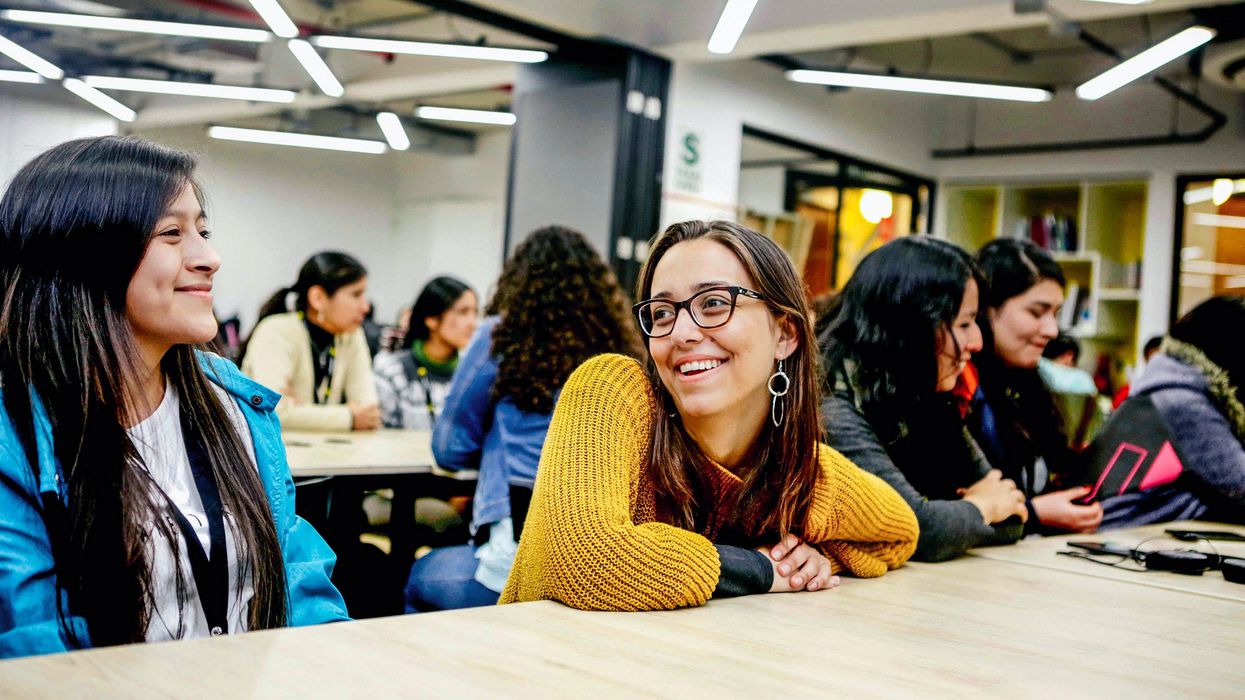
Laboratoria is a U.S.-registered nonprofit based in Miami that trains women in Latin America for digital jobs and connects graduates with employers. The organization says it has helped more than 3,500 women enter technology careers across 11 Latin American countries.
Costa helped launch Laboratoria in 2014 after returning to Lima from the United States. She had studied international relations at the London School of Economics, worked for the Organization of American States on civil registration programs, and earned a master’s degree in public administration and development from Columbia.
Her work at the OAS focused on civil identity systems, which affect access to education, health care, legal work, social services and voting. Costa has said that work sharpened her concern about inequality in Peru, where wealth, geography and ethnicity often determine access to opportunity.
Technology entered the picture through Herman Marín, a software engineer Costa met while working in Washington, D.C., and later married. Costa said Marín’s use of digital tools for social causes changed her view of programming from a purely technical field into a way to address social problems.
Why did Mariana Costa start Laboratoria?
After Columbia, Costa returned to Lima with Marín and a graduate-school friend. They started a small digital services agency building websites. As the business grew to a dozen software engineers, Costa noticed a problem hiding in plain sight: demand for developers was strong, several capable hires lacked traditional computer science degrees, and the team had no women.
Costa said the absence of female candidates did not make sense to her because tech jobs offered pay and mobility that many other fields reserved for people with elite degrees. Laboratoria grew from that gap: train women with talent but limited access, then put them in front of employers who needed technical staff.
The original program was a six-month immersive boot camp covering web development, UX design, data literacy, practical artificial intelligence use and career skills such as interviewing. Costa has also emphasized user-centered thinking, confidence and networks, since getting hired often depends on who has seen your work and trusts it.
Laboratoria’s model has since changed. The organization now runs remote programs in major Latin American job markets, using twice-weekly live Zoom sessions over six weeks. It has expanded from Lima to Santiago, Mexico City, São Paulo and Bogotá, and now operates remotely across the region.
Costa’s case is also a useful correction to the usual tech pipeline sermon. Laboratoria’s premise is that the shortage is not just a skills problem; it is also an access problem. IEEE’s award puts an engineering institution’s stamp on that argument, even if Costa arrived there without the standard engineering résumé.
This story draws on original reporting from IEEE Spectrum.