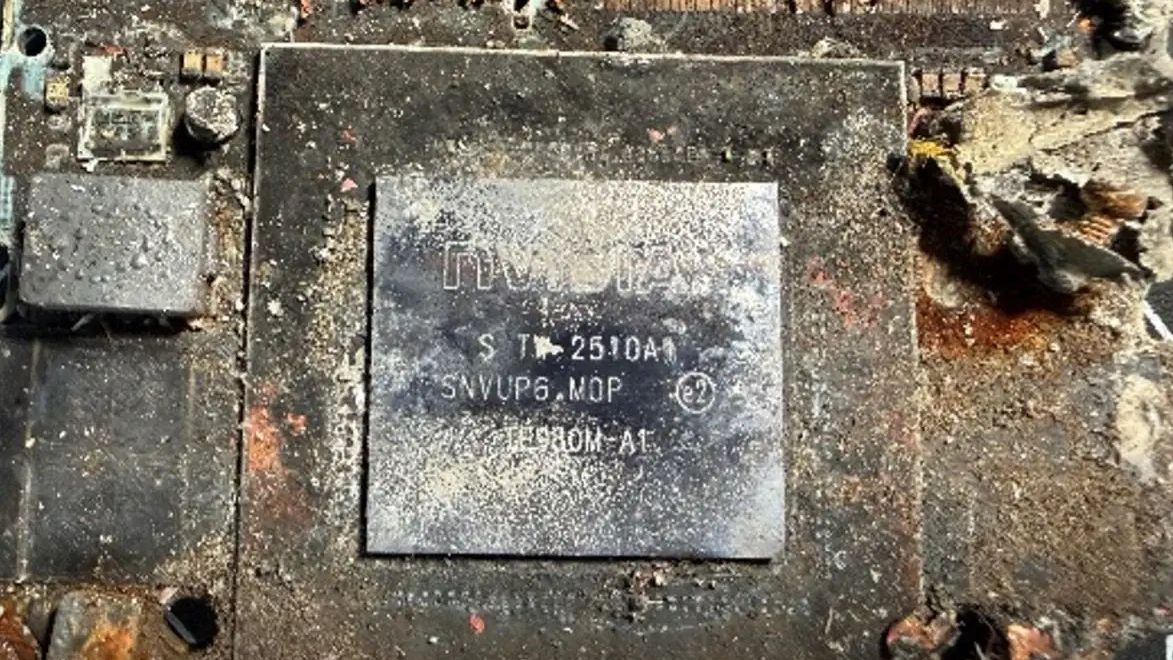
Ukraine’s Defence Intelligence agency said August 12 that it had identified an Nvidia Jetson Orin computer module in a Russian S-71 Monochrome cruise missile. The Nvidia Jetson Russian missile claim matters because the compact module is built for AI work on the device itself. It does not, however, establish that the missile ran an AI model or operated with autonomous targeting.
The agency, also known as HUR or DIU, said the module’s presence “may indicate” artificial-intelligence technology in the weapon. That is a narrower claim than the headlines suggest. Ukraine did not publicly specify the module’s job in the missile, disclose the system’s software, or provide evidence of a model executing onboard, according to Ynet’s reporting on the finding.
Does an Nvidia Jetson in a Russian missile prove it uses AI?
No. Jetson Orin is designed to perform AI computing locally rather than relying on a remote data center. Nvidia markets the family for uses including computer vision, image processing and sensor-data analysis in robotic systems. Those capabilities could in theory support recognition of visual inputs, processing of sensors or navigation assistance in a weapon. The recovered-component report alone does not show which, if any, of those tasks the S-71 performs.
That distinction is more than semantic. A processor capable of running machine-learning software says something about possible hardware capacity. It does not reveal the software installed, the data fed into it, the decisions it is permitted to make, or whether it is connected to the guidance system at all.
What did Nvidia say?
Nvidia described Jetson Orin modules as consumer-grade products sold to students, developers and startups. A company spokesperson told Tom’s Hardware that the modules are not available in Russia and were not designed for military purposes.
The company also said used Jetson products circulate through reseller channels and that Nvidia cannot trace units after their sale. It said it would take action if it determined a customer had violated US export controls. Nvidia did not say how the module identified by Ukraine reached Russia.
Ukraine’s wider component-tracing effort
DIU said its War&Sanctions project had published data on 35 electronic components identified in Russian weapon samples. The agency said the Nvidia finding underscored Russia’s dependence on foreign high-tech components and called for stronger international coordination to stop such parts reaching the country.
That broader assessment remains Ukraine’s interpretation of its component-tracing work, rather than an independently established supply-chain finding from this single module. The evidence released so far supports the reported identification and the module’s AI-capable design; it leaves the S-71’s actual use of the hardware unresolved.
This story draws on original reporting from Tom's Hardware.