O-RAN V2X deployment has not solved vehicle communications. An IEEE Spectrum author describes a proof-of-concept simulation that applies open radio access network technology to vehicle-to-everything, or V2X, networking, while stating that no O-RAN V2X test network is operating anywhere yet.
That distinction is doing a lot of work. A proposed architecture and a simulated network can identify useful ways to manage radio traffic. They do not turn into road infrastructure because a chart looked promising.
What is O-RAN V2X and why is it difficult?
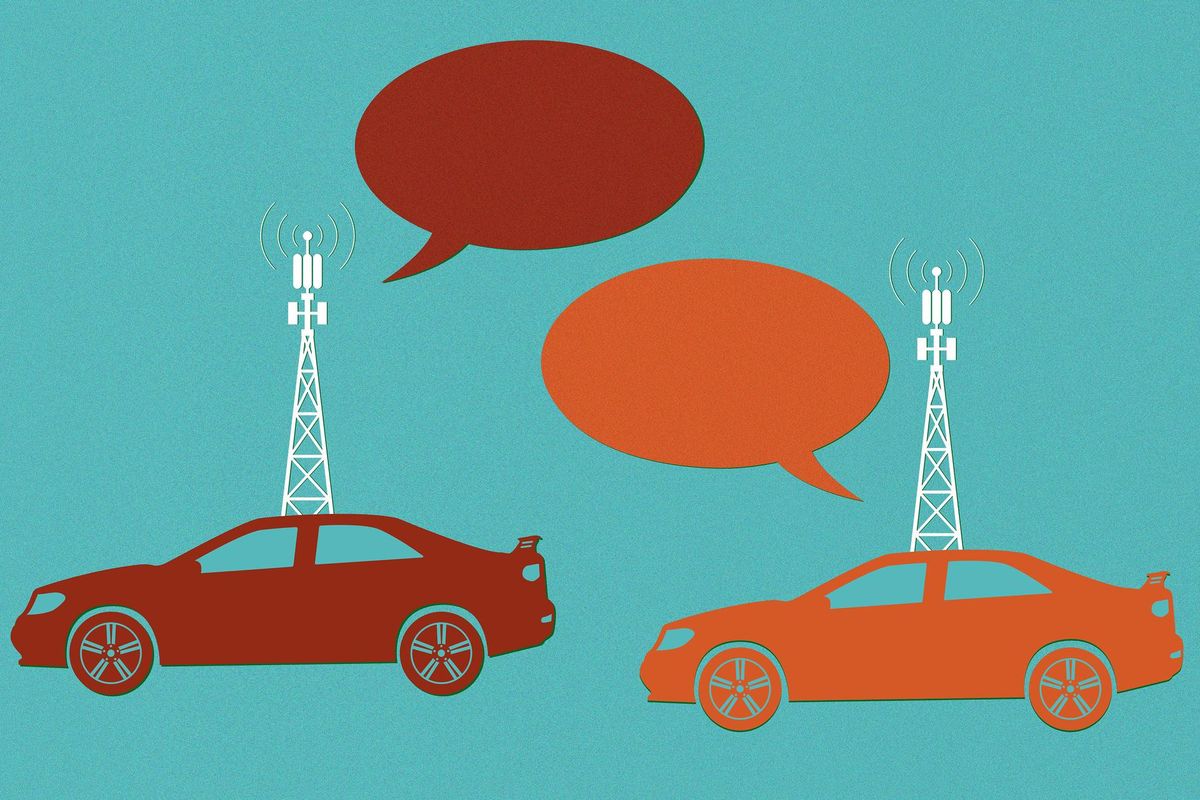
V2X means a vehicle exchanging data with other vehicles and with infrastructure such as traffic lights. The aim is for participants to share information that could support coordinated driving, navigation, or sensing. GPS location can be one input to such a system, though GPS finds position by timing satellite signals; it does not itself create a vehicle communications network.
Cars make wireless networking unpleasant in ways stationary phones and cell towers do not. Vehicles move between coverage areas, buildings block signals, traffic changes radio demand, and high-frequency links face difficult propagation conditions. Handovers between cells can introduce interruptions, delays, or packet loss, problems that matter for services needing low latency and high reliability, according to Rimedolabs.
O-RAN is an open, programmable approach to the radio access portion of some 4G and 5G networks. Rather than treating network equipment as a single vendor-controlled box, it allows software control functions and custom applications, known as xApps, to manage pieces of radio-network behavior. The IEEE Spectrum author argues that this could let V2X developers reuse cellular-networking approaches instead of starting every vehicle protocol from scratch.
What has actually been tested?
The work described by IEEE Spectrum is an engineering proposal backed by simulation. The team modeled five minutes of traffic over one square kilometer of urban area, using real building and road-layout data from OpenStreetMap and traffic patterns generated with SUMO. It assumed 50 to 70 vehicles per kilometer, communications at 28 GHz, and a dedicated xApp for each component of the O-RAN V2X system.
The available IEEE Spectrum excerpt describes that simulation, says no O-RAN V2X test network was operating, and provides no performance or safety result. It therefore cannot establish a deployed service or a measured safety outcome.
A 2024 arXiv paper by Politecnico di Milano researchers reaches a similarly cautious starting point. It presents an architecture that would extend O-RAN control to connected vehicles and reports numerical analysis of the proposal. Its authors also call effective O-RAN and V2X integration an open issue requiring further conceptual and architectural work.
Standards and engineering gaps remain
IEEE Spectrum says 3GPP issued an initial cellular V2X standard about a decade ago and refined it in later releases, while U.S. and European agencies advanced other short-range V2X standards. The publication characterizes the result as lacking a consensus standard, and says that uncertainty has contributed to autonomous-vehicle makers emphasizing onboard sensors and computing.
O-RAN may offer a way to steer traffic and improve handovers as road conditions change. That is a research direction, not an already-solved problem. The remaining job includes proving that the control architecture can handle moving vehicles, congestion, link loss, and latency outside a simulator.
This story draws on original reporting from IEEE Spectrum.