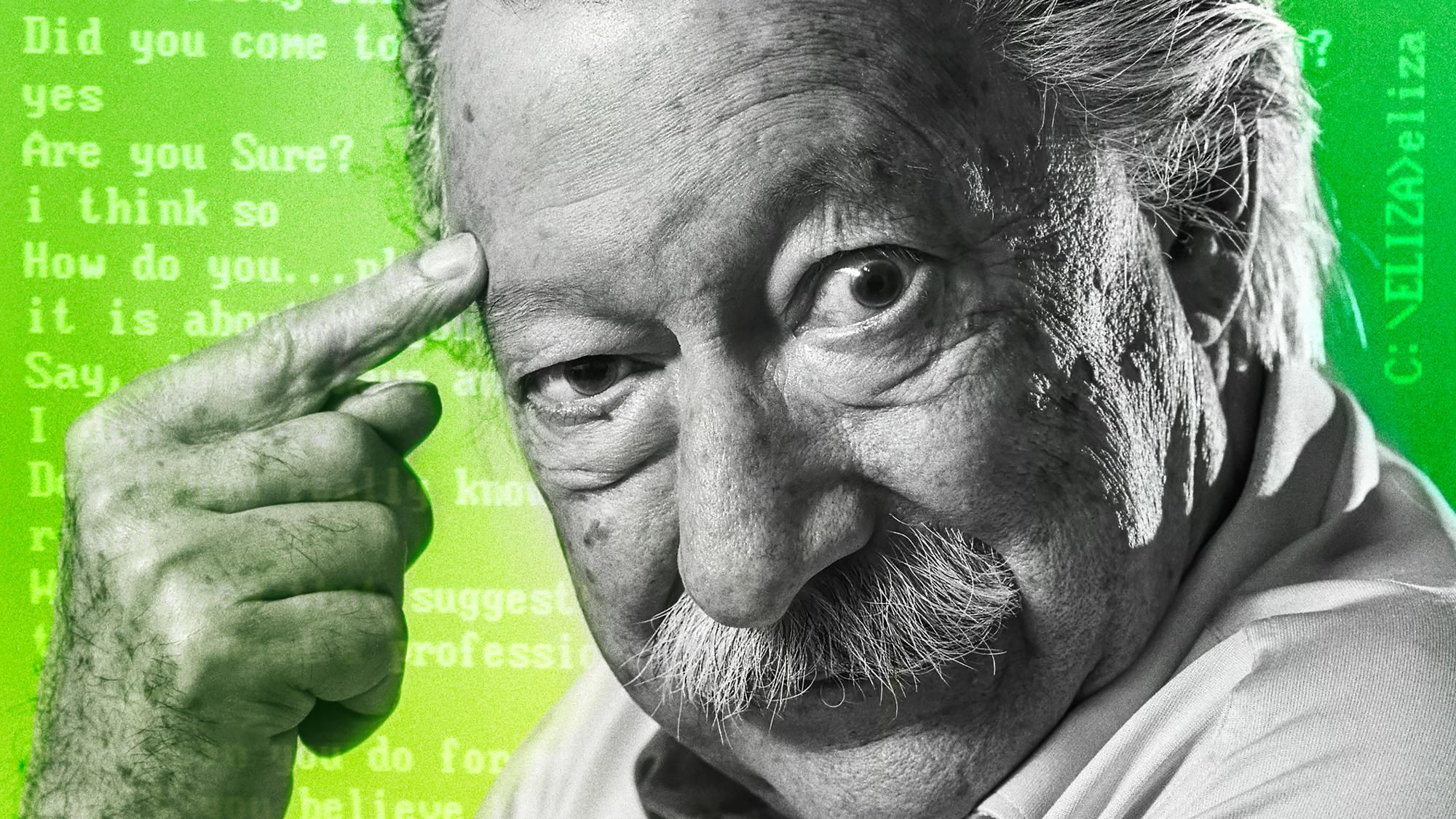
ELIZA, the 1960s chatbot usually remembered as a faux psychotherapist, was built to do more than ask users how they felt about their mothers. Researchers analyzing source code recovered from MIT’s archives say Joseph Weizenbaum’s program was a broader interaction system that could run multiple scripted personas, including tutors, small-talk partners and a plain-language arithmetic tool.
The finding comes from Inventing ELIZA: How the First Chatbot Shaped the Future of AI, published by MIT Press. The researchers argue that relying on later re-creations and Weizenbaum’s published descriptions left out important implementation details. The code, they say, shows a more flexible machine than the standard museum-piece version of ELIZA suggests.
That distinction matters because the famous “Doctor” was not ELIZA itself. Doctor was one script running on the ELIZA system. The system handled the interaction machinery. The script supplied the role, vocabulary and response rules. In current terms, it looked less like a single chatbot and more like a small platform for loading behavior files, though with 1960s constraints such as tape storage and single-pass processing.
Weizenbaum described ELIZA in a 1966 paper in Communications of the ACM, where he printed the well-known exchange that begins with a user saying, “Men are all alike.” The Doctor script answered in the style of a Rogerian therapist, using open-ended prompts and reflected user language. The researchers say that choice was practical as much as theatrical: a therapist persona could seem attentive while revealing little about the system’s thin grasp of the world.
Human-computer interaction scholar Lucy Suchman, quoted in the book excerpt, explains that Doctor benefited from the conversational habit of leaving shared assumptions unsaid. A user supplied meaning, memory and emotional stakes. ELIZA supplied a few well-timed prompts. The illusion came from both sides doing work.
Scripts made the machine sound like different people
The recovered and related archival material points to scripts beyond Doctor. The researchers identify ELIZA personas that discussed math, poetry, color, paradoxes, synchronization, relativity, France and elevators. One test script, called Neweng, chatted about New England states. Its responses mentioned beaches, cool summers and Massachusetts, producing a regional small-talk persona rather than a therapist.
Other scripts moved ELIZA into education. Edwin F. Taylor at MIT’s Education Research Center developed scripts including Intrvw, Canvec, FVP1 and Arithm for teaching experiments. The book says later ELIZA versions added conditional keyword matching, letting the system track earlier answers and branch through narrower instructional paths.
Those tutor scripts sounded different from Doctor. They used longer explanatory blocks and evaluative language such as praise or correction, creating the feel of an instructor steering a student through a lesson. The mechanism was still scripted, but the social role changed because the script changed.
Arithm went further. Weizenbaum described it as a demonstration of the evaluator available to ELIZA. Users could state simple facts and relationships in ordinary sentences, assign values, and ask for calculations. In one example cited by the researchers, the system computes the area of a globe after being told its radius and that a globe is a sphere.
The archival code does not turn ELIZA into a secret modern language model. The researchers describe a pattern-matching system with scripts, memory and branching, not a sentient machine. Its historical bite is narrower and more useful: the first famous chatbot was already a configurable performance engine, and its “personality” lived in the rules as much as in the program.
This story draws on original reporting from IEEE Spectrum.