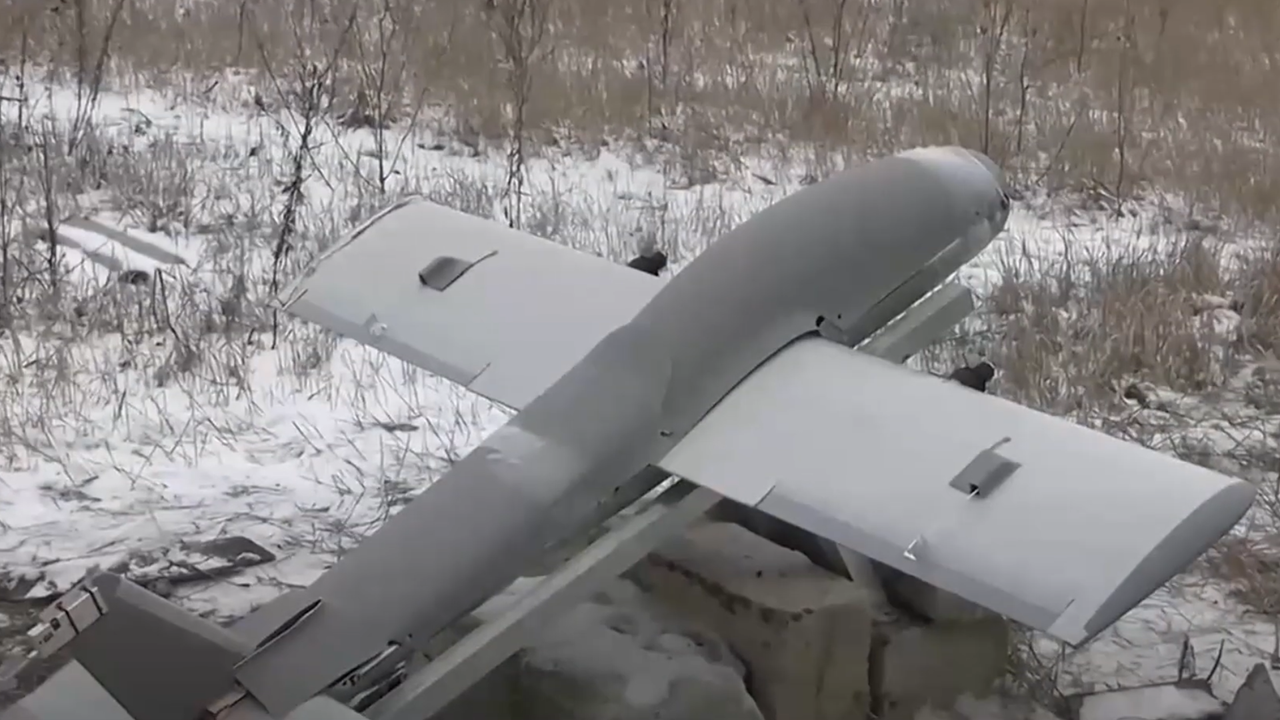
Russian frontline units are bolting basic magnetic compasses onto some Molniya drones, according to Defence Blog, giving pilots a crude backup when satellite navigation or radio links become unreliable over Ukraine.
The modification is not elegant. A leaked image cited in the report shows a small compass fixed near the first-person-view camera with five Phillips screws. Its placement appears deliberate: the drone’s camera can look down at the compass so the operator can check heading during flight. That matters in an airspace where GPS jamming is routine and where losing a bearing can mean missing the target or losing the aircraft.
The Molniya is described as a low-cost, medium-range Russian drone that uses the open-source ExpressLRS radio-control system. That setup can give operators control at a potential maximum distance of about 62 miles, or 100 kilometers, under favorable conditions. The system is still exposed to the basic problem of modern drone warfare in Ukraine: both sides are trying to break the other side’s control links, satellite positioning, and video feeds.
Some Molniya variants have reportedly used Starlink terminals to work around Ukrainian electronic-warfare pressure. That workaround has become less useful, according to the reporting, after Ukraine required Starlink units used in the country to be registered before they can connect. The claim is not that every Russian drone lost Starlink access, but that the registration requirement has made that particular method harder to use.
Another Molniya configuration uses a fiber-optic cable. That gives the operator a physical communications path to the drone, which makes it resistant to radio-frequency jamming. The trade-off is range. The fiber version is limited to about 18 miles, or 30 kilometers, according to the same reporting, because the aircraft can only fly as far as its tether allows.
The compass hack sits at the other end of the complexity scale. It does not defeat jamming or restore GPS. It gives the pilot a magnetic heading, which can be combined with other telemetry to estimate where the drone is and which direction it is traveling. In practice, that means a pilot who loses satellite positioning can still compare the compass reading with the intended course and make corrections.
The screw-on installation also suggests this is a field modification rather than a standard factory feature. Defence Blog described the component as a low-cost camping-style compass, and the visible hardware supports the idea that soldiers or technicians added it near the camera after production.
The gadget looks ridiculous because it is a consumer compass attached to a combat drone with ordinary screws. That does not make it irrelevant. The war in Ukraine has repeatedly rewarded ugly, fast modifications that solve one narrow problem well enough to keep a weapon useful for another sortie.
This story draws on original reporting from Tom's Hardware.