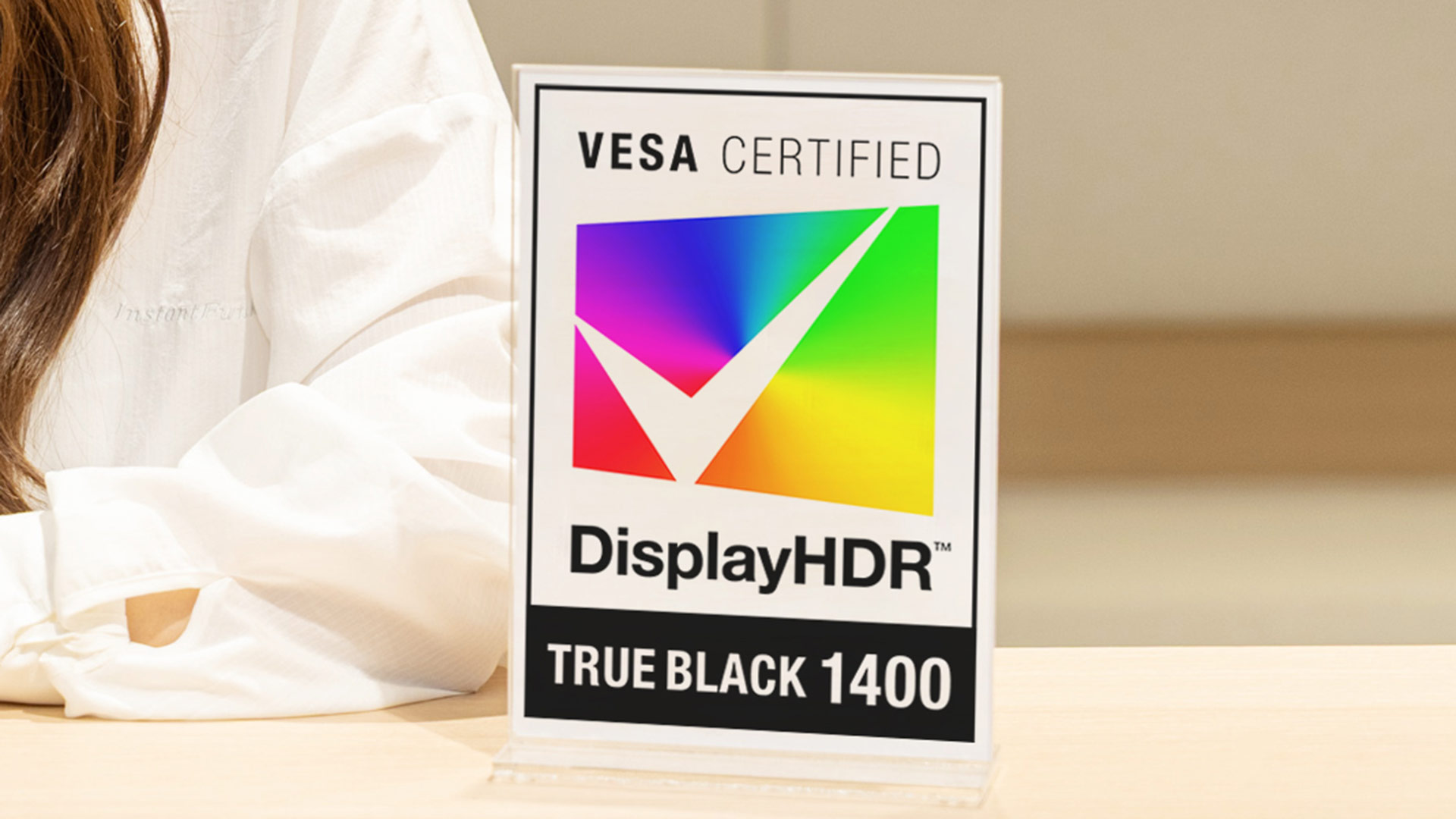
Samsung Display says it has started shipping its first mass-produced laptop panels certified for VESA DisplayHDR True Black 1400, putting a new brightness tier into machines from Lenovo, Asus, Dell and MSI.
The short version for laptop buyers: these are tandem OLED panels rated for much brighter HDR highlights than earlier OLED laptop screens, while keeping OLED’s near-black behavior. The longer version is where the panel math matters, because “brighter OLED” has often meant more heat, more power draw, shorter lifetime, or all three joining the meeting uninvited.
VESA introduced the DisplayHDR True Black 1400 certification earlier this month. According to Samsung Display, the standard requires a display to reach black levels of 0.0005 nits or lower and hit 1,400 nits of peak brightness at a 10 percent On Pixel Ratio, VESA’s test condition for a partially lit screen. Samsung says that peak requirement is 40 percent above VESA’s previous top True Black tier, DisplayHDR True Black 1000.
Samsung Display says its new tandem OLED laptop panels can reach up to 1,600 nits. The company compares that with 1,100 nits for conventional OLED panels using a single emissive layer, a gap it also describes as 40 percent higher peak brightness.
What tandem OLED changes
Tandem OLED is not a new sticker for the same panel. Samsung Display says the architecture stacks two organic emissive layers, which improves light-emitting efficiency and allows higher brightness. The company also says the design can either produce more brightness with the same current or reduce the burden on each emissive layer at the same brightness level.
That second part is the laptop-relevant claim. Samsung says spreading the work across two emissive layers can help extend panel lifespan. It also argues that the design does not necessarily have to wreck battery life when the display is running at ordinary indoor brightness, because the panel is not forced to drive one emissive layer as hard for the same output.
Those are manufacturer claims, not independent laptop battery tests. The actual result will depend on the notebook design, display settings, operating system behavior and whatever power profile the vendor ships by default. Panel makers sell the physics; laptop makers decide how much of it survives the product meeting.
Who is shipping laptops with the panel
Samsung Display says Lenovo’s Yoga Pro 9i Aura Edition is the first device to use the new tandem OLED panel. The company also says models from Asus, Dell and MSI are planned to reach retail in the second half of this year.
Tandem OLED is already showing up outside laptops. Desktop monitors using tandem OLED panels have been launched by brands including Alienware, Gigabyte and MSI. Samsung Display’s domestic rival LG Display is also preparing products for the same premium segment, according to the report.
The near-term effect is a clearer premium tier for OLED laptops: displays that combine very low black levels with higher HDR peak brightness than previous True Black-certified panels. The part still missing is the one buyers actually care about after the demo loop ends: how these screens behave in shipping laptops under real workloads, real brightness settings and real battery constraints.
This story draws on original reporting from Tom's Hardware.