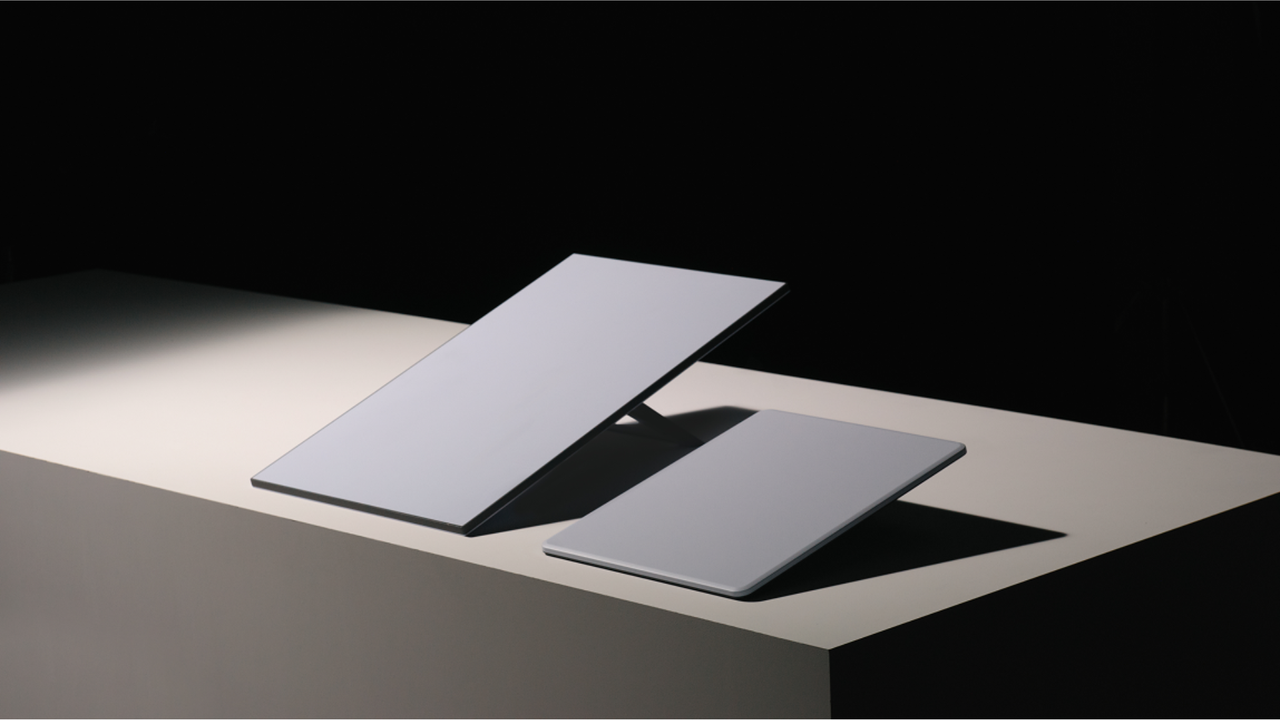
SpaceX has introduced a new Starlink residential terminal that cuts the dish weight and power draw for home satellite internet installs, while keeping performance in the same range as the company’s current standard kit.
Starlink announced the V5 kit on X and said the terminal can deliver download speeds of up to 375 Mbps-plus for streaming, video calls, games and other home internet use. The company said the kit is available only in select areas for now, with broader rollout expected as production increases.
The practical change is the hardware. Starlink V5 uses an electronic phased array antenna with a 110-degree field of view, like the Standard 4 and Mini terminals. The phased-array design steers the radio beam electronically rather than by physically moving a dish, which is why these terminals can sit in place and still track SpaceX’s low Earth orbit satellites as they pass overhead.
The new dish weighs 2.4 pounds, or 1.1 kilograms. That is much closer to the Starlink Mini, listed at 2.43 pounds, than to the Standard 4 home dish, which weighs 6.4 pounds. For customers mounting the terminal on a roof, pole or temporary stand, shaving off roughly four pounds is not a cosmetic change. It can make self-installation less annoying and reduce the load on the mount.
SpaceX’s published specifications put the V5 between its existing residential and portable options:
- Starlink V5: up to 375 Mbps-plus downloads, 2.4-pound dish, 35 to 50 watts average power use.
- Standard 4: up to 400 Mbps-plus downloads, 6.4-pound dish, 75 to 100 watts average power use.
- Starlink Mini: up to 300 Mbps-plus downloads, 2.43-pound dish, 25 to 40 watts average power use.
The V5 still needs a router, which SpaceX includes in the kit. The Mini differs there: it can provide Wi-Fi from its built-in wireless hardware without a separate router. That keeps the Mini better suited to portable setups, while the V5 appears aimed at fixed home installs that want a smaller dish without dropping to the Mini’s lower speed rating.
The power numbers are the other meaningful shift. SpaceX lists average consumption for the V5 at 35 to 50 watts, compared with 75 to 100 watts for the Standard 4. That lower draw could stretch battery stations and backup power systems during outages, which is one reason satellite internet keeps showing up in emergency communications plans.
The V5 also gets a stronger mounted wind-speed rating than SpaceX’s other two listed kits. SpaceX rates it for 165 mph, or 265 kph, while both the Standard 4 and Mini are listed at 60 mph. All three carry an IP67 Type 4 environmental rating and an operating temperature range from minus 22 degrees Fahrenheit to 122 degrees Fahrenheit, or minus 30 degrees Celsius to 50 degrees Celsius.
Snow handling stays mostly familiar. SpaceX lists the V5 and Standard 4 at up to 1.6 inches, or 40 mm, of snow melt per hour. The Mini is rated at up to 1 inch, or 25 mm, per hour.
Starlink’s public role has expanded well beyond rural home broadband. Tokyo has tested Starlink antennas on fire hydrant signs for emergency Wi-Fi. Starlink connections have also been used by first responders and in Ukraine during Russia’s invasion. Those deployments do not erase the controversies around SpaceX and Elon Musk, but they explain why a smaller, lower-power home terminal is more than another plastic rectangle for the roof.
This story draws on original reporting from Tom's Hardware.