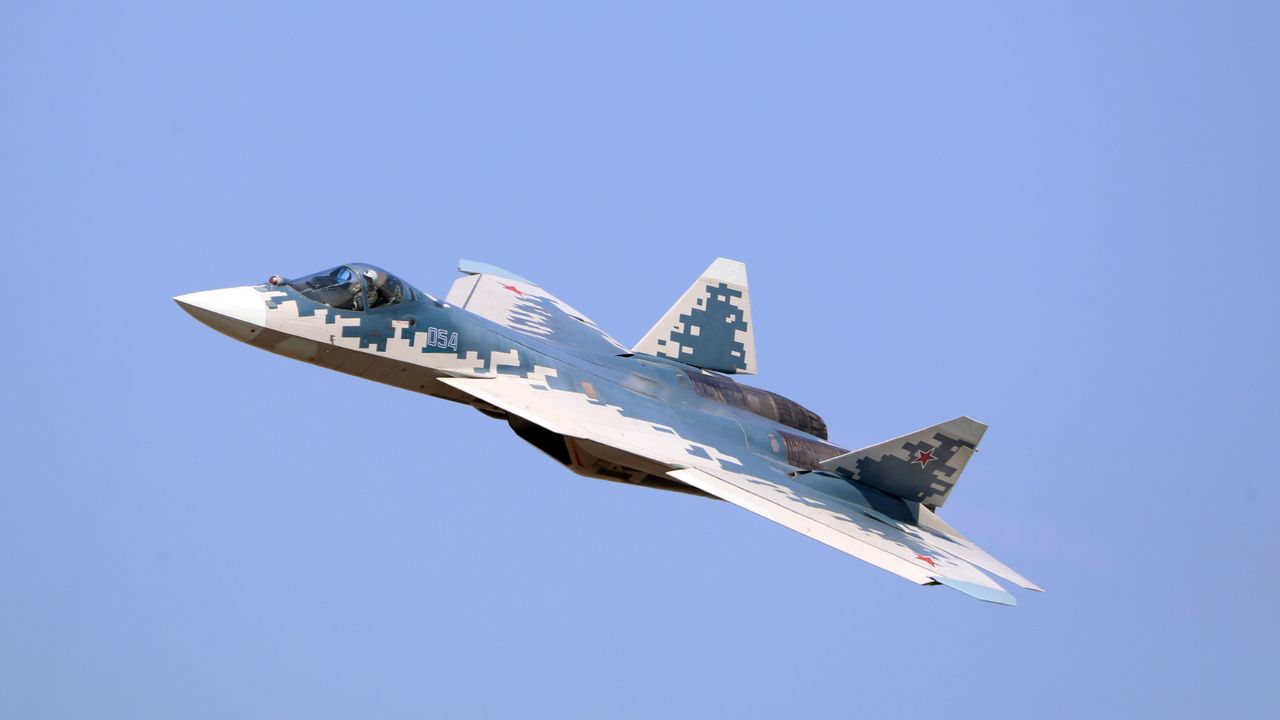
The Su-57 crash near Moscow is now the subject of two sharply different accounts: Russian state media says the fighter went down because of a technical fault, while the pro-Ukraine intelligence collective InformNapalm claims Russian air defenses were manipulated into firing on their own jet.
TASS reported that the fifth-generation Su-57 crashed on Thursday during a routine training flight in the Moscow region. According to the Russian state outlet, the pilot ejected and survived, and the aircraft came down in an uninhabited area. Russian reporting described the cause as a “technical malfunction.”
InformNapalm, a Ukrainian volunteer open-source intelligence group, gives a different account. In a post published July 23, the group claimed that a cyber and human intelligence operation affected the operation of the BARS Moscow anti-drone system and that the system shot down the Russian aircraft.
What happened in the Su-57 crash near Moscow?
The confirmed facts are narrower than the claims around them. A Russian Su-57 crashed in the Moscow region, the pilot escaped, and Russian state media attributed the incident to a malfunction. InformNapalm says the malfunction was not ordinary mechanical bad luck, but the result of Ukrainian-linked interference with a Russian air-defense system.
The Su-57 is Russia’s advanced stealth fighter, described in reports as capable of launching Kh-59 and Kh-69 missiles. Ukrainian outlet NV has reported that Russia is believed to have only a small number of the aircraft, which would make any loss operationally and symbolically expensive.
What is InformNapalm claiming?
InformNapalm says Ukrainian cyber specialists and intelligence-backed operators helped turn the BARS Moscow drone-defense network against a Russian aircraft. BARS Moscow is described as an air-defense setup around Moscow intended to counter Ukrainian long-range drones. If the claim is accurate, the system either misidentified or engaged the Su-57 after its operation was influenced from the outside.
The group tied the claim to a longer intelligence operation. It said it had previously shared secret documents from a Russian manufacturer of components used in the aircraft’s systems. InformNapalm said those materials came from human intelligence and cyber intelligence work supported by Ukrainian intelligence services.
InformNapalm also said the operation included a cognitive and cyber influence component aimed at the BARS Moscow unit. That phrase does a lot of work, and the public evidence does not fully establish the chain from alleged access to alleged shootdown. The group shared what it described as supporting material, including video from a training range for BARS Moscow crews and an excerpt referring to Russian hardware, software, combat algorithms and vulnerabilities.
Why would Ukraine target the Su-57?
Ukraine has previously said it struck Su-57 aircraft while they were on the ground, including at Akhtubinsk airfield in 2024 and Shagol airfield in May. The aircraft’s scarcity and missile role make it a high-value target in Ukrainian reporting and intelligence claims.
The central dispute remains unresolved in public. TASS reports a technical malfunction. InformNapalm claims sabotage that caused friendly fire. Without independent confirmation of how the BARS Moscow system behaved, the crash can be reported with confidence; the hack-and-shootdown claim still rests on InformNapalm’s account and the evidence it chose to release.
This story draws on original reporting from Tom's Hardware.