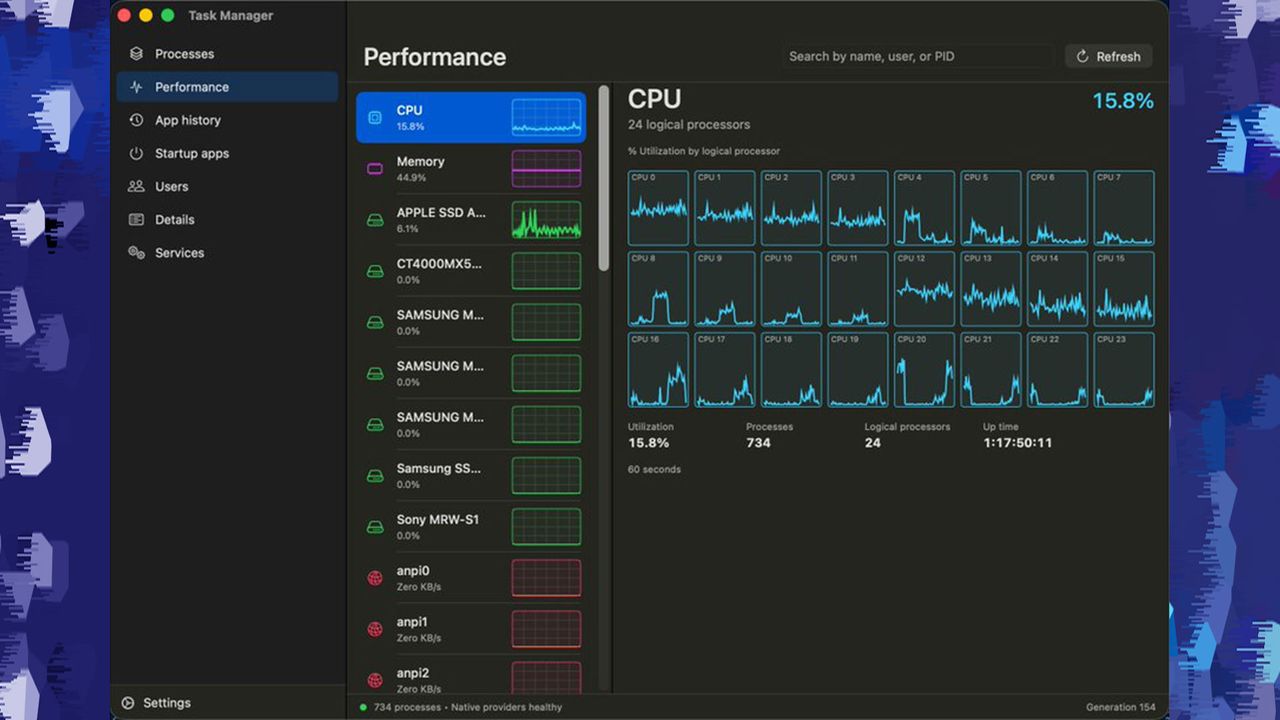
Dave W. Plummer, the developer who created the original Windows Task Manager, has shown a Task Manager for Mac project that is now in beta. The point, according to Plummer, is blunt: Apple’s built-in Activity Monitor is not the system utility he wants to use.
Plummer shared screenshots of the macOS version on social media and said he plans to put it on Apple’s App Store while it remains in beta. He said the beta would be free, though he also left open the possibility that he may stop working on it and release the code for others to continue.
Mac users already get Activity Monitor, Apple’s built-in app for checking CPU activity, memory use, and for quitting apps and processes. Plummer’s pitch is that a Windows-style task utility can expose more controls in one place. The Windows version includes functions such as process priorities, startup management, and services control, which go beyond the narrower default view many Mac users associate with Activity Monitor.
What is Task Manager for Mac?
Task Manager for Mac is Plummer’s beta attempt to bring the familiar Windows Task Manager idea to macOS. It is written in Swift, Apple’s programming language, and Plummer says it does not contain original Microsoft code.
That last part matters because Plummer is not a random developer cloning a recognizable Microsoft tool from memory. He wrote the original Windows Task Manager, which first appeared as a small utility of about 80KB, and he has recently been revisiting the idea in other experiments, including a retro-styled version inspired by Atari’s Tempest.
Plummer also addressed the obvious licensing question. In a social media post, he said Microsoft sent him the Windows XP Task Manager source code and gave him permission to share and demonstrate it. He added that the Mac project does not use that original source code and that he does not have access to later Windows Task Manager code.
That means the XP code, according to Plummer’s account, is a reference point he is allowed to discuss and show, rather than the codebase powering the macOS app. The actual Mac version is being built separately in Swift.
The project is still unfinished. Plummer said he is working on drive activity meters and is tuning how the app draws storage activity at 60 frames per second. His concern, as described in his posts, is that showing instantaneous drive activity that often can produce flickering visuals.
No public release was available at the time Plummer described the beta, and the App Store plan remains an intention rather than a completed launch. For now, the project is best treated as a working beta from the person who built the Windows original, with Microsoft’s XP-era source code permission limited to reference and demonstration.
This story draws on original reporting from Tom's Hardware.