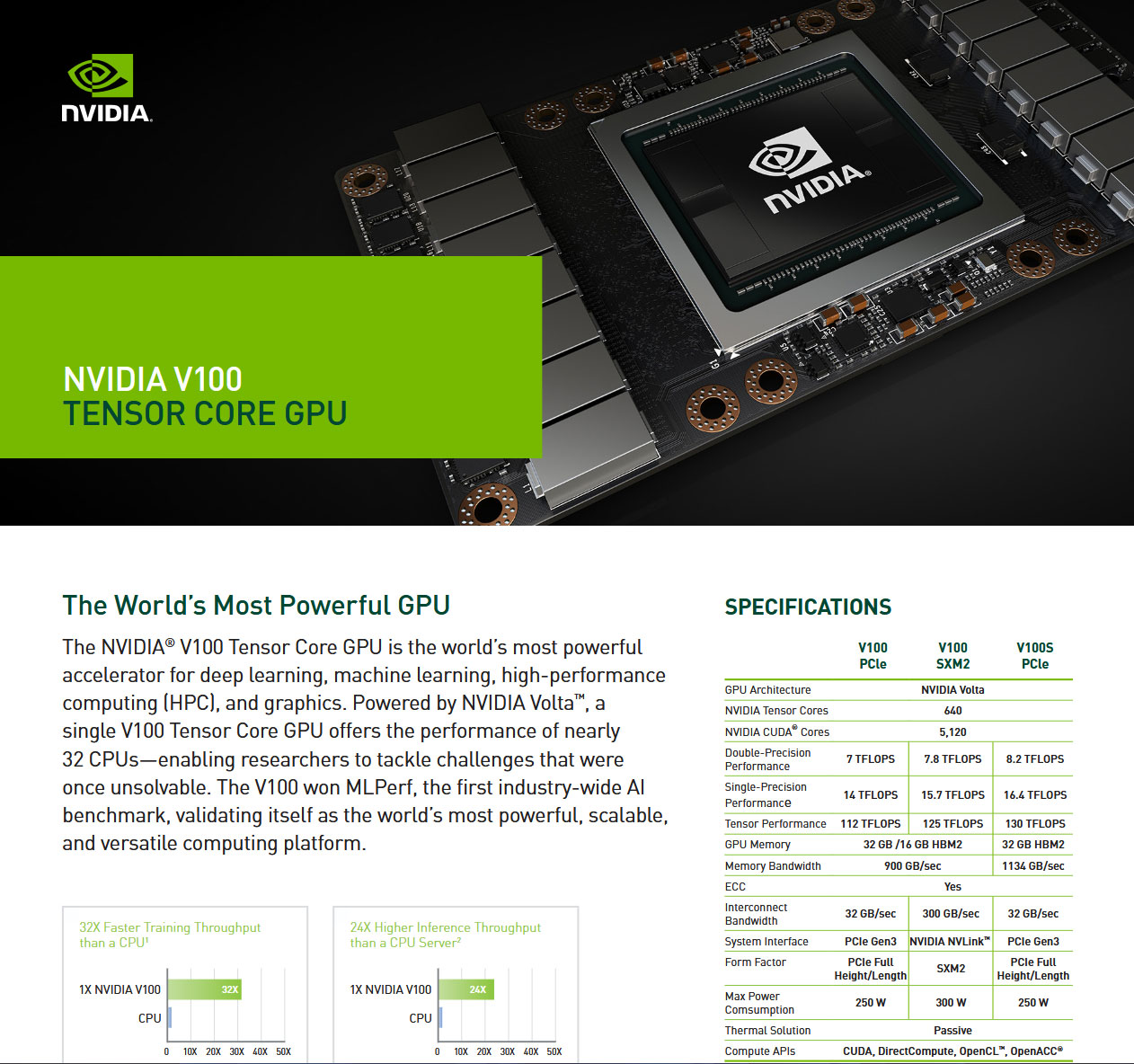
A Tesla V100 local LLM build by computing enthusiast Oscar Molnar shows what happens when old data-center hardware gets dragged into a gaming PC for AI work: more VRAM for little money, plus a fan that initially sounded like shop equipment.
Molnar wrote that they added an Nvidia Tesla V100 SXM2 with 16GB of HBM2 memory to a PC that already had an Nvidia GeForce RTX 4080 with 16GB of VRAM. The result was a 32GB total VRAM setup for local large language model inference at a reported cost of $266, about £200.
The point was not gaming. The V100 is a server GPU from Nvidia’s Volta generation, while the RTX 4080 uses Nvidia’s newer Ada architecture. Molnar’s build used the older card as extra memory and compute for running larger AI models locally, where VRAM is often the hard limit before raw GPU speed becomes the problem.
How did Oscar Molnar put a Tesla V100 in a gaming PC?
Molnar said the V100 was an SXM2 model, which means it was not a standard desktop PCIe graphics card that could be dropped straight into a motherboard slot. To make it work in the PC, they bought an SXM2-to-PCIe adapter for about $66 on eBay.
The adapter solved the slot problem. The cooling problem was less polite. According to Molnar, the stock fan attached to the Tesla V100 cooler produced 82 dB of noise and was described as “somewhere between a garbage disposal and a lawnmower.” That is not a fun acoustic profile for a machine sitting near a human being.
Molnar addressed the noise by changing how the fan was controlled. The fan wiring was rerouted to a motherboard PWM fan header, a standard connector that lets the motherboard regulate fan speed. Molnar also noted that a 2.54mm male to PH2.0 female jumper cable could be used for the same job.
After that change, the fan reportedly needed to run at only 10% speed to keep the Tesla V100 below 50C under full load. That is the useful part of the hack: the enterprise cooler was obnoxious at default behavior, but apparently overbuilt enough that a lower controlled speed still handled the heat.
What does 32 tokens per second mean for a local LLM?
Molnar said the finished machine ran a 27 billion parameter model at 32 tokens per second. Tokens are the text chunks an AI model reads and generates, so tokens per second is a practical speed measure for how quickly the model can respond.
Molnar described that result as fast enough for interactive use and said it beat most cloud API alternatives. That comparison is Molnar’s claim, not an independent benchmark, and the exact cloud services or test conditions were not specified.
Getting both Nvidia cards to cooperate required software as well as parts. Molnar used NixOS with an older Nvidia driver that still supported both the Volta-era Tesla V100 and the Ada-era RTX 4080. That driver overlap matters because mixed-generation Nvidia setups can fail on support boundaries rather than on hardware capability.
Molnar also noted that 32GB versions of the Tesla V100 exist, but said they cost about twice as much. The cheaper path, in this case, was stitching a 16GB server module into an existing RTX 4080 system and tolerating some adapter-and-fan surgery along the way.
This story draws on original reporting from Tom's Hardware.