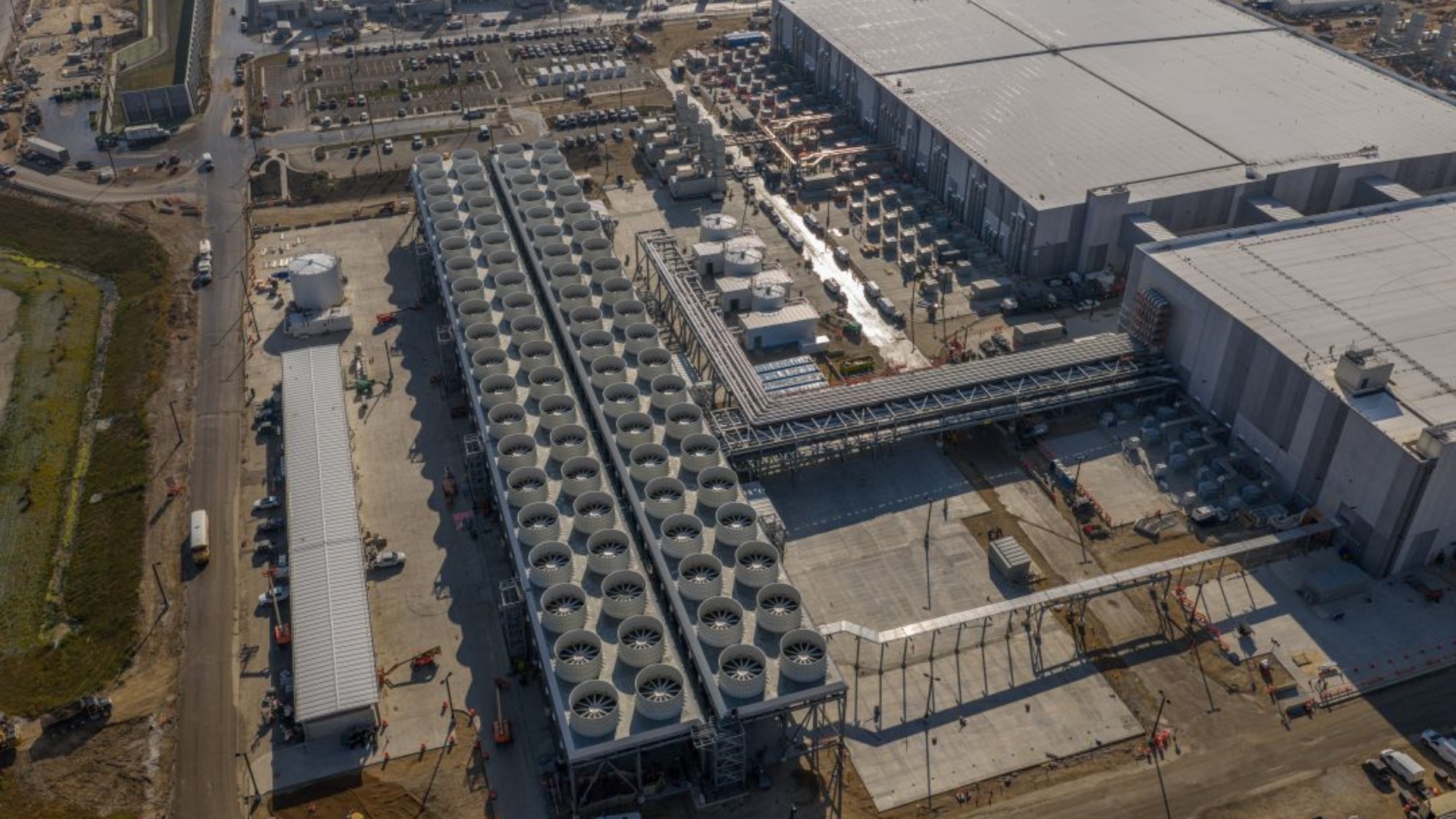
Texas’ data center moratorium is a pause on advancing new facilities through the ERCOT grid-connection process, not a statewide ban on construction. Gov. Greg Abbott announced the directive Aug. 3, ordering the Public Utility Commission of Texas and the Electric Reliability Council of Texas to verify and audit data-center projects before further approvals move ahead.
The action reaches a queue whose headline number needs some adult supervision. ERCOT is tracking more than 1,800 proposed projects seeking interconnection, representing more than 474 gigawatts of requested electricity, Abbott said. Roughly 90% of those new power requests are for data centers. The 474 GW figure is queued requested capacity across projects, not current Texas electricity consumption, firm demand, or proof that 1,800 data centers are already operating.
Still, it is an unusually large pile of requests: ERCOT described it as more than five times its record peak demand. Abbott’s office said that scale of prospective load could threaten the grid’s reliability and stability, according to USA Today.
What does the Texas data center moratorium actually pause?
It stops additional data-center projects from moving forward in ERCOT’s interconnection process until regulators complete the required verification and audit. Interconnection is the regulatory and engineering process for attaching a large electricity user to the grid. It is separate from building a facility, although a data center without an approved power connection has an obvious practical problem.
The order requires developers to provide information on public assistance and tax breaks, planned power consumption and generation, water use and cooling, ownership, and steps to limit effects on surrounding communities. The agencies are also to examine construction and operating plans, including whether a project will use on-site generation or behind-the-meter power, The Texas Lawbook reported.
Abbott said projects that do not meet applicable PUCT, ERCOT, and state-law requirements must be denied a grid connection. His stated reason for the audit was incomplete participation in a PUCT survey covering water and electricity use. The survey, developed with the Texas Water Development Board, also asks about cooling systems, water sources, and whether a facility uses ERCOT power or generates its own electricity, according to The Texas Tribune.
That information matters because data centers run on power, cooling and network equipment, and their local effects depend heavily on how those systems are designed and supplied. The audit does not establish that every queued project will impose its full requested load, or that every proposal will be built.
Which projects are outside the pause?
The directive is limited to projects seeking connection through ERCOT, which does not cover all of Texas. El Paso, for example, lies outside ERCOT’s region. Facilities using their own on-site generation may also avoid a traditional ERCOT connection, The Texas Tribune reported.
There is no announced end date. ERCOT and the PUCT had already begun a review known as “batch zero”; after Abbott’s order, ERCOT said it was pausing that review. The Tribune reported that it remains unclear whether the governor intends the audit to cover those projects, every project in the queue, or both.
The Data Center Coalition, a trade group representing large technology companies, said it hoped a prompt review would separate responsible developers from weaker proposals. That is the industry’s position, not a timetable from regulators.
This story draws on original reporting from Tom's Hardware.