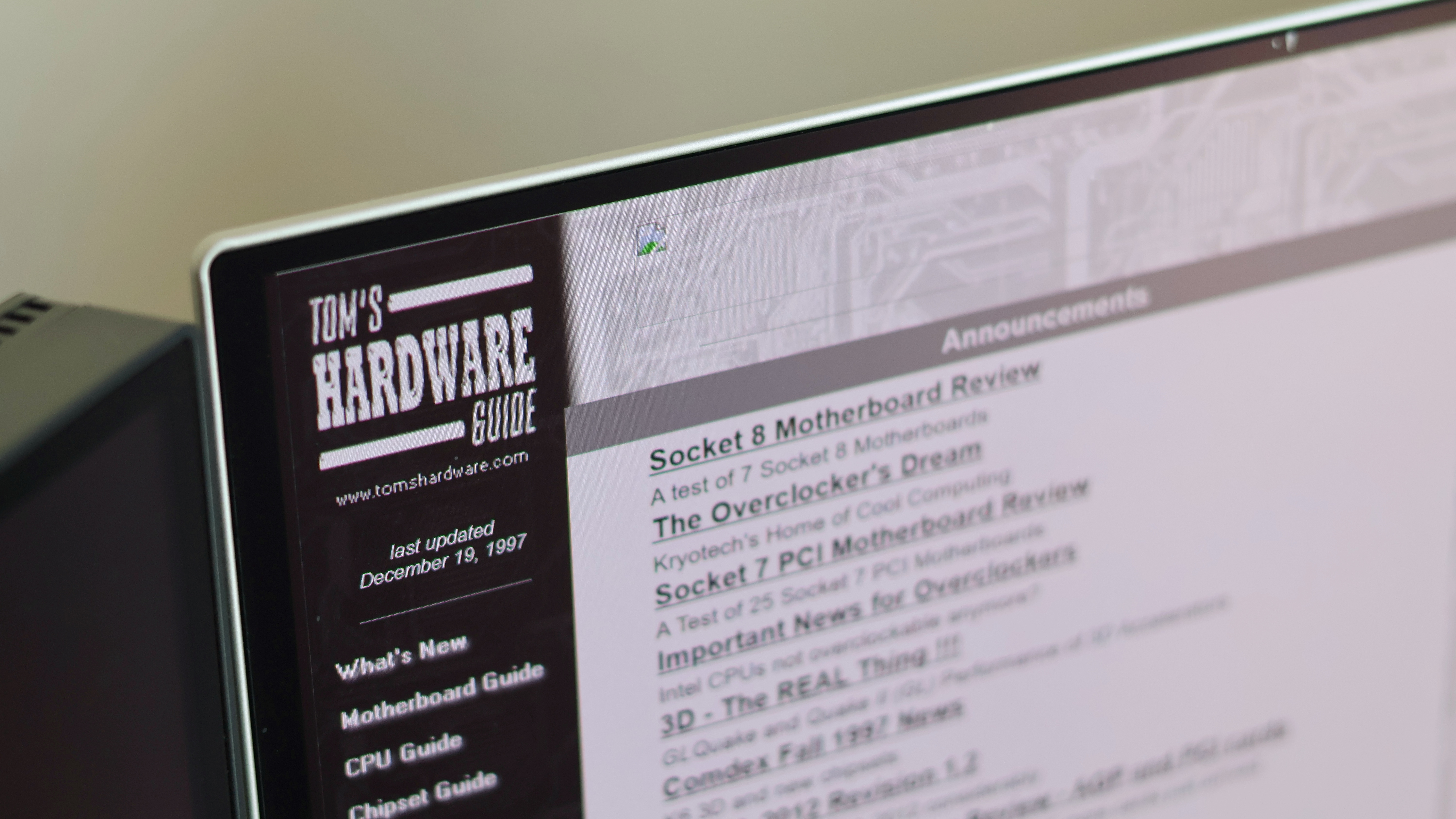
Tom's Hardware 30th anniversary coverage is starting with a look back at PC hardware, and the site is using the milestone to retell how Dr. Thomas Pabst turned motherboard and CPU testing into one of the web's better-known hardware publications. Tom's Hardware said it will run a series on the past three decades of PC components and peripherals, beginning with processors.
Pabst, a doctor and surgeon, began publishing hardware tests in 1996 under the name Tom's Roadrunner Page. Later that year, the project became Tom's Hardware Guide, the name many longtime readers still shorten to THG. According to Tom's Hardware, its early work centered on motherboards and CPUs, then expanded into graphics cards including Nvidia's Riva 128 and 3Dfx's Voodoo boards.
The publication also says Pabst wrote a custom benchmark that it billed at the time as the first real-world 3D benchmark. That sort of claim is exactly the kind of thing hardware sites tend to argue about for decades, but the broader point is less slippery: benchmarking, not vendor slide-reading, became the site's identity.
Why did Intel clash with Tom's Hardware?
The best-known fight came from Pabst's unauthorized review of a pre-release Intel Pentium II processor. Tom's Hardware says Pabst obtained the chip through publishing contacts, and the resulting coverage was negative enough that Intel threatened to withdraw advertising from two publications unless the reviews disappeared.
The dispute escaped the enthusiast press and reached mainstream outlets, including The New York Times. Tom's Hardware says Intel acknowledged using advertising contracts as pressure and apologized. The timing mattered: the controversy landed as CeBIT 1997 began, putting the Germany-based site in front of more industry contacts.
A later conflict involved the Intel Pentium III. Tom's Hardware says Pabst found persistent bugs in the chip, including issues exposed under Linux, which was not a standard benchmarking platform then. Pabst refused to hand over his sample to Intel, saying it was his only proof. According to the site's account, Intel pulled the processors from sale until it could produce a new stepping, then excluded Pabst from Pentium 4 coverage, which he considered retaliation.
What changed after the early PC testing years?
Tom's Hardware Guide broadened over time into networking, news and additional hardware categories, and eventually shortened its public name to Tom's Hardware. Pabst sold the site to Best of Media Group in 2007 and remained chairman until 2008. Tom's Guide, now a sister publication, launched in 2007.
The brand also expanded outside English-language publishing. Tom's Hardware says French and Italian licensed editions remain active today.
The PC building scene the site covered in 1996 was less polished than the one buyers see now. Tom's Hardware notes that early enthusiasts adjusted jumpers and DIP switches by hand to tune systems, long before friendly BIOS tuning became routine. Its forums still include readers who remember that era, alongside newer builders asking for help with current hardware.
The publication says its current coverage still focuses on PC components, benchmarks and buying advice, while adding areas such as 3D printing. It has also launched Tom's Hardware Premium, a subscription service that includes longer-form coverage and access to its Bench database of PC hardware results. Tom's Hardware says the publishing business now faces pressure from AI systems that reuse its expertise without payment or attribution, along with a tougher search environment from Google.
This story draws on original reporting from Tom's Hardware.