Tom's Hardware CPU history is getting a 30-year look-back, and the useful bit is not nostalgia for beige boxes. The publication uses its anniversary to trace how Intel and AMD traded leads from the Pentium II era through Athlon, Pentium 4, early 64-bit desktop chips and the point where raw clock speed stopped explaining performance.
Tom's Hardware says its CPU coverage began in 1996, with early work by founder Thomas Pabst on topics such as SoftMenu BIOS, which let users change processor settings in software rather than by moving physical jumpers. The site says its earliest archived article dates to July 1, 1996, while its original sysdoc.pair.com domain went online in February that year.
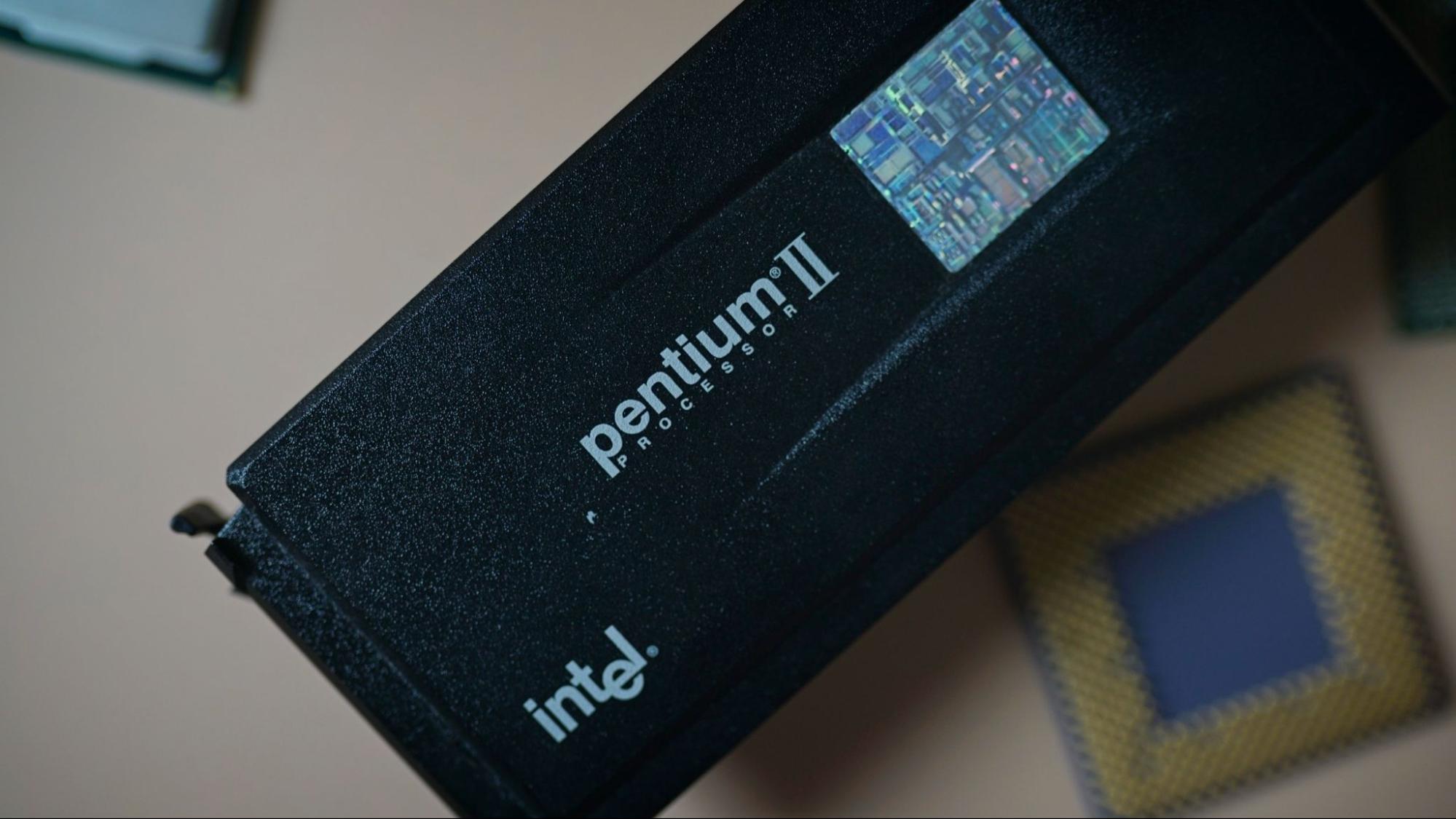
The publication's first major CPU confrontation came with Intel. Pabst reviewed a pre-release Pentium II Klamath on March 1, 1997, more than two months before Intel's official launch. Tom's Hardware says the chip came through two German magazines, C'T Magazin fur Computertechnik and PC Professionell. After those reviews appeared, Intel threatened the German magazines with advertising and legal consequences, according to Tom's Hardware. Pabst publicized the dispute, The New York Times covered it, and Intel backed off.
The hardware gap since then is not subtle. Tom's Hardware lists the Pentium II Klamath at 7.5 million transistors, a 350 nm process, a 300 MHz top clock and an approximate $700 launch price, or about $1,450 adjusted for inflation. Its comparison table puts modern desktop parts in the billions of transistors, with the Core Ultra 7 270K Plus at 17.8 billion and the Ryzen 9 9950X at 16.63 billion.
What happened in the AMD vs Intel CPU race?
Tom's Hardware frames the late 1990s and early 2000s as a messy fight over architecture, clocks, cache and pricing, not a clean march of faster numbers. AMD's K6 arrived in 1997 as a cheaper challenger to Intel's Pentium line, though Tom's Hardware found the final Pentium II stronger in DOS games and Windows NT while Windows 95 results were closer.
AMD's bigger break came with K7, better known as Athlon, in June 1999. Tom's Hardware described Athlon as a milestone and pointed to its three-way instruction decoder, which could handle instructions of varying complexity across all three lanes. Intel's Pentium III also used a three-way decoder, but Tom's Hardware says Intel segmented those lanes by instruction complexity.
The race then became almost comically literal. AMD released Athlon 600, then 650 and 700 MHz parts within months. Intel answered with Pentium III 600, but Tom's Hardware reported instability at that speed. Intel later moved to the Coppermine Pentium III, adding on-chip L2 cache, shifting to 180 nm and raising the initial top clock to 733 MHz. AMD followed with Orion, an Athlon revision at 180 nm and up to 750 MHz.
AMD claimed the first released 1 GHz desktop CPU in March 2000 with Athlon 1000, according to Tom's Hardware. Intel later introduced a Pentium III at 1.13 GHz, but Tom's Hardware found stability problems, and Intel recalled the chip less than a month after launch, according to a CNN report cited by the publication. AMD's Thunderbird revision then pushed Athlon to 1.1 GHz and later 1.2 GHz.
Why did clock speed stop telling the whole story?
A CPU's clock rate says how many cycles it can run per second, but it does not say how much useful work each cycle completes. Cache design, instruction handling, memory support, threads and software support can make two chips with different clock speeds perform closer than their names suggest.
Intel tried to retake momentum with NetBurst and the Pentium 4. Tom's Hardware says Intel reached 2 GHz with Pentium 4 in August 2001, while AMD moved to Athlon XP model numbers that did not match actual clock rates. For example, Tom's Hardware says Athlon XP 1500+ ran at 1.3 GHz, while Athlon XP 2100+ ran at 1.7 GHz.
Intel's Pentium 4 3.06 GHz, released in November 2002, added Hyper-Threading to the consumer market. Hyper-Threading is Intel's simultaneous multithreading approach, allowing one physical CPU core to present two threads to software so the chip can keep more execution resources busy.
AMD answered in another direction with Athlon 64, which brought its AMD64 extension to desktop PCs in 2003 after appearing in Opteron. AMD64 extended the familiar x86 PC architecture to 64-bit computing, giving software access to wider registers and more addressable memory when the operating system and applications supported it.
Tom's Hardware says Intel launched the Pentium 4 Extreme Edition a week before Athlon 64, keeping a performance lead against the Athlon 64 FX-51 but at a higher price. Intel's later 90 nm Prescott core did not deliver the clean win enthusiasts expected, according to Tom's Hardware testing, while AMD's 90 nm FX-55 helped close the gap. By 2004, the old gigahertz scoreboard was already losing its authority.
This story draws on original reporting from Tom's Hardware.