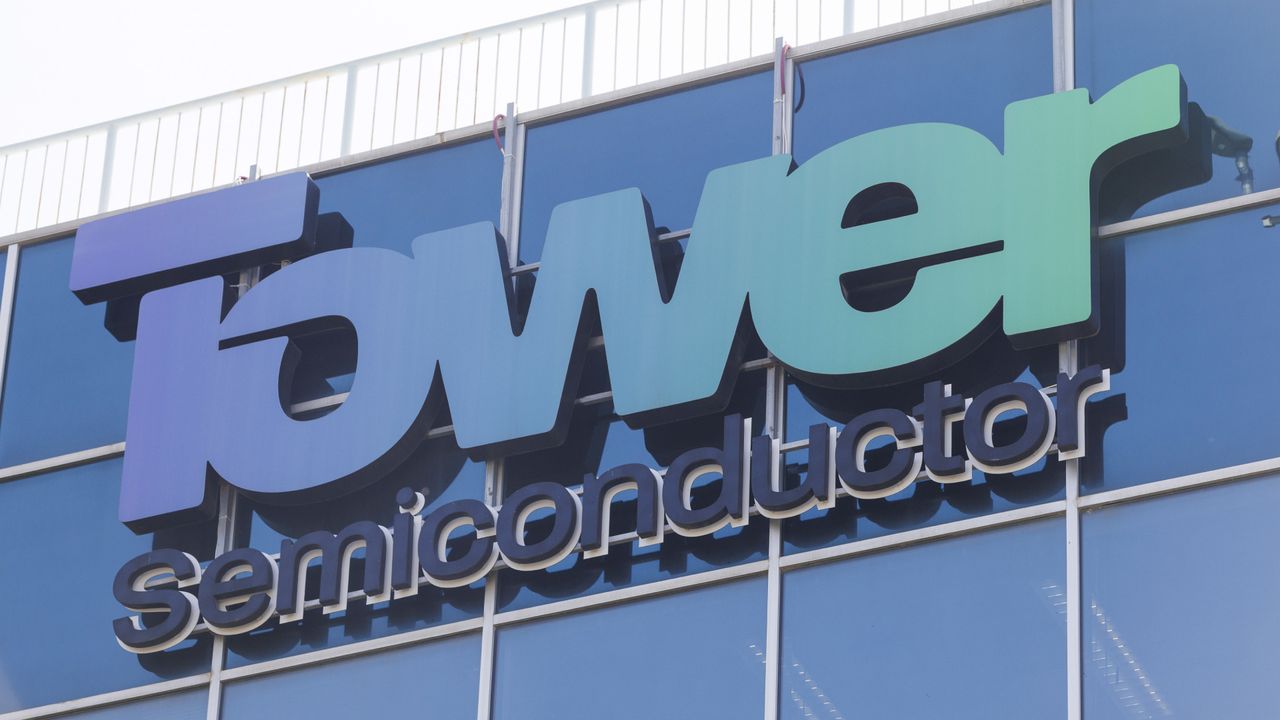
Tower Semiconductor plans to spend as much as $3 billion, after grants, on a Japan expansion aimed at silicon photonics, silicon germanium and advanced packaging, the company said. Japan’s Ministry of Economy, Trade and Industry is backing the plan, which gives Tower a bigger role in the optical plumbing now feeding AI data centers.
The Israeli specialty foundry also raised its 2028 business model to about $3.6 billion in revenue and $1.2 billion in net profit. Tower said those figures depend on the first, already committed part of the plan: reopening the Arai site and increasing output at its 300mm Uozu plant in Toyama Prefecture.
A dormant fab becomes the shortcut
The first phase turns Arai, also called Fab 6, into a 300mm silicon photonics and advanced optical packaging facility. Tower also plans to expand Fab 7 in Uozu. The company expects full production readiness in the fourth quarter of 2027.
Arai is not an empty field with a ribbon-cutting problem. Tower’s SEC filings say the plant stopped operating in July 2022 because it served Nuvoton Technology Corporation Japan rather than Tower’s foundry customers. That left a usable fab shell idle for years.
Tower chief executive Russell Ellwanger argued that the reused site changes the schedule. In the company’s telling, greenfield fabs and acquired fabs require long cycles for process development, customer qualification and revenue ramp. A dormant building near an operating, qualified photonics fab lets Tower move faster than starting from dirt.
The second phase is larger and less certain. Tower said it may build a new 300mm fab next to Fab 7, which would multiply silicon photonics and silicon germanium capacity and become accretive from 2029. The company has not signed definitive agreements for that part, and Tower said its 2028 targets do not rely on it.
The Panasonic joint venture gets cleaned up
The expansion follows a March 2026 restructuring of TPSCo, the joint venture that brought Tower into Japan in 2014 when it bought 51% of Panasonic’s three-fab semiconductor manufacturing operation. Panasonic later sold its remaining interest to Nuvoton in 2020.
Under the March agreement, Tower will take full ownership of the 300mm Fab 7. Nuvoton Technology Corporation Japan will take the 200mm operations and pay Tower $25 million. Closing is expected on April 1, 2027, according to Tower. Full control of Fab 7 removes a governance tangle that would have sat awkwardly under a multibillion-dollar expansion.
Photonics carries the new model
Tower reported $1.566 billion in revenue and $220 million in net profit for 2025. The new 2028 model more than doubles that revenue and implies a net margin near 33%. Tower’s previous 2028 model, reaffirmed in May, called for $2.8 billion in revenue and $750 million in net profit.
Ellwanger told analysts in February that silicon photonics revenue reached $228 million in 2025, up from $106 million in 2024. He said the fourth-quarter run rate was $380 million on an annualized basis, including some non-wafer engineering revenue. In May, Tower disclosed $1.3 billion of contracted silicon photonics revenue for 2027 from its largest customers, supported by $290 million in prepayments.
Tower says its silicon photonics customers include Innolight, which uses Tower’s PH18 platform family for 400G, 800G and 1.6T optical transceivers, and Marvell, which said in June that it had shipped more than five million coherent photonic ICs made with Tower.
The risk list is not subtle. Tower’s forward-looking disclosures cite construction delays, equipment lead times, permitting and METI grant conditions that could cost it some or all of the grant money. The margin target also depends on continued AI and data center optics demand from a concentrated set of large customers, a dependency Tower acknowledges.
Competitors are not waiting. GlobalFoundries said in its annual report that it paid $453 million in cash for Singapore’s Advanced Micro Foundry in November 2025. TSMC is pursuing co-packaged optics tied to Nvidia’s optical interconnect plans. MarketsandMarkets estimates the silicon photonics market will grow from $2.65 billion in 2025 to $9.65 billion in 2030.
Japan has already put large sums behind domestic chip capacity, including commitments for TSMC’s JASM fabs, Micron in Hiroshima and Rapidus. Tower’s plan appears to be the country’s first support package of this scale aimed at a dedicated silicon photonics foundry.
This story draws on original reporting from Tom's Hardware.