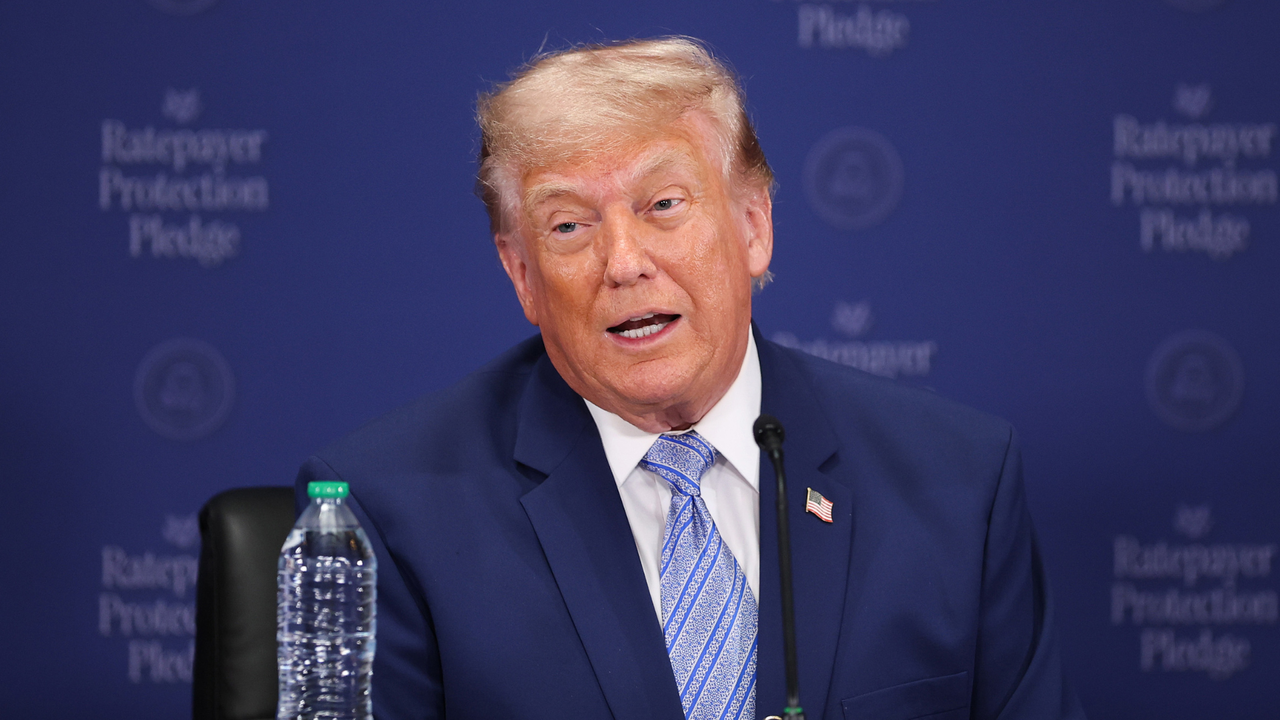
The Trump ratepayer protection pledge now has signatures from 23 state governors and 187 utility companies and data center developers, according to The Associated Press. The White House says the pledge is meant to keep households from eating the grid costs of AI data centers, whose power demand is becoming a political problem rather than a spreadsheet item.
AP identified several signers, including utilities NextEra Energy, Duke Energy, American Electric Power, Southern Co. and Pacific Gas & Electric. Data center developers Equinix, Digital Realty and Prologis also signed, according to AP.
President Donald Trump first announced the pledge in late February during the State of the Union address, then hosted AI companies including Meta, Amazon and OpenAI at the White House a week later. The administration’s pitch was that large data center operators should pay for the power and infrastructure they require, rather than shifting those costs onto ordinary utility customers.
What is the ratepayer protection pledge?
The ratepayer protection pledge is a voluntary commitment that data center developers, utilities and now governors can sign to support power arrangements that do not raise electricity bills for regular customers. Critics cited by AP say the problem is that a pledge is not law, so it cannot be enforced like a statute or utility regulation.
Energy Secretary Chris Wright said in March that the plan “will deliver more affordable, reliable, and secure energy for the American people.” Trump made the same claim at the time, saying, “Electricity bills for American families will actually come down. They’re going to have a lot of electricity left over, and they’ll put that into the grid.”
The record so far is less tidy than the sales pitch. PJM Interconnection, the largest grid operator in the United States, assigned Maryland a $2 billion grid upgrade bill tied to out-of-state AI data centers. Monitoring Analytics, the independent market monitor for PJM, said a 75.5% increase in power costs in the country’s largest power region was directly caused by data centers.
The administration has made AI infrastructure a priority, arguing that the United States must expand adoption of AI tools and the data centers that run them to compete with China. Federal energy regulators have also moved to speed up AI data center applications, according to the reporting cited on the policy push.
That collides with local resistance. Communities have objected to data center projects over electricity costs, water quality, noise and other effects. Several jurisdictions have adopted temporary bans on new data center development, including Seattle and New York, according to the reporting on those moratoriums.
Some states are looking beyond voluntary promises. AP reported that California is trying to put the pledge’s ideas into law. Oregon has already passed the POWER Act, a law covering developments that use more than 20 megawatts of electricity. The law requires large power users’ bills to “reflect the true costs of their electric service.”
After Oregon passed that law in April 2025, Portland General Electric raised data center power bills by 30% and cut residential costs by 1.3%, according to the reporting on the utility’s rate change. It remains unclear which pledge-signing states, if any, are pursuing similar rules, or what data center developers will actually do to meet the promise they signed.
Trump has urged states to accept data center projects rather than fight them. “You have to convince your community. You can’t fight it. You have to go with it,” he said. “If you don’t take all that money, somebody else is going to take it. You might as well do it yourselves.”
This story draws on original reporting from Tom's Hardware.