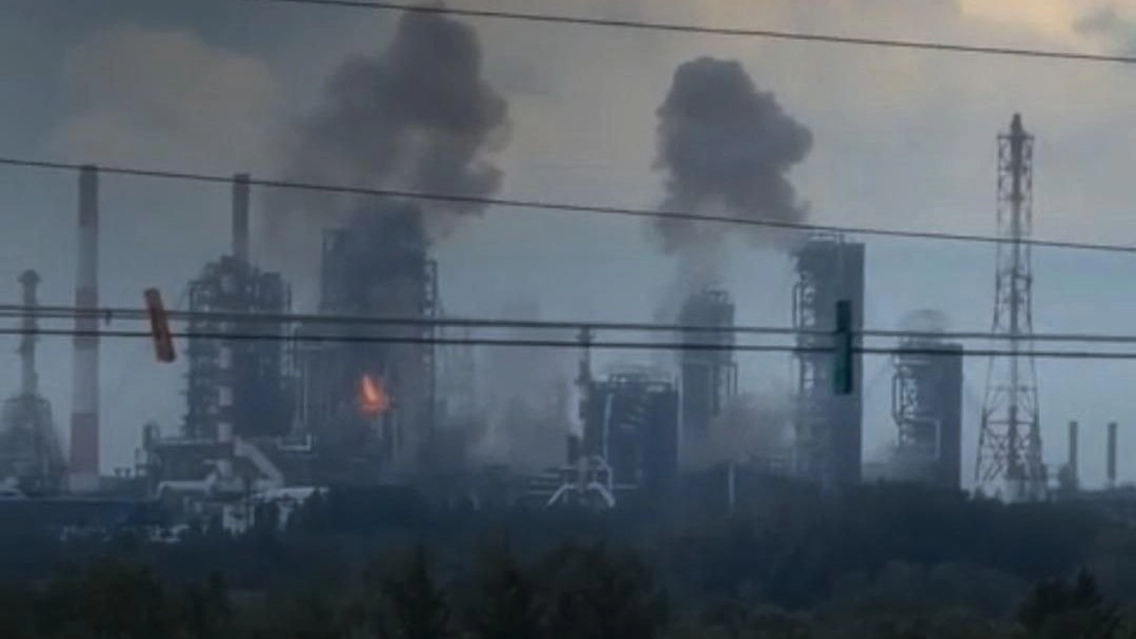
Ukraine struck Gazprom Neft’s refinery in Omsk, Siberia, on July 6 with FP-1 attack drones that flew about 2,500 kilometers for more than 12 hours, according to The Telegraph. The newspaper described it as the longest-range Ukrainian drone attack of the war.
The target was not marginal infrastructure. The Omsk refinery is Russia’s largest gasoline producer, according to The Telegraph. Reuters reported that the strike ignited the CDU-10 crude distillation unit, which processes 24,580 metric tons of crude a day and represents about 38% of the plant’s capacity. Reuters also reported that CDU-11, another unit responsible for 37% of processing, was shut after damage to network links needed for its operation.
The refinery processed 22 million metric tons of crude in 2024, or roughly 440,000 barrels per day. The day after the strike, it stopped selling gasoline and diesel on the St. Petersburg International Mercantile Exchange, according to the report.
A cheap airframe with enough range to matter
The FP-1 is built by Fire Point, a Kyiv-based company. Its design is bluntly practical: plywood carries the load, foam forms the wings, and fiberglass or carbon fiber skins cover the structure. The drone uses a twin-boom layout, has a wingspan of about five meters, and lacks landing gear. A solid rocket booster gets it off a fixed launcher or truck, then a two-cylinder piston engine and propeller keep it going.
That is not a sleek military aerospace pitch deck. It is a machine designed to be built in numbers. The reported unit cost is about $55,000, far below the price of an interceptor missile fired by systems such as Russia’s S-400 or Pantsir batteries.
The original FP-1 was designed for a range of 1,600 kilometers while carrying a warhead of up to 60 kilograms. At the Eurosatory defense exhibition in Paris last month, Fire Point displayed an upgraded model with extra fuel storage built into the wing, raising claimed range to 2,700 kilometers.
The Telegraph reported that the drones used against Omsk were modified for the mission, with reduced weight, longer wings and larger fuel tanks. Denys Shtilerman, a Fire Point co-founder, told the newspaper that Ukrainian planners spent more than a week working out a route around Russian air defenses. The drone’s guidance combines inertial and satellite navigation, with a dedicated algorithm meant to resist GPS spoofing, according to the report.
Russia’s defenses have a coverage problem
Fire Point chief executive Iryna Terekh said the company makes about 100 FP-1 drones a day, and that the aircraft now accounts for about 60% of Ukraine’s long-range strikes inside Russia.
The logic is ugly and mechanical. Russia’s air defense network was built mainly to detect and engage fast aircraft and ballistic missiles, according to the report, rather than slow, low-flying drones with small radar signatures. Moscow sent Su-57 stealth fighters during the Omsk raid, but several drones still reached the refinery.
Kyle Glen, an open-source investigator, told The Telegraph that Russia appears to cluster its defenses around Moscow and St. Petersburg, leaving much thinner protection beyond those areas after drones break through the first layer.
Ukraine’s General Staff recorded 172 deep strikes last month, up from 85 in February. Omsk was the sixth major Russian refinery to be fully or partly shut since the beginning of June, according to the report. President Volodymyr Zelensky said last month that a new Fire Point drone can reach 3,000 kilometers, while the company’s FP-5 Flamingo cruise missile, which carries a 1,150-kilogram warhead over the same stated range, has begun hitting Russian weapons facilities.
This story draws on original reporting from Tom's Hardware.