The Windows NT 4.0 anniversary lands 30 years after Microsoft sent the operating system to manufacturing partners on July 31, 1996, a release that gave the company’s 32-bit enterprise Windows line the interface millions of PC users knew from Windows 95.
RTM, short for release to manufacturing, meant Microsoft had finished the build for hardware makers and other partners. For Windows NT 4.0, that milestone mattered because Microsoft was trying to make NT more approachable for administrators and workstation users while using it to compete against established Unix server systems.
Windows NT 4.0, developed under the Cairo codename, paired the NT kernel and enterprise features with the Windows 95-style Start menu, taskbar, Task Manager, My Computer and My Documents. That UI decision sounds cosmetic until you remember the job: Microsoft wanted one visual language across consumer PCs, workstations and servers, rather than making NT feel like a separate planet.
Why did Windows NT 4.0 matter?
Windows NT 4.0 mattered because it helped move Microsoft’s serious operating system line toward the Windows most people recognized. NT had arrived publicly in 1993 with Windows NT Server 3.1, but version 4.0 made the server and workstation product feel less alien to users coming from Windows 95.
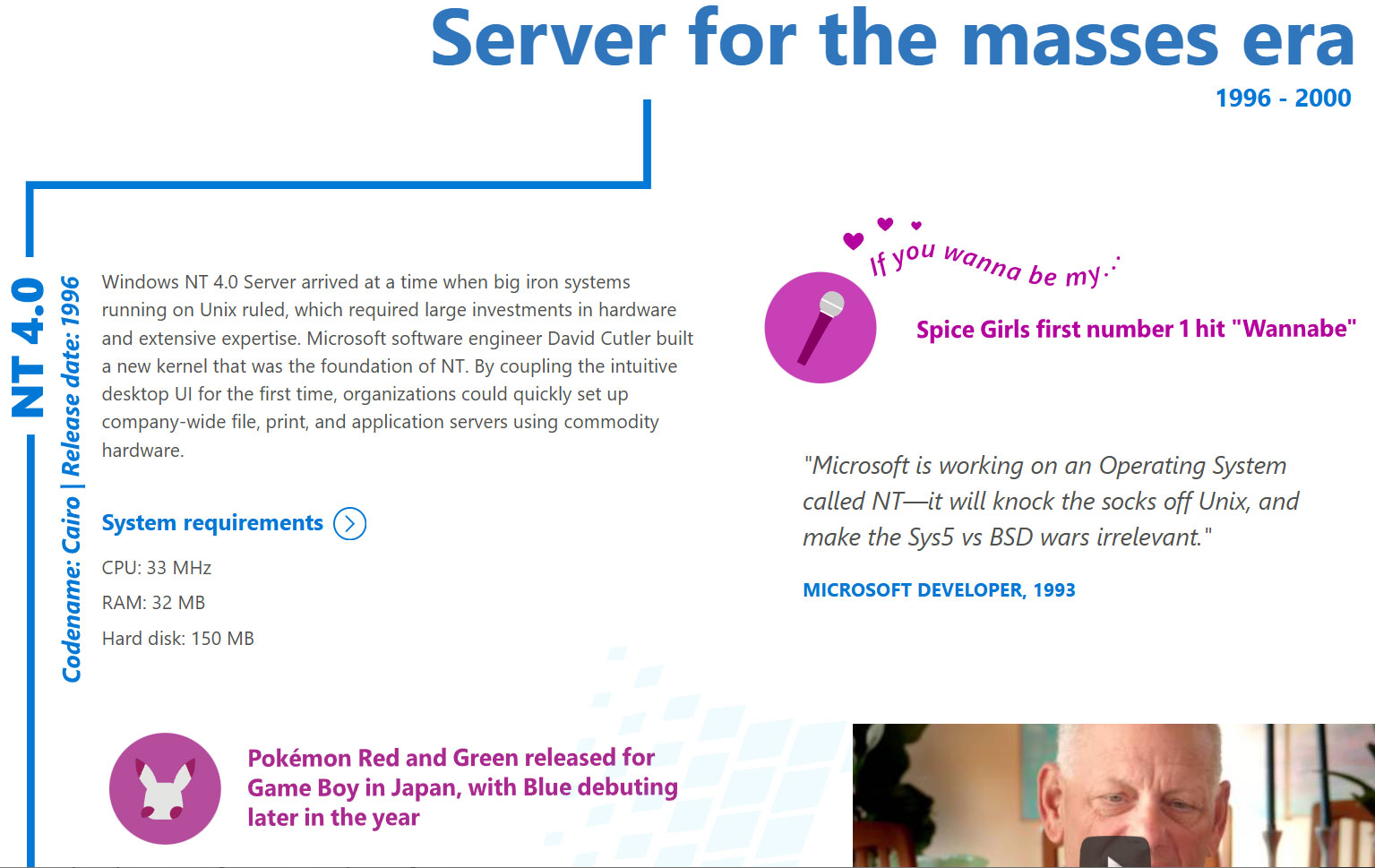
The release also sat at an awkward and interesting hardware moment. Microsoft listed modest minimums by later standards: a 33 MHz or faster CPU, 32MB of RAM, SVGA graphics and a hard drive with 256MB of capacity. That put NT 4.0 in the Pentium and Pentium Pro era, before Windows XP would make far heavier assumptions about PC hardware.
NT 4.0 was also the last NT release to support Alpha, MIPS and PowerPC processors, according to the historical record around the product. That detail is a reminder that Windows NT once had broader ambitions across CPU architectures than the x86-dominated Windows desktop most users remember.
Microsoft followed the initial NT 4.0 release with editions for embedded systems and Terminal Server. The platform added or supported components including the cryptography API, DCOM, TAPI 2.0 and some DirectX 2 features, which helped stretch NT beyond a plain file-and-print server role.
How Windows NT led to Windows XP
NT 4.0 was one stop in a longer server lineage. Windows NT Server 3.1 arrived in 1993 and introduced NTFS. Windows NT Server 3.5 followed in 1994 with integrated Winsock and TCP/IP support. Windows NT Server 3.51 added client/server support in 1995. Windows 2000 Server later introduced a new naming scheme, Active Directory and NTFS 3.0 with file system encryption.
The larger strategic payoff came in 2001, when Microsoft shipped Windows XP as the consumer break from the DOS-based Windows 95, 98, 98 SE and Me line. XP’s marketing leaned on the phrase “Built on NT technology,” a slightly tortured slogan if you were in the camp that read NT as “New Technology.”
Microsoft still had substantial work between NT 4.0 and XP, including Plug and Play, gaming support and WDM drivers. PC hardware also became faster and more multimedia-capable in that half-decade, which helped make XP practical for mainstream users.
Microsoft later called Windows NT 4.0 “the server for the masses” on the operating system’s 20th anniversary. The phrase is marketing, but the endurance was real enough: administrators and retro-computing enthusiasts kept NT 4.0 around well beyond its original moment, and old Cairo builds and browser-based installs remain part of the retro Windows circuit.
This story draws on original reporting from Tom's Hardware.