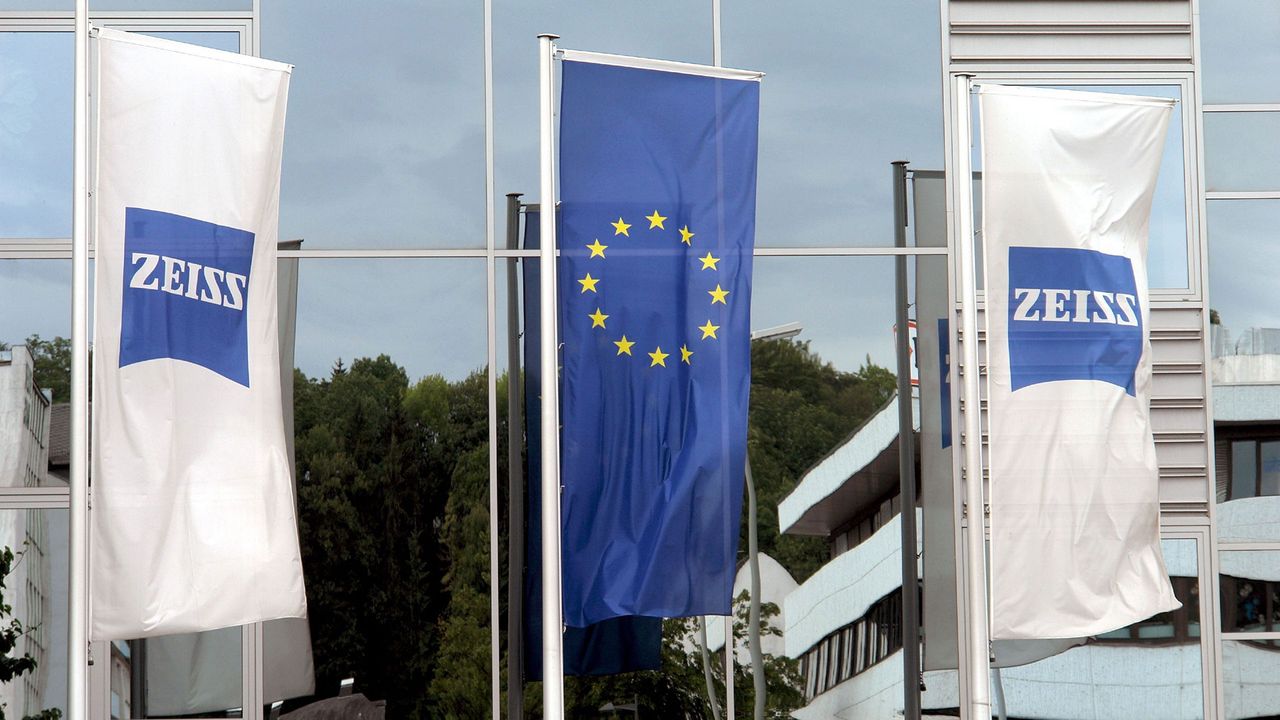
Zeiss SMT said its Zeiss Oberkochen expansion in southern Germany has reached its first handover, with employees moving into the initial completed building this month. The project adds about 25,000 square meters of production and related space, four years after construction began in 2022, and more buildings are due to follow in stages.
The square footage matters because Zeiss Semiconductor Manufacturing Technology sits in a narrow and uncomfortable spot in the chip supply chain. According to ASML’s annual report, Zeiss SMT is the exclusive supplier for critical optical components used in ASML lithography systems, including lenses, mirrors, illuminators and collectors. ASML says its own system output is constrained by Zeiss SMT’s production capacity.
Oberkochen and Wetzlar are the two sites worldwide where the optical columns inside ASML’s lithography scanners can be built. That makes the German expansion less like a routine factory project and more like a pressure valve for the world’s most expensive chipmaking tools.
Why does Zeiss Oberkochen expansion matter for ASML?
ASML’s EUV lithography scanners are used by advanced chipmakers to print extremely small circuit patterns onto wafers. Their optical systems have to steer and shape EUV light with absurd precision, and ASML’s filings make clear that it cannot swap in another supplier if Zeiss SMT falls behind.
ASML put the risk bluntly in its 2025 annual report: if Zeiss SMT could not keep production going for a sustained period, ASML “would effectively cease to be able to conduct our business.” Purchases from Zeiss SMT and its subsidiaries rose to €4.41 billion in 2025, from €3.95 billion in 2024 and €3.33 billion in 2023. The cited exchange rate is €1 to $1.14.
ASML CFO Roger Dassen told investors on the company’s July earnings call that ASML is close to fully booked for low-NA EUV systems in 2027. He said the company is raising capacity by about 30 percent from roughly 65 systems this year and is considering another 30 percent increase for 2028. Dassen also told reporters that ASML is trying to cut the scanner build cycle from about 22 weeks to 15 or 16 weeks.
More factory space does not make EUV optics easy. High-NA projection optics contain more than 40,000 parts and weigh about 12 tons, according to Zeiss. That is about seven times the volume and weight of standard EUV optics. The illumination system adds another 25,000 parts and 6 tons.
Zeiss says individual high-NA mirrors can weigh several hundred kilograms, roughly twice the size and 10 times the weight of current EUV mirrors, and require months of machining before they meet specification. Checking them requires a purpose-built vacuum chamber measuring 5 by 10 meters, built from more than 100,000 parts and weighing over 150 tons. Floor area helps capacity, but it does not remove those process steps.
How ASML is funding the bottleneck
ASML has also been financing Zeiss SMT’s expansion. At the end of 2025, ASML held €1.91 billion in loans receivable from Zeiss SMT, up from €1.44 billion a year earlier, plus €1.19 billion in advance payments to secure optical column deliveries.
The companies have two €1 billion loan facilities, signed in September 2021 and September 2024. ASML also issued a €444 million loan in July 2025 and a €212.5 million short-term loan in November. A May 2025 restatement of their framework agreement made the capital expenditure loans interest-free, with repayment expected over seven or 15 years through quarterly installments tied to Zeiss SMT revenue.
Zeiss SMT reported €5.055 billion in revenue for the fiscal year ended September 30, 2025, up 23 percent, making it the largest of Zeiss Group’s four segments. The company is also building a multifunction factory in Wetzlar, added 300 square meters of cleanroom space in Rossdorf last fall, and opened an innovation center in Korea this month.
This story draws on original reporting from Tom's Hardware.