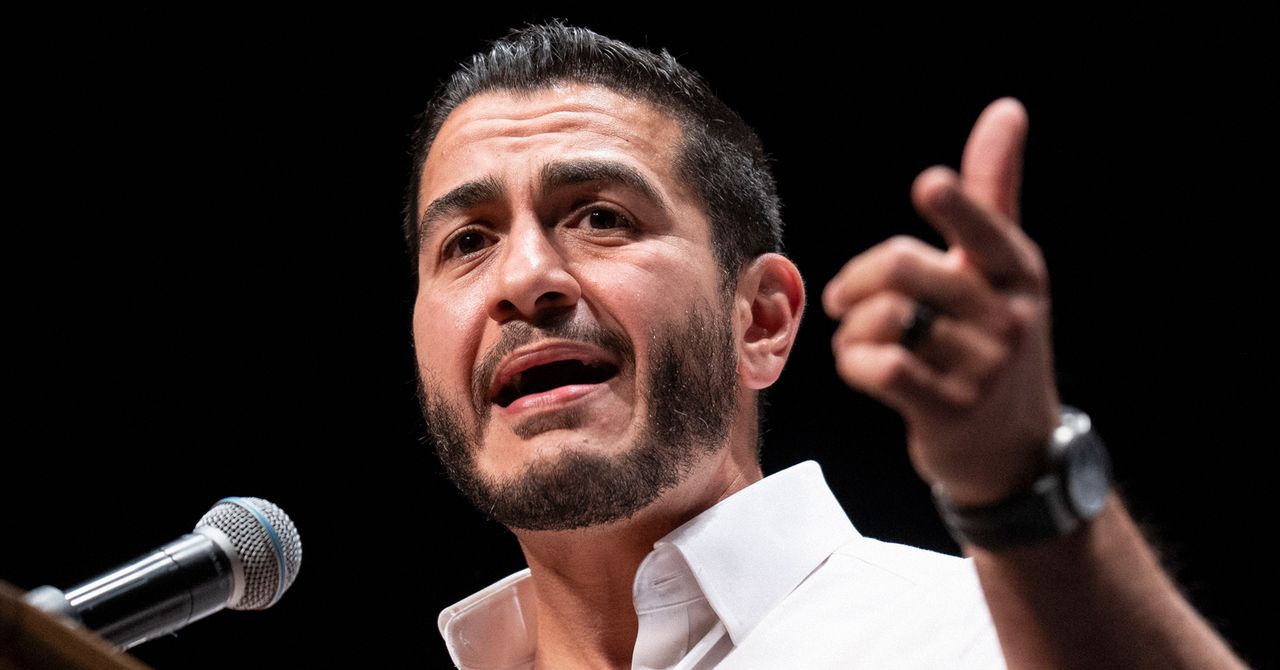
Abdul El-Sayed is running for Michigan’s open Senate seat while his state is dealing with two very tangible failures of public health: dirty air from Canadian wildfire smoke and the nation’s highest number of cyclosporiasis cases, according to WIRED.
For El-Sayed, a physician and epidemiologist with an MD-PhD who previously served as Detroit’s health officer, the timing has made an abstract campaign plank easier to explain. Public health infrastructure is usually the kind of phrase that makes voters check their phones. Smoke in the lungs and a gastrointestinal outbreak tied to food safety do not require much translation.
El-Sayed told WIRED that the lettuce problem gives him a blunt way to talk about federal capacity. He linked the outbreak to the Department of Government Efficiency’s downsizing of the federal lab that tests for cyclosporiasis, a move WIRED reported occurred last year. His point was not subtle: if the government cuts the people and systems responsible for checking food-borne illness, the public should expect slower and weaker protection.
He also said he may have been personally hit by cyclosporiasis while campaigning, though he was not tested. He told WIRED that he was sick for four days and that his wife suspected the illness. On the smoke side, he said he had avoided outdoor exercise, including biking, because of the air quality.
A health candidate in a tight primary
El-Sayed is competing in a close Democratic primary for the Senate seat. His campaign has drawn help from prominent progressives. Senator Bernie Sanders and Representative Alexandria Ocasio-Cortez appeared with him at a rally in Grand Rapids over the weekend, and Senator Elizabeth Warren endorsed him on Monday.
Warren said in her endorsement that El-Sayed would challenge billionaires and special interests that she said have tilted the economy against working people. El-Sayed tied that argument to campaign spending and regulation, telling WIRED that food companies often push to police themselves while resisting public rules. His less polite shorthand for the failure was “poop lettuce.” Accurate enough for campaign trail epidemiology.
If elected, El-Sayed said he would use Senate oversight to question leaders at the Environmental Protection Agency, the Centers for Disease Control and Prevention, and the Food and Drug Administration. He said Congress should investigate how the food supply was compromised, how CDC decisions were made, and why case counts are lagging.
He framed cyclosporiasis as a warning shot. He told WIRED that the illness is usually not deadly for most people, but the same surveillance and lab systems would be needed if the next pathogen were more dangerous. That is the boring machinery of public health, and it is only boring until it breaks.
Climate, energy, and the voter’s electric bill
El-Sayed also connected the wildfire smoke to climate policy and energy. Michigan, WIRED noted, has the country’s highest level of local ordinances opposing solar and wind projects. El-Sayed said voters are often focused less on climate change as a broad concept than on rent, medical bills, homeownership, and utility costs.
His argument is that renewable energy should be discussed through those immediate pressures, including the possibility of more reliable jobs and union work. He said politicians still need to connect those household problems to the larger climate and pollution system producing them.
Asked about Republicans who have suggested sanctioning Canada over wildfire smoke, El-Sayed dismissed the idea as unserious. He said he still sees room to build relationships with voters who have backed Republicans, especially around basic questions like whether people want to breathe smoke or worry about contaminated lettuce.
This story draws on original reporting from WIRED.


