Researchers at Stanford University and the Arc Institute reported that AI-designed viruses produced 16 viable bacteriophages after laboratory synthesis and testing. The result concerns viruses engineered to infect E. coli bacteria, not people, and it is an early laboratory demonstration rather than a treatment for patients.
In the study, published in Science, the team used genome language models called Evo 1 and Evo 2 to generate candidate viral genomes. Researchers then selected roughly 300 designs to synthesize and introduce into bacteria. Sixteen yielded functional phages, according to reporting by Wired, CNN and the BBC.
That distinction is doing a lot of work. The software generated candidates, but laboratory construction and biological testing determined which ones actually functioned. Most of the tested designs did not produce viable viruses.
What did the AI-designed viruses do?
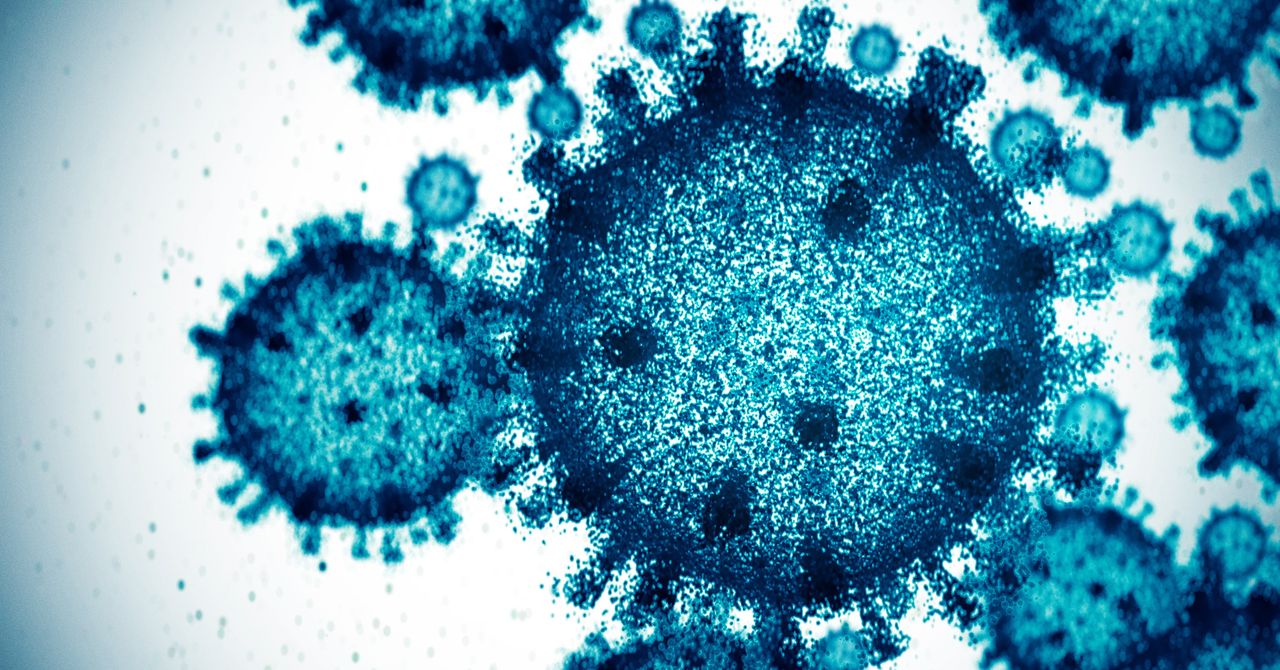
The viruses are bacteriophages, viruses that infect bacteria. The experiment used an E. coli-host framework based on the phage Phi X-174. CNN reported that these phages cannot infect humans.
A mixture of the working AI-designed phages overcame resistance in some E. coli strains in laboratory tests, where a comparable mixture of naturally sourced phages did not, CNN reported. The Guardian said the cocktail overcame resistance in two strains. That points to a possible route for designing phages against bacterial infections that no longer respond to antibiotics, but it does not establish a clinical therapy or show effectiveness in people.
Phage therapy uses bacteria-infecting viruses to target bacterial infections. It has drawn interest as antibiotic resistance rises, though the study reported here tested bacteria in lab conditions, not patients.
A small genome, and a constrained experiment
The scale is limited. The BBC reported that the phage genome used is about 5,400 base pairs long, compared with roughly 500,000 base pairs for the smallest living-cell genome. Viruses are not living cells, and this research did not show an AI system creating a living organism.
The Guardian reported that the models were trained on genetic data from 2 million bacteriophages, while data from viruses that infect humans, other animals or plants was excluded. Researchers conducted the work in a secure laboratory. Whether the approach transfers to other kinds of viruses remains unknown, according to the accompanying commentary discussed by CNN and the Guardian.
Why are researchers raising safety concerns?
The narrow scope does not erase the dual-use issue. Researchers acknowledged biosafety, biocontainment and biosecurity concerns, the Guardian reported, and urged teams designing whole genomes to involve safety and security specialists throughout a project.
In a related Science commentary, Thomas Inglesby and Moritz Hanke of the Johns Hopkins Center for Health Security said generative viral-genome design raises urgent governance questions. They argued that work on pathogens capable of infecting humans, animals or plants should not be pursued, according to CNN, the BBC and the Guardian.
Filippa Lentzos of King's College London told the Guardian that safeguards should not stop at the AI model. She called for layers including controls on model development and access, research review, DNA-synthesis screening, and laboratory biosafety and biosecurity.
The result is a meaningful proof that AI-generated designs can yield new, functioning bacterial viruses. It is also a reminder that “the model made it” is not a substitute for examining what the model was trained to design, who can build the output, and what checks sit between a sequence on a screen and a biological experiment.
This story draws on original reporting from WIRED.