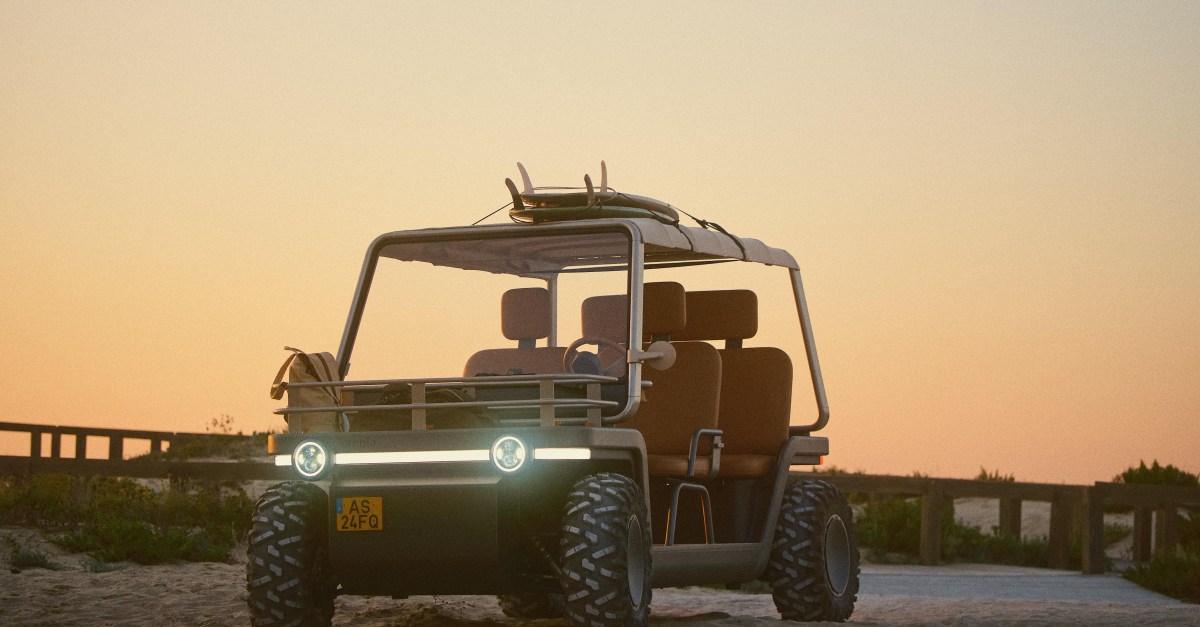
Amble, a Lisbon-based electric vehicle startup, has introduced the Amble One, a compact open-air buggy aimed first at hotels and resorts and, if the company can pull it off, at households that do not need a full-size truck for school runs and groceries.
The pitch is deliberately modest by car-industry standards. Amble is not selling a highway cruiser, an autonomy platform, or a quarter-mile toy. CEO Adrien Roose told The Verge that the company wants the vehicle to serve as a household’s second vehicle, used for short local trips where a conventional car is overkill.
The Amble One has a 15 kW motor, an 11 kWh battery, a top speed of 40 mph, or 65 km/h, and claimed range of more than 62 miles, or 100 km, per charge. Amble says it can recharge from a normal wall outlet in five hours. The vehicle weighs under 450 kg, or 992 pounds.
Small vehicle, annoying weight target
That weight figure is not trivia. Roose told The Verge that Amble is homologating the vehicle under Europe’s L7e quadricycle rules, which require the complete vehicle, including the battery, to come in below 450 kg. He described that limit as one of the hardest engineering constraints for the team.
The design is open and sparse: no doors, folding front seats, a digital display, physical controls, and materials including leather and cork. Amble says the rear seats fold flat for gear such as surfboards, while a front cargo rack and built-in mounts support baskets, straps, mirrors, and other accessories.
Roose said the vehicle draws from the Lunar Rover and older boxy 4x4s such as the Mercedes-Benz G-Wagen. He also pushed back on the easy golf-cart label, telling The Verge the Amble One sits between categories and has three to four times the range of a golf cart.
A resort rollout before private buyers
Amble is starting with hospitality fleets because Roose sees that as a cleaner launch path than selling directly to consumers from day one. The company’s leadership fits that first market. Founder and chairman José António Uva is a Portuguese hotelier and entrepreneur behind São Lourenço do Barrocal. Roose previously led Belgian e-bike company Cowboy. Design lead Julian Hoenig has worked on Audi vehicles including the R8, RSQ, A4, and Q3, as well as Apple Watch, Vision Pro, and Apple’s canceled car project. Michael Tropper, founder of London creative studio forpeople, is cofounder and chief creative officer.
Amble is taking $100 reservations now. Roose told The Verge the company is targeting 2028 deliveries, a $25,000 starting price, and has received more than 1,000 reservations. He also said demand has pushed Amble to consider speeding up deployment of a US street-legal version.
The company will not build the vehicle itself. Roose said Amble has signed with an unnamed contract manufacturer that he described as a Tier 1 automotive supplier with about 1,100 employees and existing EV component work. Motors will come from Germany, reducers from Italy, and batteries currently come from China. Amble plans to export early vehicles to the US from Europe, then eventually build vehicles in America for US customers.
The market will not be empty. Small EVs and neighborhood vehicles already include the Microlino, Citroën Ami, Fiat Topolino, Japanese kei cars, and a growing golf-cart culture in some US communities. Amble’s bet is that some buyers tired of oversized vehicles will pay real-car money for a smaller machine with better design. In the US, where trucks and SUVs make up about 80 percent of vehicle sales, that is less a guaranteed lane than a test of taste, zoning, and patience.
This story draws on original reporting from The Verge.