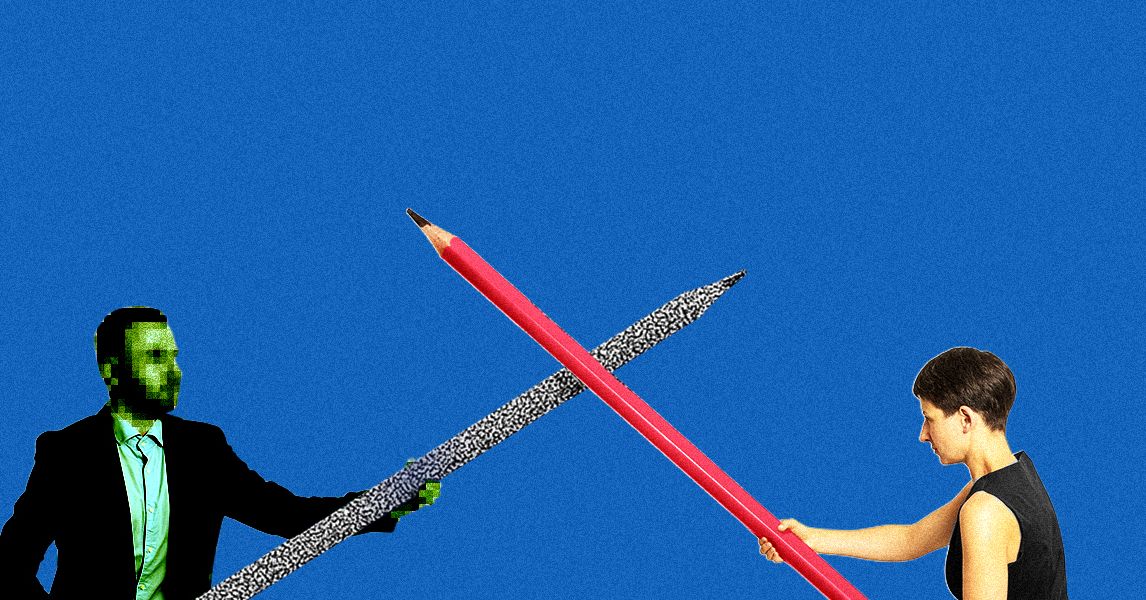
An anti-AI writing style is taking shape among novelists, journalists, editors and serial LinkedIn advice-givers who want their work to read less like large language model output, according to WIRED. The moves are small and sometimes performative: fewer em dashes, fewer tidy three-part lists, more first-person detail, stranger syntax, and the occasional typo left in like a fingerprint.
Novelist Laura Brooke Robson told WIRED that while writing "Love Is an Algorithm," a romance involving the cofounder of an AI dating app and a musician living through the LLM era, she worked deliberately against what she sees as AI’s smooth, generic habits. Robson said she began choosing more unexpected punctuation and phrasing, and described a desire to include small mistakes as signals that a person was behind the page.
Robson argued that AI could help create a literary counterculture. In her view, literary fiction may move further toward the strange and esoteric while commercial fiction absorbs more personalization.
What is anti-AI writing style?
Anti-AI writing style is a loose set of choices meant to avoid the polished sameness associated with chatbot prose. Writers cited by WIRED described using rougher edges, personal anecdotes, unusual comparisons and less standardized structure to make the work feel authored rather than generated.
The obvious problem is that these signals are weak evidence. A typo does not prove humanity, and clean prose does not prove machine involvement. Clickhole writer Jessye McGarry, who wrote a parody article called "5 Reasons to Love Summer (NO AI)" packed with misspellings and human-authorship pleas, told WIRED that any cosmetic response to AI can also be mimicked by AI. Her blunt answer was that good writing is the only durable counterstyle.
AI accusations are already changing publishing decisions
The anxiety is not theoretical for authors. WIRED reported that Hachette pulled Mia Ballard’s horror novel "Shy Girl" in March after online speculation that AI had been heavily used in the book, an allegation Ballard denied. Ballard said making her writing feel more real and authentic is now her top priority, and said she is editing her own work after claiming an editor she hired ran the book through AI software. WIRED said Hachette did not immediately respond to a request for comment.
WIRED also pointed to Steven Rosenbaum’s "The Future of Truth," a book about AI and reality, which was alleged to contain fabricated AI-generated quotations. Rosenbaum later acknowledged that the claim was true.
Ellena Savage, an Australian novelist and academic, told WIRED that chatbots have made her suspicious of syntactical habits she once liked, including heavy use of em dashes and the rule of three.
Editors are asking for rougher, more personal copy
The shift is showing up inside publications too. Richard Fisher, an honorary professor at University College London and editor at Aeon, told WIRED that AI has led him to urge writers to sound more human and conversational, without sanding away every rough edge.
Mano Sundaresan, who became Pitchfork’s head of editorial content in July 2024, told WIRED he has pushed writers toward more distinct voices. Pitchfork editors later sent a memo saying writers may not use AI when filing review copy and encouraging first-person perspectives. Pitchfork and WIRED are both owned by Condé Nast.
At Playboy, editor-in-chief Philip Picardi told WIRED that after opening the magazine’s pitch inbox in May and receiving about 1,000 submissions, he believed most were AI-generated after trying Claude himself. He said the experience pushed the magazine toward work grounded in first-person experience and more adventurous form.
The anti-AI instinct has even become a product pitch. Ben Horwitz, who built an app called Sinceerly, described it to WIRED as an "anti-Grammarly" that leaves typos in emails and signs off with "sent from my iPhone." Horwitz said that in his A/B test targeting Fortune 500 CEOs, the only emails opened used lowercase, misspelled subject lines. Treat that as a founder’s claim, not peer-reviewed gospel.
Writing teacher John Warner has argued in "More Than Words: How to Think About Writing in the Age of AI" that AI may renew the value of style and process rather than replace writers outright. If chatbots made pseudo-academic filler cheap, the market correction may be prose with an actual pulse.
This story draws on original reporting from WIRED.


