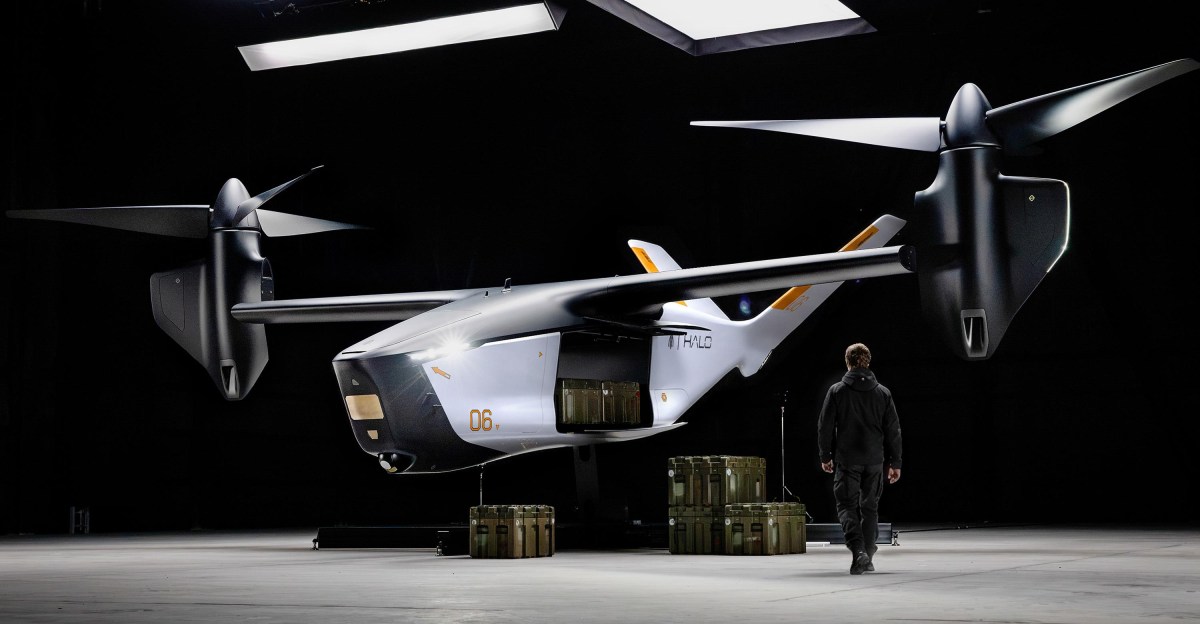
Archer Aviation and defense company Anduril have introduced Thunder, a hybrid vertical takeoff and landing aircraft meant to push air-taxi engineering into military work before most passengers have taken an electric air taxi anywhere.
Archer said it co-developed the aircraft with Anduril, the defense technology company founded by Palmer Luckey. Anduril revealed Thunder on Monday at the Farnborough International Airshow in Hampshire, England, according to the companies.
The pitch is clear enough: take the vertical-lift architecture that Archer has been building for urban air mobility and adapt it for missions where a short runway is a luxury. The companies describe Thunder as a platform for both defense and commercial uses, though the version shown at Farnborough is aimed squarely at the military.
Anduril presented Thunder as a fully autonomous attack rotorcraft designed to operate alongside crewed military aircraft. That pairing matters because it puts the system in the category of uncrewed aircraft meant to supplement, rather than replace, pilots in the cockpit. The companies did not provide operational details beyond that description.
Thunder also marks a technical break from Archer’s Midnight air taxi. Midnight is fully electric. Thunder uses a series hybrid powertrain, Archer said, a choice the company says will give the aircraft much more range while still allowing tight control of power across different flight conditions.
That range claim comes from Archer, and it should be treated as a claim. The company did not provide range figures in the available announcement. The shift to hybrid power, though, tracks with a broader problem in electric aviation: batteries are useful for short hops, but they get much less forgiving when the mission expands beyond city-to-city shuttles.
Archer said it sees Thunder being used for military strikes, cargo transport, remote logistics, and other operations in places that are difficult to reach. Those are broader and rougher jobs than the airport-to-downtown routes air-taxi companies have spent years promising regulators, investors, and occasionally actual cities.
The aircraft’s design, as shown by Archer, sits somewhere between Archer’s existing Midnight air taxi and a military tiltrotor such as the V-22 Osprey. That visual comparison is useful, but the companies have not said Thunder matches the Osprey’s capabilities or mission profile.
Archer said it plans to show a commercial version of the aircraft later this week. That matters for the business as much as the engineering. Air-taxi companies are still trying to turn expensive development programs into revenue, and military partnerships offer one possible path while passenger service remains limited.
For now, Thunder is another sign that the electric air-taxi sector is not waiting for city commuters to validate the model. Archer and Anduril are taking the same vertical-lift idea into defense, where autonomy, range, and payload flexibility may matter more than whether the aircraft ever picks anyone up from a rooftop pad.
This story draws on original reporting from The Verge.


