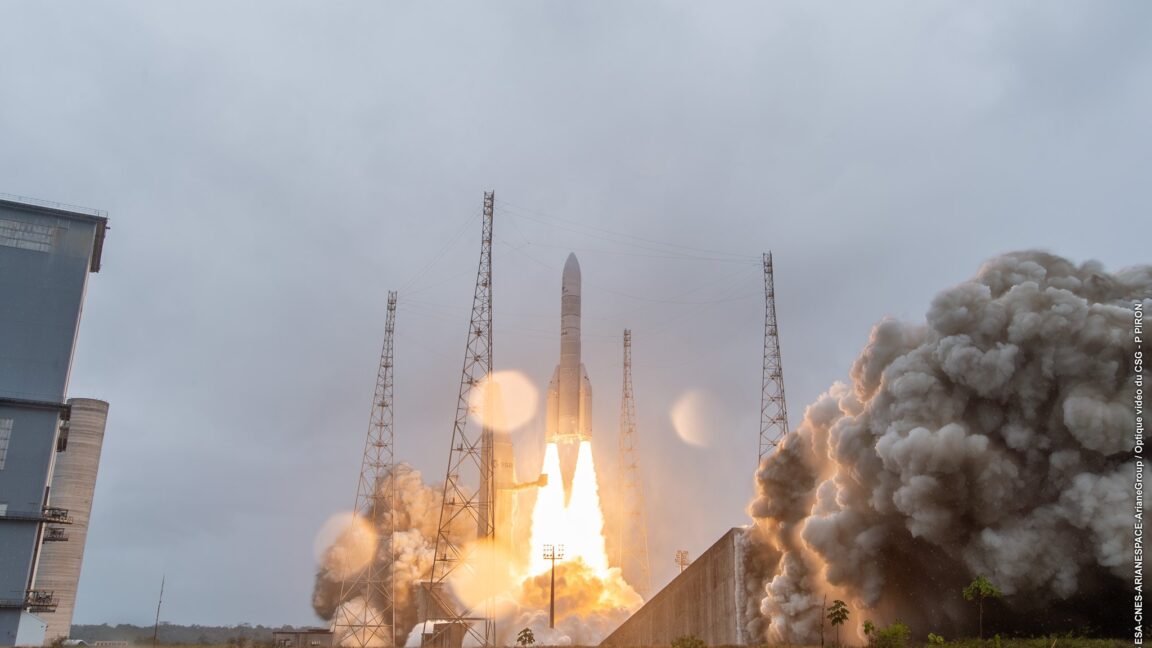
The European Space Agency has shelved the proposed Ariane 6 Block 3 evolution, a decision that removes the planned ICARUS lightweight upper stage from the rocket’s path for now. For anyone searching Ariane 6 Block 3 shelved, the key distinction is that ESA has not cancelled Ariane 6 or its nearer-term Block 2 improvements.
ESA told European Spaceflight that it is no longer considering Block 3 because there is “no programme need or justification” at this time. The statement was relayed by the specialist outlet after questions about the project’s status emerged earlier this month.
What Ariane 6 upgrades were shelved?
Block 3 was the proposed next major version of Europe’s Ariane 6 launcher. Its central change was ICARUS, short for Innovative Carbon Ariane Upper Stage, which would have used carbon-composite structures. Space Scout reported that the project followed the Phoebus technology demonstrator and was intended to make the upper stage lighter.
Less upper-stage mass can leave more of a rocket’s performance available for payload, which matters for missions headed beyond Earth orbit as well as for large payloads nearer home. But that technical case is not the same thing as an approved programme. ESA’s reported position is that Block 3 lacks a current programme need or justification.
Reporting has discussed ESA exploration budgets and requests to lift Ariane 6’s flight rate as possible context for the decision. Neither ESA nor the available reporting establishes either factor as its reason for shelving Block 3, so the agency’s stated rationale is the one that holds.
What remains in the Ariane 6 roadmap?
Block 2 remains the final major Ariane 6 version described in the reporting. It includes P160C solid rocket boosters, a higher-thrust version of the Vinci upper-stage engine, and changes to the first stage, according to Space Scout.
That means the rockets now flying and the Block 2 path are not covered by the Block 3 decision. Ariane 6 is an expendable launcher operated by Arianespace, and Ars Technica reported that the vehicle had completed eight missions that reached orbit safely since its debut.
The clearer consequence so far concerns a proposed ESA mission to Saturn’s icy moon Enceladus. European Spaceflight and Space Scout reported that its study team had been planning around the more capable Ariane 64 Evo, identified in the reporting as Block 3. The team had to revise those launch-vehicle assumptions for Ariane 64 Block 2 instead.
That is a planning constraint, not a cancellation of the Enceladus proposal. It also illustrates the unglamorous part of rocket roadmaps: spacecraft designs, payload mass and mission trajectories can be built around performance that vanishes when a future launcher variant does.
This story draws on original reporting from Ars Technica.