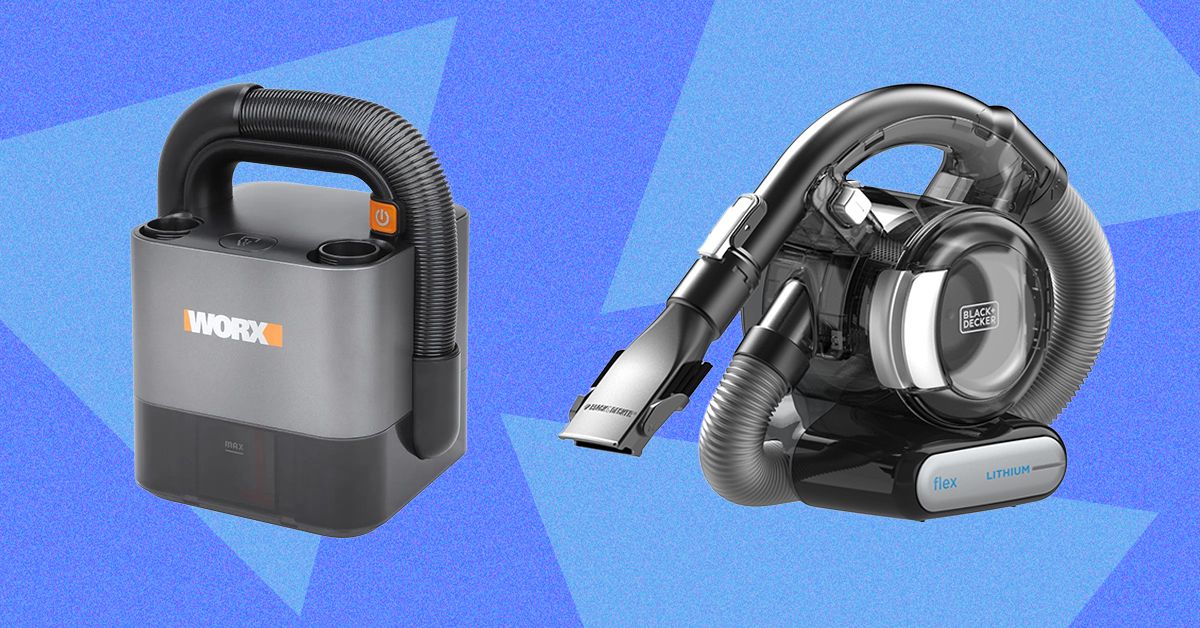
The best car vacuums 2026 are not one product category with a single winner. The useful choice starts with the mess, the size of the cabin and whether there is an outlet nearby. A tiny handheld is convenient for crumbs and seat seams; it can become tedious fast when faced with sand, pet hair or a full interior.
Several 2026 test roundups reach different conclusions on overall winners. Car and Driver selected Fanttik's Slim V10 APEX, while MotorTrend selected Dyson's Car & Boat. That disagreement is less a crisis of vacuum science than a reminder that these machines make different compromises in size, suction, bin capacity, battery life and tools.
Which car vacuum should you buy?
Buy a compact handheld for quick cleanups and confined spaces. Choose a cordless stick vacuum with a removable handheld unit, or a battery-powered shop vacuum, if you regularly clean an entire cabin. A corded shop vacuum remains the practical option for heavier jobs when a garage outlet is available.
WIRED says ordinary household vacuums can work in a car, but identifies handhelds and cordless models as the easier formats to move around seats, mats and the trunk. MotorTrend splits the market into four groups: car vacuums or dustbusters, stick vacuums, battery-powered shop vacs and corded shop vacs. That is a more useful map than the word “car” on a retail listing.
- Compact handheld/dustbuster: Best for crumbs, small spills and fast touch-ups. They are light and portable, but their small bins and batteries limit longer sessions.
- Cordless stick vacuum: A removable wand can turn it into a handheld. WIRED says these models generally bring more power, longer battery life and often more accessories, at the cost of weight and price.
- Battery-powered shop vacuum: Worth considering for larger, recurring messes when carrying a bigger unit is acceptable.
- Corded shop vacuum: The outlet is the tax. In return, the format is suited to sustained cleanup and wet/dry work, according to Vacuum Nerds' creator-reported comparison.
Handheld runtime is short, so plan for it
True handhelds commonly run about 10 to 20 minutes, WIRED reports. Consumer Reports found 9 to 25 minutes across power settings in its testing of handhelds. That can be enough for one focused cleanup, but not necessarily for every carpeted mat, seat crease and cargo area in a dirty vehicle.
Consumer Reports also says only a few of the nearly 30 handhelds it tested used swappable batteries. For a vacuum intended to live for years in the garage, that detail deserves more attention than a glossy suction number.
A compact-handheld shortlist, with caveats
Car and Driver named the Fanttik Slim V10 APEX its overall pick. Its test measured the unit at 1.16 pounds, 71.7 dBA on average and 14 minutes, 26 seconds at maximum power. The publication liked its portability and included accessories, which support blower, inflator and vacuum-sealer functions. It also found the small chamber needed frequent emptying, the filter could clog, and the nozzle struggled with cereal-sized debris.
Car and Driver chose a Black+Decker Dustbuster as its value pick, reporting that its wide intake did well with floor-mat debris and was straightforward to empty. It lacked extra attachments beyond its rotating built-in snout. Model names matter here: Black+Decker sells several Dustbuster variants. Consumer Reports' lab-tested reference list includes the DustBuster CHV1410L, Flex BDH2020FL and Max+ AdvancedClean+ HHVK515J00, alongside Dyson's Car+Boat and Shark's Ion W1 WV201.
Shopping checklist
- Get a crevice tool for seat rails, seams and tight gaps.
- Check whether the intake handles the debris you actually have, rather than just fine dust.
- Look at bin capacity and the mechanism for removing and cleaning the filter.
- Compare measured runtime at the power setting you expect to use.
- Check weight, noise and whether the battery is replaceable or swappable.
- Verify the exact model, included tools, battery arrangement and current price before buying.
The test publishers disclose affiliate relationships or retailer-link compensation, so their rankings are useful evidence, not a final verdict. The right vacuum is the one that reaches your car's awkward gaps and finishes the cleanup before its bin, battery or your patience runs out.
This story draws on original reporting from WIRED.


