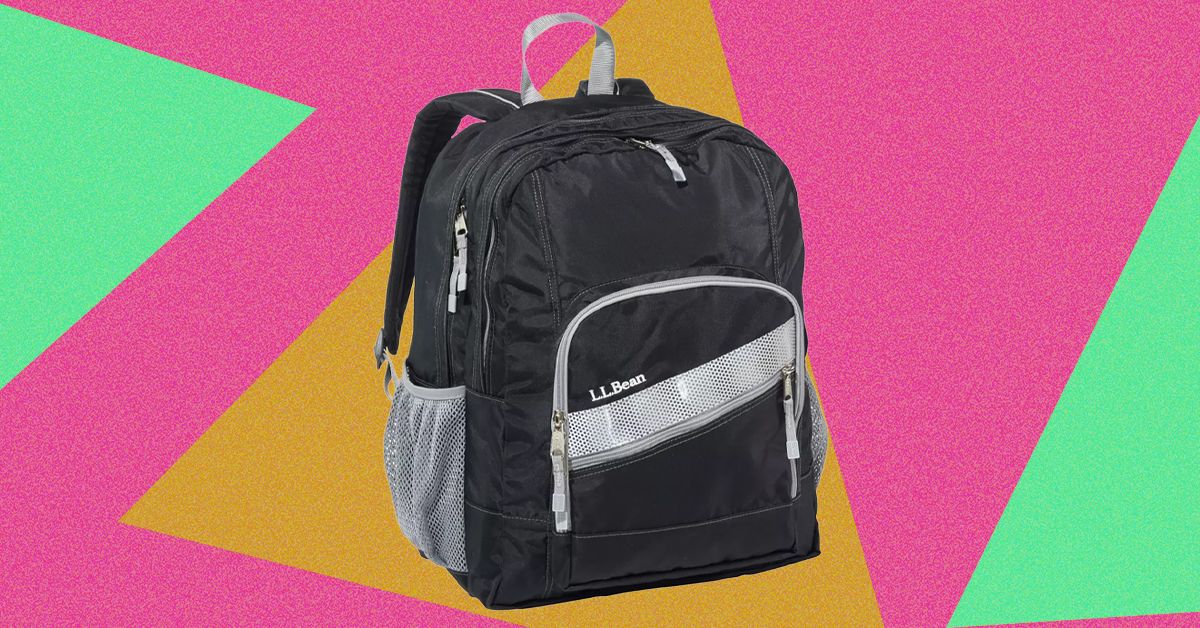
Parents searching for the best kids backpacks 2026 have one unusually clear starting point: L.L.Bean. WIRED named the L.L.Bean Deluxe Book Pack its best overall children’s backpack, listed at $55, while Wirecutter separately said L.L.Bean’s 24-liter Original Book Pack and 17-liter Junior Original Book Pack rank among the highest-quality kids’ bags it has tested. Those are not identified as the same model, but the overlap is a stronger signal than a temporary bestseller badge or a sponsored shopping list.
WIRED says children of its Reviews team used the bags for weeks or years, including in lockers and beneath plane seats. Its test framing reflects the real daily load: a school bag may need room for a lunch box, water bottle, folders and books, and sometimes an iPad, Chromebook or other device. It also has to survive the standard abuse administered by school hallways, cars and gym floors.
Which kids’ backpack should you buy for the 2026 school year?
Start by matching the bag to the child’s actual school-day cargo and body size, then check comfort before print choices. L.L.Bean has the clearest cross-publication quality signal in the available testing coverage. WIRED’s other choices are more specific use-case picks, rather than proof that one bag fits every student.
- L.L.Bean Deluxe Book Pack: WIRED’s overall selection, with a listed price of $55 at L.L.Bean.
- State Bags Kane Double Pocket Backpack: WIRED’s upgrade pick. The Mini version was listed at $98 by State Bags.
- GoRuck KR1: WIRED’s heavy-duty selection, listed at $65 by GoRuck.
- Storq Cool Kid Backpack: WIRED’s first-backpack choice, listed at Nordstrom for $47, reduced from $55.
Those prices are snapshots, not promises. Stock, patterns and sales change quickly, especially once school supply aisles become a seasonal siege zone. Amazon’s kids’ backpack list is also volatile: Amazon describes it as sales-based and frequently updated. A sales rank or customer rating can show what people bought, but it does not independently establish fit, construction quality or long-term durability.
How should a child’s school backpack fit?
Capacity should follow grade level and the expected load. A preschooler may need space for a folder, lunch, change of clothes and bottle; older students may carry notebooks, binders, textbooks or a laptop. Check the items that will actually go inside rather than buying by age label alone.
Cubby, in a compensated shopping post it says was independently written and edited, reports that Johns Hopkins Medicine advises wide shoulder straps, lower-back padding, and a design that is lightweight but sturdy. It also reports American Academy of Pediatrics guidance that a backpack should weigh no more than 15% of a child’s body weight. That is reported guidance, not a substitute for individual medical advice.
The boring checks are the ones that prevent a bad purchase: load the bag with daily essentials, confirm the straps sit comfortably, and make sure the child can manage the zippers and compartments. A tablet sleeve is useful only if the student carries a tablet. More pockets are useful only if they do not turn finding lunch into an archaeological dig.
This story draws on original reporting from WIRED.


