Search for the best robot lawn mowers 2026 and the rankings promptly disagree. That is useful, not a defect: a mower for a flat, open lawn is a different purchase from one expected to cope with slopes, trees and awkward edges. WIRED’s updated August 2026 guide assigns picks by use case, while Reviewed names a different machine as its overall winner.
Best robot lawn mowers 2026: which model fits your yard?
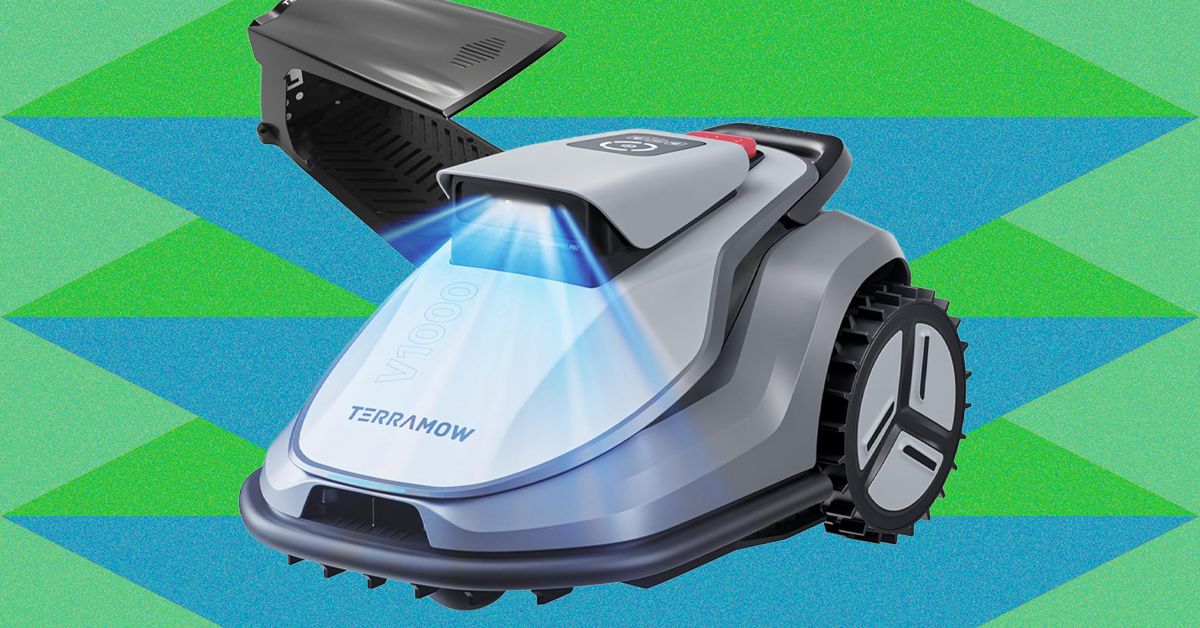
- Regular lawns: WIRED names the TerraMow V1000 its pick for regular lawns.
- Challenging lawns: WIRED selects the Mammotion Luba 3 AWD.
- Budget pick: WIRED selects the Anthbot M9.
- Remote control: WIRED selects the Mowrator S1.
Those are category calls from one publication, not a universal league table. Reviewed, another outlet that says its editors independently choose products, identifies the Ecovacs Goat A3000 LiDAR Pro as its overall best robot mower. It credits the model’s LiDAR-and-camera navigation, slope handling and edge trimmer, while flagging that it has only one cutting height.
The disagreement is the point. A buyer who turns several incompatible rankings into a single “winner” has learned very little about their own grass.
What should buyers check before choosing a robot mower?
Start with terrain and the yard’s obstructions. For hills, Reviewed names the distinct Mammotion Luba 3 AWD 3000S as its pick for hills and slopes, citing its sturdy wheels and RTK hardware. The same review says it can dig up new and established grass during turns. In the UK, Gardeners’ World instead names the Mammotion Luba mini 2, another model, as its choice for bumpy or hilly ground.
Navigation and installation also need more scrutiny than the word “wire-free” suggests. Mammotion, writing in its own manufacturer-published guide, says RTK can lose signal near trees or buildings and that vision systems can have consistency problems over time. Its guide also says wireless mapping may still require attention to RTK antenna placement, calibration and app mapping, with some models needing multiple adjustments. Those are manufacturer claims, not independent validation, but they describe a plausible shopping checklist.
Boundary-wire machines use a cable laid around the lawn to define the mowing area, according to Gardeners’ World. That is a different installation method, not an automatic verdict on convenience.
Test reports also expose the small failures that product pages tend to sand down. Reviewed says the Eufy E18 was its easiest model to set up and use, but reports occasional sticking at landscape edges and patchy cutting. It says the Sunseeker Elite X7 Plus Gen 2 can struggle in shade, miss some spots and require trial and error to set up its RTK antennae.
WIRED’s displayed retailer-linked prices were $949 for the TerraMow V1000, $2,399 for the Luba 3 AWD, $769 for the Anthbot M9 and $3,999 for the Mowrator S1 when its excerpt was captured. Treat those as dated listings, not price promises. The sensible order is dull but effective: map the lawn, identify slopes and shade, then decide how much setup fiddling you will tolerate before buying the robot with the most flattering spec sheet.
This story draws on original reporting from WIRED.


