The commercial launch environmental rule now being pushed by the Department of Transportation would exempt Federal Aviation Administration approvals for commercial launches, reentries and launch sites from 13 federal laws and related regulations, SpaceNews reported. Industry likes the shortcut. Environmental groups see a fairly obvious problem: launches and launch pads touch land, water, air and protected species, not a spreadsheet.
The proposal would be issued for public comment, according to the department. Among the laws covered is the National Environmental Policy Act, which requires federal agencies to review environmental effects for major federal actions, including licenses. Environmental groups also objected that the waiver would reach the Endangered Species Act, Clean Water Act and Clean Air Act. Transportation Secretary Sean Duffy framed the move as cutting red tape in a new space race.
What would the commercial launch environmental rule change?
If adopted as described, the rule would reduce the environmental-review burden attached to FAA commercial space licenses and launch-site approvals. That would likely speed some licensing work, but critics say it would also remove checks that force agencies and companies to study damage before rockets fly or infrastructure is built.
The policy fight landed during a busy week for U.S. launch procurement. The U.S. Space Force awarded SpaceX two task orders totaling $1.6 billion for 18 Falcon 9 missions tied to its Space Based Sensing and Targeting portfolio, the military said. Those launches are planned from Vandenberg Space Force Base in California and are expected to finish by the end of 2027 under the National Security Space Launch Phase 3 Lane 1 program.
Rocket Lab also announced its largest launch contract so far: a $266 million Space Force deal for 12 suborbital launches, with options for as many as six more. The company said the first launch under that agreement is expected no earlier than the end of 2026. The missions will mainly use a new Rocket Lab site at the Pacific Spaceport Complex-Alaska in Kodiak, Alaska, and are likely connected at least partly to hypersonic testing.
Elsewhere, Rocket Factory Augsburg said it will de-stack its RFA One rocket after finding an issue during pad testing. The German company had been preparing for a debut launch from Scotland, with a window previously set to open August 10. It gave no replacement date. RFA One is a three-stage launcher designed to carry up to 1,300 kilograms to Sun-synchronous orbit.
European launch plans shifted too. European Spaceflight reported that MaiaSpace, an ArianeGroup subsidiary, has dropped a planned suborbital test of its Maia rocket and now intends to attempt orbit on the vehicle’s first flight in the second half of 2027. European Spaceflight also reported that ArianeGroup completed a wet dress rehearsal of its 28-meter Themis reusable booster demonstrator at Sweden’s Esrange Space Centre, using liquid nitrogen rather than the liquid oxygen and methane planned for powered tests.
Boeing Chief Executive Kelly Ortberg told analysts that work to address Starliner’s propulsion-related deficiencies is progressing, and Ars Technica reported that port availability at the International Space Station is now a main scheduling constraint for a possible cargo flight this year. That mission would come before any return to crewed Starliner flights.
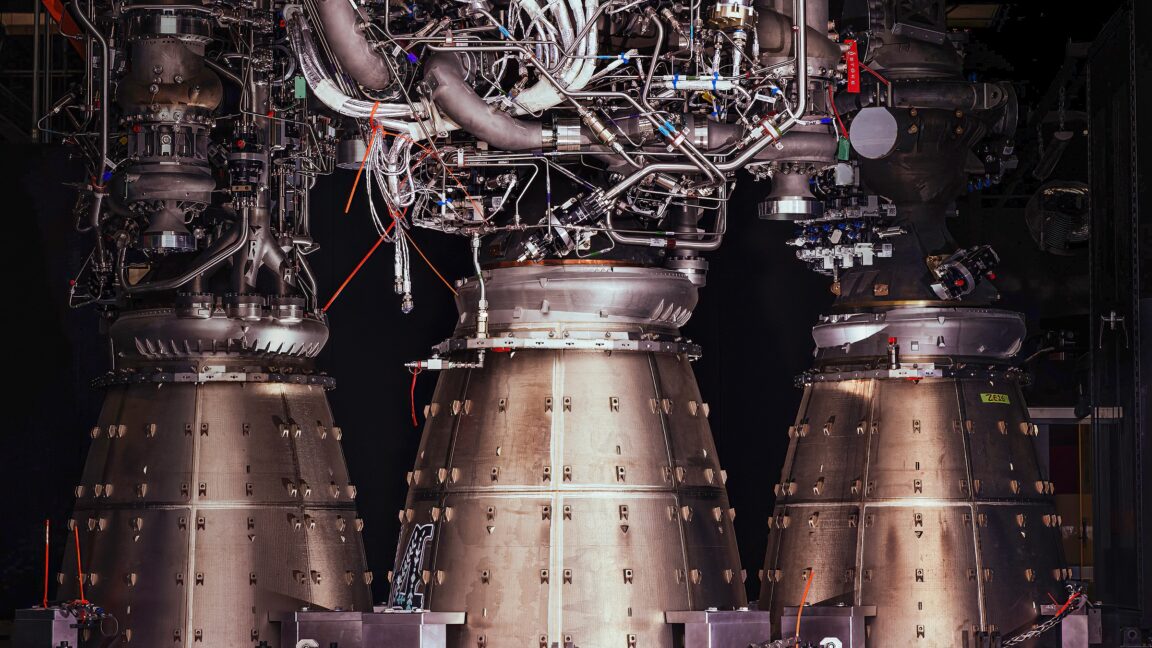
Stoke Space said three first-stage Zenith engines for its Nova rocket are ready to leave its Kent, Washington, shop for hot-fire acceptance testing in Moses Lake. Nova’s first stage uses seven Zenith engines, each rated at 100,000 pounds of thrust. A late-2026 debut remains possible in name, though no date has been set.
A Falcon 9 upper stage is also expected to hit the near side of the Moon early August 5. A University of Texas at Austin research team modeled the impact and said the debris plume should rise about 15 to 20 kilometers above the lunar surface and may be bright enough for some telescopes. The stage launched Firefly’s Blue Ghost and ispace’s Hakuto-R lunar landers on January 15, 2025.
AST SpaceMobile said BlueBird 11, 12 and 13 are scheduled to launch August 5, 2026, from Cape Canaveral on Falcon 9. The company says the satellites will expand its direct-to-phone broadband network for ordinary smartphones, putting it in competition with SpaceX’s Starlink direct-to-cell plans.
SpaceX’s latest Starship test also drew attention after the vehicle splashed down intact in the Indian Ocean, with Elon Musk saying the company would try to retrieve it. Ars Technica reported that SpaceX may try a tower catch of Starship on a future flight, while independent experts warned that the vehicle’s current tile-based heat shield may be a bottleneck for rapid reuse at very high flight rates.
This story draws on original reporting from Ars Technica.


