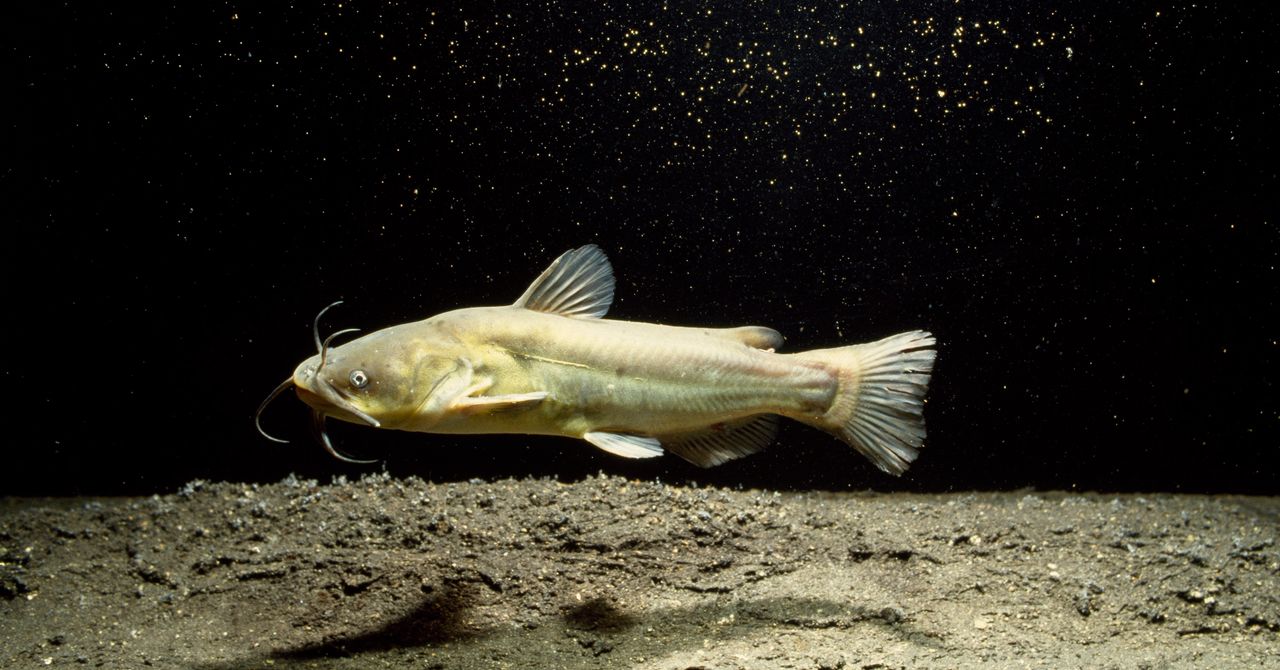
Researchers say they have found contagious cancer in catfish from Lake Memphremagog, identifying what they report is the first documented transmissible cancer in fish and the first known case in a freshwater ecosystem. The finding, published this month in Nature, centers on brown catfish, Ameiurus nebulosus, with black melanoma lesions.
Transmissible cancer is rare, and it is not how human cancer works: people do not pass cancer to each other like a cold. In a few animal lineages, though, cancer cells themselves can move into a new host and keep dividing there. Researchers have previously documented that kind of cancer in dogs, Tasmanian devils, and some mollusks.
The catfish case traces back to 2012, when fishermen and biologists noticed an unusually large number of fish with dark lesions in Lake Memphremagog, which crosses the Vermont-Quebec border. Earlier work showed the lesions were malignant melanomas. Among examined specimens, 23 percent to 37 percent had the tumors, an unusually high rate for the species.
Julie Dragon, a University of Vermont researcher and co-lead author of the study, said the pattern was unexpected because the fish live near the bottom, while melanoma is commonly associated with too much sunlight exposure.
How can cancer in catfish be contagious?
A transmissible cancer spreads when living cancer cells from one animal enter another animal and survive as a clone. In this case, the researchers argue that the tumors in different fish carry a shared genetic identity that does not match the fish hosting them.
The team tested that idea by sequencing whole genomes from tumors and healthy tissue in affected fish, then comparing those results with healthy fish from other populations. According to the researchers, tumors taken from different catfish were more closely related to one another than to the fish in which they were growing.
The giveaway was not a single mutation doing jazz hands. The team found hundreds of thousands of genetic variants that repeatedly appeared in tumors but not in the healthy tissue of the same animals. That pattern, they reported, is hard to square with each fish developing melanoma separately.
As a comparison, the researchers examined hundreds of human melanomas and found that nearly all mutations were unique to individual patients. In the catfish tumors, by contrast, many mutations appeared across multiple fish, which the study describes as a signature of clonal transmissible cancer.
The researchers also considered whether a virus, bacterium, or other microorganism might be driving the disease. Their analysis did not find viruses or bacteria specifically linked to the tumors. They do not rule out a pathogen helping the cancer begin or spread, but they say the strongest evidence points to the cancer cells as the infectious agent.
What researchers still do not know
The study does not establish how the cancer moves from fish to fish. The authors suggest several routes: close contact during spawning, tumor cells persisting for a time in water or sediment, or entry through skin, gills, or the mouth. They also raise the possibility that reproductive hormones affect the immune response in ways that help the cancer take hold.
Mark Henderson, a biologist and study co-author, said younger fish did not appear to have the cancer, while larger fish of spawning age did. He suggested that some part of spawning behavior may be involved in transmission.
The University of Vermont said the researchers found elevated arsenic levels in tumor cells and a geographic correlation between cancers and areas with high natural arsenic concentrations. The scientists emphasized that the correlation does not prove arsenic caused the cancer, which is the correct level of enthusiasm for a map and a metal.
The lake is also a public concern because it supplies drinking water to more than 175,000 people. The reported finding is about a cancer spreading among catfish, not evidence of a human cancer risk from the lake.
Dragon said studying how cancers survive outside their original host could help researchers understand what keeps cancers contained and what happens when those limits fail. Henderson offered more practical advice for people catching fish with visible tumors: he said he would not eat them.
This story draws on original reporting from WIRED.


